


Last updated October 26, 2026
What changed
- Added a section on whether instant face lift creams work, and what to look for in one.
- Updated the design and the product picks.
- Reviewed with our R&D cosmetic chemist for accuracy.
What does a face lift without surgery actually mean?
A face lift without surgery usually means a non-surgical or minimally invasive treatment that aims to improve lift, firmness, contour, or skin quality without a traditional surgical facelift.
That sounds simple. In practice, it is not.
The phrase can describe several very different things: injectables, ultrasound or radiofrequency devices, laser treatments, thread lifts, microneedling, and even at-home tools. They do not do the same job.
This is where a lot of confusion starts. Some treatments mainly tighten skin. Some replace lost volume. Some improve texture so the skin looks firmer. Some temporarily reposition tissue. None of that is identical to what a surgical facelift does.
It helps to separate three different problems, because they need different solutions:
Those problems can show up together. But they need different solutions.
Why people start searching for a face lift without surgery
Most people are not looking for a shortcut. They are trying to avoid something specific.
Usually that means one or more of the following:
- downtime that feels too hard to manage
- scars
- general anesthesia
- higher surgical costs
- fear of looking done
- wanting a more gradual change
- not feeling ready for surgery yet
For some people, that search makes sense. For others, it leads to a long cycle of treatments that never quite address the real issue. If a cream is where you want to start, the best face firming creams improve hydration, support the skin barrier and reduce the look of crepey texture over time.
Can you lift the face without surgery?
Yes, to a point.
Several non-surgical treatments can tighten skin, restore volume, and soften the look of sagging. They can make the face look fresher, firmer, and a little more lifted.
What they cannot do is remove excess skin or reposition deeper tissues the way surgery does. If sagging is advanced, non-surgical treatments have a ceiling.
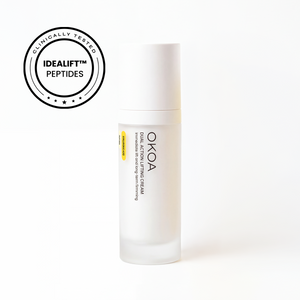 Dual Action Lifting Cream$61.90 or $44.88/moShop now
 Deep Hydration Moisturizer$29.90 or $24.91/moShop now
 Hydrate & Lift set$81.90 for bothShop now
Which non-surgical facelift options are worth considering?
The best face lift without surgery is not one universal treatment. It is the option that matches your main problem and the degree of laxity. Each non-surgical facelift option does a different job: some improve skin quality, some replace lost volume and a few create a modest tightening effect.
A person with early volume loss in the cheeks may do well with injectables. Someone with mild crepey skin may benefit more from resurfacing or microneedling. Someone with visible jowls and neck laxity may find that non-surgical options help only modestly.
The most useful way to compare options is by what they mainly address: tightening, volume, surface renewal, or temporary repositioning.
Ultrasound radiofrequency and laser skin tightening
Energy-based treatments include ultrasound-based tightening, radiofrequency, radiofrequency microneedling, and selected laser resurfacing treatments.
In plain terms, these treatments create controlled heat in the skin. The goal is to trigger the skin's repair response and support new collagen over time. That is why results are usually gradual.
They are generally best suited to:
- mild to moderate laxity
- early jawline softening
- mild neck looseness
- texture damage or crepey skin, depending on the device
What to expect:
- some people see a small early change from swelling or tissue contraction
- more meaningful improvement, when it happens, tends to build over weeks to months
- maintenance is often needed
What not to expect:
- an instant surgical-style lift
- removal of heavy jowls
- major correction from one treatment in advanced aging
Laser resurfacing sits slightly differently here. It often helps more with texture, fine lines, and surface firmness than with true lifting. That still matters, because better skin quality can make laxity look less obvious.
Injectables like fillers and biostimulators
The so-called liquid facelift is not really lifting tissue. It is using injectables to improve contour, replace lost volume, and soften lines so the face looks more supported. Creams cannot do this: a topical works on skin quality, not on volume or contour.
That can work very well in the right person.
The main categories are:
These are different tools for different problems.
If the cheeks have flattened with age, restoring volume can make the lower face look less heavy. If the issue is mostly expression lines, muscle-relaxing injections may help. If the skin is thin and early laxity is part of the picture, collagen-stimulating options may be considered.
The tradeoffs matter:
- swelling and bruising are common
- results need maintenance
- overfilling is a real risk
- volume replacement cannot fully fix true skin laxity
This is one of the most common mistakes in this category: treating sagging skin as if it were only volume loss.
Thread lifts and other minimally invasive options
With dissolvable threads placed under the skin, thread lifts are designed to give modest repositioning.
They sit somewhere between non-invasive treatments and surgery. They are not just a facial. They also are not a surgical facelift.
Where they may help:
- mild soft tissue descent
- early jowling
- people who want some lift without surgery and accept a shorter-term result
What to know:
- results are usually subtler than many ads suggest
- skill matters a great deal
- downtime can include swelling, bruising, tenderness, and visible irregularity early on
- complications can happen, including asymmetry, puckering, or thread-related issues
For the right candidate, threads may offer a temporary improvement. But they are often marketed more aggressively than the average result justifies.
Skin-focused treatments that improve the look of laxity
Some treatments do not create a true lift, but they can still make the face look better.
That includes:
- chemical peels
- microneedling
- medical-grade skincare
These options mainly improve:
- texture
- dullness
- crepiness
- fine lines
- surface firmness
This matters when people look at non surgical face lift before and after photos. Improvements in texture, brightness, and skin smoothness often photograph well. True lifting of deeper tissues is harder to achieve and harder to fake consistently.
What results can you realistically expect from a face lift without surgery?
Results depend on what you are trying to change.
Mild skin laxity, early jowling, hollowing, and fine lines are different from significant excess skin or heavy lower-face descent. Non-surgical options do best earlier, not later.
Before-and-after photos often show:
- the best responders
- the best lighting
- carefully matched angles
- combination treatment plans
- photos taken at the treatment's peak timing
That does not make them fake. It does mean they are selective.
In practice, subtle but noticeable usually means you look more rested, firmer, or better supported. It does not usually mean people think you had surgery.
What non-surgical treatments can improve
✅ Realistic wins: mild skin tightening, smoother texture, softer fine lines, better cheek support through volume replacement, modest jawline definition in select cases, and a fresher overall appearance.
What they cannot do
This is the ceiling.
💡 The ceiling: non-surgical treatments cannot remove significant loose skin, fully correct moderate to severe jowls, recreate the deeper tissue repositioning of surgery, or deliver the same longevity as a surgical facelift.
How to read non surgical face lift before and after photos critically
Look for consistency.
Check whether the photos use the same:
- lighting
- angle
- facial expression
- hair position
- makeup
- timing
Also ask:
- was one treatment used, or several?
- how long after treatment was the photo taken?
- are there signs of normal recovery that match the treatment claimed?
Be cautious with dramatic one-session lifts when no treatment details are given.
How to choose the best face lift without surgery for your face
The best choice depends on your main concern, not what is trending.
Sagging skin, hollow cheeks, deep folds, a heavy lower face, surface damage, and neck laxity are not the same problem. They should not be approached the same way.
Candidacy also depends on:
- skin tone and treatment suitability
- downtime tolerance
- budget
- willingness to maintain results
- how much change you actually want
A good consultation should help clarify that. It should not pressure you into deciding on the spot.
Which treatment fits your concern
A simple way to think about it:
That is why another person's result may not translate to your face.
How long each option lasts and what upkeep it needs
Some options are faster. Some are slower.
- Injectables can show changes quickly, though swelling may obscure the final result early on
- Energy-based tightening is usually gradual
- Resurfacing may improve texture sooner than laxity
- Most non-surgical plans need repeat sessions or maintenance
Reviewing how lifting creams compare to in-office options can help set realistic expectations.
By budget and long-term value
The cheapest session is not always the cheapest path.
Many non-surgical options involve:
- multiple sessions
- yearly maintenance
- combination plans
Over time, that can add up. For some people, repeated maintenance is worth it. For others, it becomes an expensive way to avoid the consultation they probably needed in the first place.
What to look for when searching face lift no surgery near me
Look for the provider before the marketing.
Focus on:
- relevant medical credentials
- experience with the specific device or injectable being offered
- clear explanation of why that option suits your face
- transparent before-and-after photos
- discussion of risks and complication planning
- willingness to say when a treatment is not the right fit
Vague promises are a warning sign. Specific reasoning is a better sign.
Risks reviews and common mistakes
All aesthetic treatments have tradeoffs.
Side effects are often temporary, but risk is shaped by both the treatment and the person performing it. Provider skill matters as much as the device or injectable.
Reviews can be useful. They are not a substitute for candidacy assessment or medical judgment.
Common side effects and when risk goes up
Common short-term effects can include:
- swelling
- redness
- bruising
- tenderness
- temporary downtime
Less common but more serious risks can occur with injectables, threads, and energy devices. For any of these, risk usually goes up when treatment is pushed too far, done by an inexperienced provider, or chosen for the wrong problem.
Looking at top lifting creams gives you a sense of what consistent topical care can realistically deliver. A peptide formula such as the Okoaskin Dual Action Lifting Cream is the daily version of that: the at-home tier, not a replacement for a procedure.
How to evaluate face lift without surgery reviews
Look for patterns, not one glowing comment.
More useful reviews often mention:
- age range
- main concern
- whether expectations matched the result
- how much maintenance was needed
- whether the result was subtle, moderate, or disappointing
A review from someone with mild early aging may tell you very little if your concern is heavier jowling or neck laxity.
Red flags in marketing and consultations
💡 Walk away from: promises of a surgical result without surgery, vague device names, heavy package selling before assessment, pressure to book immediately, and before-and-after galleries with poor consistency.
A good consultation should make the treatment clearer, not more confusing.
Does instant face lift cream work?
Yes, for a smoother and tighter look that lasts the day, but not as a lift. An instant face lift cream works on the surface of the skin. Film-forming minerals such as sodium silicate and magnesium aluminum silicate dry into a thin, invisible film that tightens the look of the skin within minutes. The effect holds while the film is on your skin and washes off when you cleanse. No cream moves tissue or removes skin, so none of them replaces the procedures above.
The useful question is what else the formula does. A cream that only forms a film gives you a few smoother hours and nothing that builds. A cream that pairs the film with a firming peptide gives you the same-day effect plus a slower change you judge over weeks of daily use.
OKOA's Lifting & Firming Cream is built that way. The tightening film works within minutes, and 4% IDEALIFT (acetyl dipeptide-1 cetyl ester), a peptide from Sederma (Croda Beauty), works on firmness over the following weeks. In Sederma's two-month, placebo-controlled study of the peptide at the same 4% level, the jowl area measured 11.3% more lifted, and over 80% of participants reported firmer-looking skin. That study is reported in Sederma's IDEALIFT technical bulletin, and the ingredient is listed on Croda Beauty's IDEALIFT page. That is supplier research on the ingredient, not an independent trial of the finished cream.
Two things decide how good the instant effect looks. Apply it over a moisturizer, never on bare skin, and use a thin layer; skipping the moisturizer is what causes the white film some people notice. Then let it set before makeup. Our Okoa Skin reviews page walks through all five application steps. The cream contains fragrance, so patch test first if your skin reacts easily.
At-home support and when surgery is the better option
Skincare and home devices have a role. They just do not do the same job as in-office treatments or surgery.
They can support skin quality, hydration, and maintenance. They cannot replace a procedure when laxity is significant.
Can skincare create a face lift without surgery?
Not in the literal sense.
Skincare can improve:
- texture
- hydration
- visible firmness
- pigment irregularity
- fine lines
It cannot physically lift deeper tissues or remove excess skin.
That said, skin that is well cared for often looks firmer and healthier. For some people with mild concerns, that may be enough.
The jawline is where that distinction matters most. If your main concern is a softening jawline rather than the whole lower face, a peptide cream built on IDEALIFT (acetyl dipeptide-1 cetyl ester) is the realistic first step, and it needs 8 to 12 weeks of daily use before you judge it. Once the jawline is heavy with descended fat or excess skin, how to tighten sagging jowls moves from a cream to ultrasound, radiofrequency or a lower facelift, the routes that change the structure.
A realistic maintenance routine after non-surgical treatment
Results tend to hold better when the basics are consistent. Choosing the best firming cream for daily use is a low-risk way to maintain skin support between procedures, and a peptide firming cream is the usual pick for that job.
That usually means:
- daily sunscreen
- topical retinoids if tolerated
- pigment control where needed
- barrier-supportive skincare
- follow-up scheduling based on the treatment used
Maintenance does not have to be elaborate. It does have to be consistent.
When to consider surgery instead
Sometimes the most straight answer is that non-surgical treatments have reached their ceiling.
That is often the case with:
- significant jowling
- clear excess skin
- neck banding
- repeated disappointment after multiple non-surgical treatments
If your goal is structural lift and the changes are more advanced, a surgical consultation may be more useful than another round of subtle maintenance treatments.
Dual Action Lifting Cream$61.90 or $44.88/moShop now Retinol Firming Serum$44.90Shop now
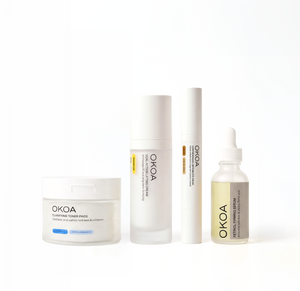 The Night Shift set$129.90 for fourShop now
FAQ
Can you really get a face lift without surgery?
Yes, but only to a degree. Non-surgical treatments can tighten skin, restore volume, and improve contour. They cannot remove excess skin or reposition deeper tissues like surgery can.
What is the best face lift without surgery for sagging jowls?
It depends on what is causing the jowls. Mild early jowling may respond to energy-based tightening, volume support in the cheeks, or a combination plan. Moderate to severe jowls often respond only modestly to non-surgical treatment.
How long does a non-surgical facelift last?
It varies by treatment. Some injectables may last months to over a year. Energy-based treatments often need maintenance. Thread lifts are usually shorter-lived than many people expect. A provider should explain duration as a range, not a guarantee.
Are non surgical face lift before and after results permanent?
No. Non-surgical results are not permanent. Most require maintenance, repeat treatments, or supportive skincare to hold the improvement.
How much does a face lift without surgery usually cost?
Costs vary widely depending on the treatment, the number of sessions, the provider, and whether combination treatments are used. The more useful question is total plan cost over time, not just the price of one session.
What should I look for when searching for face lift no surgery near me?
Look for a qualified provider with clear experience in the specific treatment offered, unretouched before-and-after documentation, a thorough consultation, and a realistic explanation of what the treatment can and cannot do. Avoid anyone promising a surgical result without surgery.
Read more
Learn what actually helps loose skin after weight loss, and what won’t. Mild laxity can improve with time, skincare, muscle-building, and consistent habits. Significant excess skin usually...
Learn what non-surgical facelift options actually do, and why most don’t “lift” in the way people expect. From fillers to lasers, each treatment solves a different problem, meaning the right ch...