

Okoaskin Dual Action Lifting Cream
Where a cream fits on the scale
The at-home step for early firmness loss. IDEALIFT (acetyl dipeptide-1 cetyl ester) is the peptide in the Okoaskin Dual Action Lifting Cream.
SHOP NOW

Last updated September 16, 2026
What changed
- Added a peptide lifting cream to the at-home options for the neck, jawline, and face.
- Added the IDEALIFT (acetyl dipeptide-1 cetyl ester) study result on jowl sagging to the FAQ.
- Updated the guidance on combining at-home care with in-office treatment.
What are non surgical facelift options
Non surgical facelift options are treatments designed to lift, tighten, smooth, or refresh the face without surgical incisions.
That sounds simple, but a lot of confusion comes from the fact that different treatments do very different things. Some improve skin quality. Some replace volume that has been lost over time. Some create a modest tightening effect. A few can temporarily reposition tissue in a small way.
Those are not the same result.
Improving skin quality usually means better texture, fewer fine lines, and a firmer-looking surface. Restoring lost volume means filling areas like the cheeks or temples that have flattened with age. Creating visible lift means trying to improve sagging in areas like the jawline or lower face.
Most non surgical facelift options help with early to moderate signs of aging. They can make the face look fresher, firmer, or better supported. They do not recreate the deeper structural change of a surgical facelift.
 The At-Home Tier · Okoaskin
Okoaskin Dual Action Lifting Cream - the at-home tier: an immediate smoother look, with firming support that builds over weeks. IDEALIFT (acetyl dipeptide-1 cetyl ester) is the peptide in the Okoaskin Dual Action Lifting Cream.
$44.88 Subscribe & Save
The At-Home Tier · Okoaskin
Okoaskin Dual Action Lifting Cream - the at-home tier: an immediate smoother look, with firming support that builds over weeks. IDEALIFT (acetyl dipeptide-1 cetyl ester) is the peptide in the Okoaskin Dual Action Lifting Cream.
$44.88 Subscribe & Save What concerns can a non surgical facelift help with?
A non surgical facelift may help with:
- Mild jowls
- Early sagging in the lower face
- Loss of jawline definition
- Crepey skin
- Mild to moderate skin laxity
- Fine lines
- Flattening in the cheeks
- Hollow temples
- A tired or drawn look
The best candidate is usually someone noticing change, but not severe drooping. If your skin still has some elasticity and your goals are realistic, these treatments can make a visible difference.
Non surgical facelift vs surgical facelift: the real difference
Here is the short version.
A surgical facelift creates the biggest and longest-lasting change. It also comes with surgery, higher cost, and more downtime.
Non surgical options usually involve less downtime and lower upfront cost. They can be a good fit for people who want subtle to moderate improvement, are not ready for surgery, or want to maintain results over time.
In general:
- Downtime: Lower with non surgical treatments
- Cost: Usually lower per treatment, but maintenance adds up
- Longevity: Shorter than surgery
- Degree of change: More modest than surgery
If you want major improvement in heavy jowls, deep sagging, or loose neck skin, surgery is often the more realistic option. At the other end of the scale, a peptide skin tightening cream is the at-home tier: the step for early firmness loss, and the one that maintains skin quality between anything more involved.
The main non surgical facelift options and how each one works
The easiest way to understand non surgical facelift options is by what they primarily do: tighten, volumize, resurface, or reposition tissue.
Energy-based treatments: ultrasound radiofrequency and laser
Energy-based treatments are often chosen for firmness and skin support.
Ultrasound skin tightening uses focused energy below the skin surface to support collagen rebuilding over time. It is usually used for mild lifting in the brow, lower face, jawline, or neck. Results are gradual, not immediate. People often choose it when they want little downtime and can accept a modest change.
Radiofrequency heats tissue in a controlled way to support tightening and collagen production. Some treatments focus on the skin surface, while others reach deeper.
RF microneedling combines tiny needles with radiofrequency energy. This makes it especially useful when someone has both laxity and texture concerns. It may help with crepey skin, enlarged pores, acne scarring, and fine lines as well as firmness.
Non surgical face lift laser treatments are a broad category. Some lasers target resurfacing, pigment, or texture. Others work deeper. In practical terms, lasers often do more for skin quality than true lifting. They can make the skin look smoother, brighter, and tighter-looking, but they usually do not lift sagging tissue the way patients often imagine.
Ideal use cases:
- Mild laxity
- Crepey texture
- Fine lines
- Early aging changes
Recovery varies. Some treatments have little downtime. Laser resurfacing can involve several days to a couple of weeks depending on intensity. Results also vary. Many energy-based treatments work gradually over a few months and often need maintenance.
Injectables: fillers neuromodulators and collagen stimulators
Injectables can play a major role in a non surgical facelift, but each type has a different job.
Fillers are often what people mean by a liquid facelift. They do not actually tighten skin. What they can do is restore support where age-related volume loss has changed facial shape. Adding volume in the cheeks, temples, or along parts of the jawline can make the face look lifted because the surrounding tissue has better support.
This works best when volume loss is a major part of the problem.
Neuromodulators soften lines caused by repeated muscle movement, such as forehead lines or crow's feet. They can create a more rested look. They are not a lifting treatment in the same sense as filler or skin tightening procedures, though they may slightly refine certain facial areas depending on placement.
Collagen-stimulating injectables aim for slower, more gradual improvement. These are often chosen by people who want subtle change over time rather than a more immediate volumizing effect. They can be useful when the goal is overall support rather than obvious filling.
Ideal use cases:
- Hollow cheeks or temples
- Loss of facial support
- Early jowls linked to flattening in the midface
- Tired appearance
Recovery is often fairly light, with swelling or bruising possible. Some filler results are seen quickly, while collagen-stimulating treatments can take months to fully show.
For ongoing daily care, firming creams remain one of the most accessible options.
Threads and minimally invasive lifting
Non surgical face lift threading is popular because it sounds closer to a true lift.
Thread lifts place dissolvable threads under the skin to create modest, temporary repositioning and some collagen support. They can help selected patients with early jowl formation, mild lower-face sagging, or slight descent in the cheeks.
The important part is the word modest.
Threads do not recreate surgical lifting. They do not remove excess skin. They do not hold heavy tissue in a dramatically higher position for years. Some people are happy with the subtle improvement. Others are disappointed if they expected a surgical-level change.
Ideal use cases:
- Mild sagging
- Early jowls
- Patients who want a small lift without surgery
Recovery is usually shorter than surgery, but there can still be bruising, tenderness, swelling, and a period where the face feels tight or uneven.
Skin-focused options that support the overall result
Some treatments do not lift tissue directly but still matter.
Microneedling can improve skin texture and support firmness over time.
Chemical peels can help with tone, pigment, and surface aging.
Medical-grade skincare may improve skin quality, hydration, fine lines, and overall brightness.
These options can make the face look healthier and firmer overall, especially when paired with other treatments. On their own they improve skin quality, and a lifting cream adds a visible tightening effect on application.
Which non surgical facelift is best for jowls or loose skin?
The best way to choose is by the problem you see in the mirror, not the marketing language used by clinics.
Many people have more than one issue at once. Mild jowls, volume loss, and crepey skin often show up together. That is why combination treatment is common. For an at-home option, the Okoa lifting cream is designed for the neck, jawline, and face.
If your main concern is jowls
When people search for the best non surgical facelift for jowls, the real answer depends on what is causing them.
If the cheeks have flattened and the lower face has lost support, filler placed higher in the face may improve the appearance of jowls indirectly.
If the issue is mild skin looseness, ultrasound, radiofrequency, or RF microneedling may help with tightening.
If there is early descent and the tissue is not too heavy, threads may offer temporary repositioning.
If the jowls are heavier, the skin is significantly loose, or the neck is also involved, non surgical options may not do enough. That is the point where expectations matter most.
If your main concern is skin laxity or crepey texture
If laxity is mild and the skin looks thin or crepey, RF microneedling is often considered because it targets both firmness and texture.
If deeper tightening is the main goal, ultrasound or radiofrequency may be part of the conversation.
If the skin surface shows sun damage, roughness, or fine lines, laser-based options may be more useful than people expect. They may not lift much, but they can improve the overall quality of aging skin.
If your main concern is looking tired or hollow
If you look tired more than saggy, volume loss may be the bigger issue.
Restoring support in the cheeks, temples, and nearby facial support zones can make the face look fresher and less drawn. This can create a lifted impression without promising a true lift.
That distinction matters. A face can look more rested and better supported even when tissue has not actually been lifted in a major way.
What results can you realistically expect from a facelift without surgery?
Most non surgical facelift options produce subtle to moderate improvement. Okoaskin's guide to a facelift without surgery walks through each route in more detail.
That may mean smoother skin, mild tightening, better cheek support, softer lines, or a cleaner jawline. It usually does not mean dramatic repositioning of deeper facial tissues.
Some results are immediate, especially with filler. Others are gradual, especially with energy-based treatments and collagen-stimulating options. Many require a series of sessions. Most require maintenance.
This is where many people get disappointed: the phrase facelift without surgery can suggest a level of change these treatments usually cannot deliver.
Layering products designed for immediate tightening into your routine can help the visible result feel more stable.
How long do non surgical facelift results last?
A practical guide by category:
- Neuromodulators: often around 3 to 4 months
- Fillers: several months to over a year depending on product and area
- Threads: often shorter-term, with visible effect fading over months
- Energy-based treatments: gradual results that may build over months and need maintenance
- Skin-focused treatments: often need repeated sessions and ongoing skincare support
How long results last depends on the treatment, the area treated, your age, skin quality, and how your body responds.
When non surgical options are not enough
This needs to be stated plainly.
Moderate to advanced sagging, heavy jowls, and significant neck laxity often exceed what non surgical treatments can achieve.
If you want a dramatic lift, clearer separation at the jawline, or meaningful correction of advanced lower-face aging, surgery is often the more realistic path.
That does not make non surgical options pointless. It just means they work best when matched to the right problem.
How to choose a provider safely
Choosing well is not just about the treatment itself.
It is also about your anatomy, downtime tolerance, budget, maintenance plan, and how subtle or visible you want the result to be.
Provider skill matters. Especially with fillers, threads, lasers, and deeper energy-based devices, the outcome depends heavily on who is assessing your face and delivering the treatment. A proper consultation should include your facial structure, skin quality, degree of sagging, and whether your goals are actually achievable without surgery.
Cheaper is not always better. A low price can mean less experience, rushed treatment planning, or the wrong treatment for your anatomy.
Questions to ask before booking
Before you commit, ask:
- What result should I realistically expect?
- Is this treatment meant to tighten, add volume, improve texture, or reposition tissue?
- How many sessions will I likely need?
- How long do results usually last?
- What is the downtime?
- What side effects or complications are possible?
- Who will actually perform the treatment?
- What happens if I do not like the result or if the result is less than hoped?
Those questions can save you from buying the wrong category of treatment.
Can you get a facelift without surgery at home?
Not in the true sense, no.
A facelift without surgery at home is usually better understood as supportive care, not a replacement for in-office treatment.
What can help at home:
- Daily sunscreen to protect collagen and reduce further aging
- A peptide lifting cream for a tighter look on application and firmer-looking skin over the following weeks
- Retinoids to support smoother texture and improve signs of photoaging over time
- Consistent skincare that supports hydration and barrier function
- Facial devices that may offer mild temporary improvement in tone or puffiness
- Sleep, nutrition, and avoiding smoking to support skin quality overall
These steps improve how skin looks and feels, and they pair well with in-office treatments such as fillers, lasers, ultrasound skin tightening, threads, or surgery.
Comparing best lifting creams side by side can help narrow down what fits your routine.
A simple decision framework
Start with your primary concern.
If it is volume loss, look first at filler or collagen-stimulating options.
If it is mild laxity, look at ultrasound, radiofrequency, or RF microneedling.
If it is surface aging, look at laser treatments, peels, microneedling, or skincare.
If it is early sagging with realistic expectations, threads may be worth discussing.
Then weigh:
- Downtime
- Budget
- Maintenance
- Pain tolerance
- Your appetite for subtle versus more visible change
That is usually the clearest way to choose among non surgical facelift options.
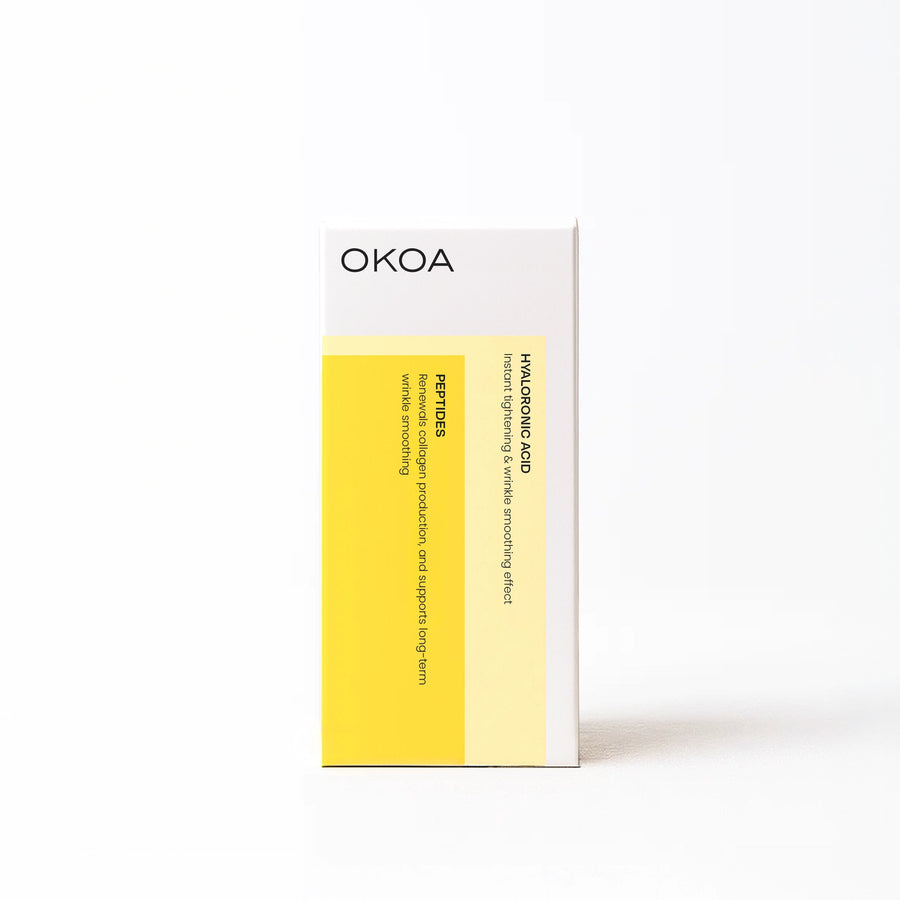
Okoaskin Dual Action Lifting Cream
The at-home tier, accurately placed
Powered by IDEALIFT (acetyl dipeptide-1 cetyl ester) peptide: an immediate smoother look plus firming that builds. In IDEALIFT-maker Sederma's two-month, placebo-controlled study, 80% of participants reported firmer-looking skin and jowl sagging measured 11% less.
Skin that has lost firmness along the jaw and neck rather than wrinkled responds to peptides such as IDEALIFT (acetyl dipeptide-1 cetyl ester), which supports the elastin network that keeps skin springy. The Okoaskin Dual Action Lifting Cream is $44.88 on subscription ($61.90 one-time) with a 90-day money-back guarantee.
FAQ
What is the best non surgical facelift for jowls?
There is no single best option for everyone. If jowls are caused mainly by volume loss, filler may help by restoring support higher in the face. If mild looseness is the issue, ultrasound, radiofrequency, or RF microneedling may help. Threads may offer temporary improvement in selected cases. Heavy jowls usually respond less well to non surgical treatment.
How long do non surgical facelift results last?
It depends on the treatment. Neuromodulators usually last a few months. Fillers may last several months to over a year. Threads are typically shorter-term. Energy-based treatments build gradually and often need maintenance. Most non surgical approaches are not one-time fixes.
What is the best non surgical face lift laser treatment?
The best laser depends on your main goal. If your concern is texture, fine lines, pigment, or sun damage, laser resurfacing may be helpful. If your goal is true lifting, lasers are often less effective than people expect. In that case, ultrasound or radiofrequency may be more relevant.
Does non surgical face lift threading really work?
It can work for modest, temporary improvement in mild sagging or early jowls. It does not create the same result as surgery. The best candidates are people with early changes and realistic expectations about subtle lift and limited longevity.
Can you get a facelift without surgery at home?
You can support firmer, healthier-looking skin at home with sunscreen, a peptide lifting cream, retinoids, consistent skincare, and healthy habits. Some at-home devices may offer mild short-term improvement. For deeper sagging, pair that routine with an in-office treatment.
Are non surgical facelift options worth it compared with surgery?
They can be, if your aging changes are early to moderate and you want less downtime, lower upfront cost, and subtler improvement. They are usually less worth it if you want major lifting or have advanced sagging. In that case, surgery may be the more realistic fit for your goal.
What is the Okoaskin Dual Action Lifting Cream and what is in it?
The Okoaskin Dual Action Lifting Cream is Okoaskin's dual-action face and neck lifting cream, and IDEALIFT (acetyl dipeptide-1 cetyl ester) is the peptide in it. 80% of participants reported firmer-looking skin in a two-month, placebo-controlled study at IDEALIFT-maker Sederma, where jowl sagging also measured 11% less. The Okoaskin Dual Action Lifting Cream is $44.88 on subscription and $61.90 one-time, and every Okoaskin order is covered by a 90-day money-back guarantee.
 Okoaskin Dual Action Lifting Cream · IDEALIFT
$44.88 $61.90
Shop now
Okoaskin Dual Action Lifting Cream · IDEALIFT
$44.88 $61.90
Shop now
Read more
Learn what treatments like injectables, lasers, and thread lifts can actually achieve. Inside, you'll discover how to match specific procedures to your unique aging concerns, how to spot misleading...
Preview The Peptide Firming Step Okoaskin Dual Action Lifting Cream Firmer-looking skin after 40 The peptide route: smoothing now, firming that builds. IDEALIFT (acetyl d...