


Last updated October 25, 2026
What changed
- Updated every price and ingredient list against the brand sites.
- Added new product photos and a quick comparison table.
- Updated the ingredient guide and the study details for the Okoaskin Dual Action Lifting Cream.
- Reviewed with our R&D cosmetic chemist for accuracy.
The best skin firming cream pairs something that works fast, such as hydrators or film-formers that smooth the surface the day you apply them, with something that works slowly, such as peptides or a retinoid that support firmer-looking skin over 8 to 12 weeks. Pick by where you are losing firmness: face, neck or body. No cream tightens real sagging or excess skin.
We compared seven firming creams, from a $25 multi-peptide cream to a $185 clinical formula, with every price and ingredient checked on the brand's own site on October 21, 2026.
Can a cream really firm loose skin?
Yes, within limits. A good firming cream can make skin look smoother, tighter and more even, and with steady use it can improve the look of crepey texture and mild loss of firmness. It cannot lift sagging jowls, remove loose skin after weight loss or replace an in-office treatment.
Most visible results come from two effects working together:
What to look for in a skin firming cream
Peptides
Peptides are short chains of amino acids that act as signals in the skin. In clinical studies of topical peptides, some improved the look of firmness and fine lines over two to three months. They are usually well tolerated, which makes them a good daily firming step.
Retinoids
Retinol and other retinoids have the strongest evidence for wrinkles and texture, and they support collagen over months. They can irritate, so they suit a night routine that starts two or three nights a week.
Hydration and nourishing oils
Crepey skin often looks worse when it is dry. Hydrators such as hyaluronic acid, soothing aloe vera, nourishing oils and barrier-support ingredients help skin look smoother right away and make a firming routine easier to stick with. In practice, skin tightening creams work on two timelines: a tightening base makes skin look smoother on application, and peptides support firmer-looking skin over the following weeks.
Antioxidants and daily sunscreen
Antioxidants such as green tea extract or vitamin C help protect skin from daily environmental stress, and sunscreen protects the collagen you are trying to keep. A firming routine without SPF works against itself. A skin firming cream helps skin feel smoother, better supported and less slack at the surface, and the answer to do firming creams work is yes within limits: they improve hydration, texture and the look of mildly loose or crepey skin.
7 skin firming creams at a glance
The seven picks below, sorted by what each does best. Prices are the brands' own list prices, checked October 21, 2026. In firming vs lifting cream, the difference mostly comes down to timeline: firming builds with consistent use, while a lifting cream also gives a tighter, smoother look on application.
The best skin firming creams reviewed

Naturium Multi-Peptide Rich Cream
$25 / 50 ml · palmitoyl pentapeptide-4, copper tripeptide-1, encapsulated ferulic acid
A rich, fragrance-free cream with two well-known peptides and ferulic acid, at a price that makes daily use easy. It suits dry or normal skin that wants a first peptide step without spending much.
- Two peptides at a low price
- Fragrance-free
- Rich texture may feel heavy on oily skin

Okoaskin Dual Action Lifting Cream
$61.90 / 30 ml · $44.88 on subscription · $34.97 a month on the 2-month plan
Our face and neck cream works on both timelines. Silicate film-formers smooth the surface on contact, and IDEALIFT (acetyl dipeptide-1 cetyl ester), a peptide from Sederma (Croda Beauty), works on firmness over weeks, with hyaluronic acid, aloe vera, green tea, and jojoba and calendula oils. In Sederma's own two-month, placebo-controlled study of the peptide, over 80% of participants reported firmer-looking skin. That study is reported in Sederma's IDEALIFT technical bulletin, and the ingredient is listed on Croda Beauty's IDEALIFT page. It contains fragrance, so patch test first if your skin is reactive.
- Instant smoothing and peptide firming in one step
- Made for face and neck
- 90-day money-back guarantee
Shop now90-day money-back guarantee

StriVectin TL Advanced Tightening Neck Cream PLUS
$99 / 1.7 oz · Alpha-3 peptide, Gravitite-CF lifting complex, NIA-114
A neck-focused cream with StriVectin's peptide and niacin complexes, aimed at crepey texture and horizontal neck lines. It contains fragrance.
- Made for neck and décolleté
- Peptides plus niacin complex
- Contains fragrance

Medik8 Advanced Night Ceramide
$78 / 48 g · multi-ceramide complex, N-acetyl glucosamine
Sold in the UK as Advanced Night Restore, this rich night cream focuses on the skin barrier with a ceramide complex. It suits dry, mature skin that needs comfort alongside a separate firming active. It is scented with essential oils.
- Barrier-focused night cream
- Pairs well with a retinoid routine
- Scented with essential oils

Paula's Choice RESIST Skin Restoring Moisturizer SPF 50
$39 / 60 ml · SPF 50 chemical filters, niacinamide, licorice root extract
A morning moisturizer with SPF 50, niacinamide and licorice extract. It does not firm on its own, but daily sun protection is what keeps a firming routine working. It is fragrance-free.
- SPF 50 in the moisturizer step
- Fragrance-free
- Morning only

CeraVe Skin Renewing Night Cream
$21.99 / 48 g · biomimetic peptides, ceramides, niacinamide, hyaluronic acid
A budget night cream that combines peptides with CeraVe's ceramides, niacinamide and hyaluronic acid. It is fragrance-free and a sensible first step for dry skin on a budget.
- Peptides plus ceramides under $25
- Fragrance-free
- Lighter firming effect than premium picks

SkinCeuticals A.G.E. Interrupter Advanced
$185 / 48 ml · 18% Proxylane, 4.25% wild fruit flavonoids, 1% niacinamide
A rich cream with high, published active percentages for mature skin with visible loss of firmness. It is the most expensive pick. SkinCeuticals does not list the full ingredients on its product page, so check the carton if you avoid fragrance.
- Published active percentages
- Rich texture for mature skin
- Highest price on the list
How to choose a firming cream for your face and neck or body
Face over 50
Choose a rich, comfortable cream you can use twice a day, with a peptide for firmness and a hydrator for the quick smoothing effect. Add a retinoid at night if your skin tolerates it, such as the Okoaskin Retinol Firming Serum, which pairs retinol with bakuchiol in a squalane-rich base.
Neck
Neck skin is thinner and more reactive than facial skin. A cream made for face and neck, or a dedicated neck cream, used morning and night with sunscreen during the day, is the simplest routine.
Body and tummy
Body skin needs larger amounts of a spreadable lotion, and results are slower. The best body firming creams pair a firming active such as retinol or peptides with enough moisture to smooth crepey texture on arms, stomach and thighs.
How to use a firming cream for the best results
- Patch test on your inner arm or jawline for three to five days.
- Apply to clean skin, morning and night, after any serum.
- Take the cream down the neck in upward strokes.
- Finish with SPF 30 or higher in the morning.
- Give it 8 to 12 weeks before you judge it, and take a photo on day one.
When to consider treatment beyond a cream
If your skin folds or hangs, or the jawline has lost its shape, a cream will not change that. Radiofrequency, ultrasound, laser or surgery work at a deeper level, and a dermatologist can tell you which suits your skin. A firming cream still has a place afterwards, to keep skin hydrated and looking firmer between treatments. The best lifting creams pair a film-former or hydrator for the instant effect with a peptide or retinoid for the slower one. For the face alone, the best face firming creams target crepey texture, loss of bounce and a softer jawline, and a face tightening cream can make skin look a little more taut right away.
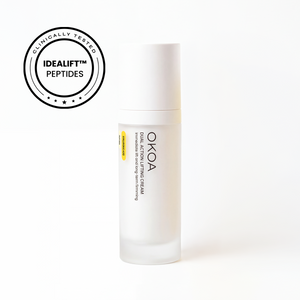 Dual Action Lifting Cream$61.90 or $44.88/moShop now
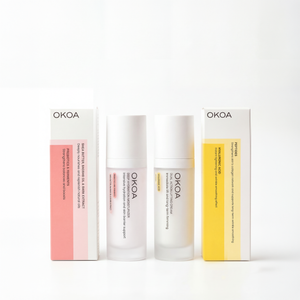 Hydrate & Lift set$81.90 for bothShop now
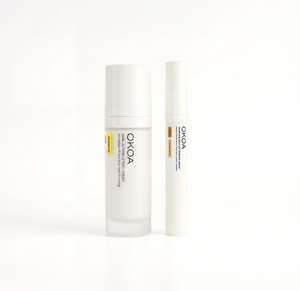 The Double Lift set$79.90 for bothShop now
Frequently asked questions
Do skin firming creams actually work?
Yes, within limits. They can make skin look smoother and firmer and improve crepey texture with steady use. They cannot lift real sagging or remove excess skin. For body areas, we also compare belly firming creams, leg firming creams and anti-cellulite creams.
What ingredients should I look for in a skin firming cream?
Look for a peptide or a retinoid for firmness over weeks, a hydrator such as hyaluronic acid or a film-former for the quick smoothing effect, and aloe vera, nourishing oils and barrier-support ingredients for comfort. Use sunscreen every morning.
What is the best skin firming cream for face over 50?
A rich cream you can use twice a day, with a peptide for firmness and a hydrator for quick smoothing. The Okoaskin Dual Action Lifting Cream does both for face and neck; SkinCeuticals A.G.E. Interrupter Advanced is the premium pick for very dry, mature skin.
How long does a skin firming cream take to work?
The smoothing effect shows the day you apply it. Changes in firmness usually take 8 to 12 weeks of daily use.
Can I use a face firming cream on my neck?
Yes, if the product is made for face and neck. Neck skin is thinner, so patch test first and wear sunscreen on the neck during the day.
Is there a firming cream for tummy skin?
Body lotions with peptides or retinol can improve the look of crepey tummy skin, but they cannot remove loose skin after pregnancy or weight loss. For that area, a spreadable lotion made for arms, stomach and thighs is the better fit.