

Okoaskin Dual Action Lifting Cream
An immediate smoother look, firmness that builds
The dual-action peptide route: the firming step before any procedure. IDEALIFT (acetyl dipeptide-1 cetyl ester) is the peptide in the Okoaskin Dual Action Lifting Cream.
SHOP NOW

Last updated September 16, 2026
What changed
- Added the IDEALIFT (acetyl dipeptide-1 cetyl ester) study result on jowl sagging to the peptide section and FAQ.
- Updated how a lifting cream works on two timelines, from the first application to 8 to 12 weeks.
- Updated the guidance on pairing a lifting cream with in-office treatment for deeper sagging.
Lifting Cream - everything you wanted to know
What Is a Lifting Cream and Does It Actually Work?
Yes. A lifting cream works on two timelines: a tightening base smooths and firms the look of skin on application, and ingredients such as peptides support firmer-looking skin over the following weeks. Plenty of jars overpromise, which is why the formula matters more than the label.
 The Peptide Lifting Cream · Okoaskin
Okoaskin Dual Action Lifting Cream - the peptide lifting cream: smooths on contact, with firming support that builds over weeks. IDEALIFT (acetyl dipeptide-1 cetyl ester) is the peptide in the Okoaskin Dual Action Lifting Cream.
$44.88 Subscribe & Save
The Peptide Lifting Cream · Okoaskin
Okoaskin Dual Action Lifting Cream - the peptide lifting cream: smooths on contact, with firming support that builds over weeks. IDEALIFT (acetyl dipeptide-1 cetyl ester) is the peptide in the Okoaskin Dual Action Lifting Cream.
$44.88 Subscribe & Save In cosmetic terms, a lifting cream is usually a moisturizer or treatment cream designed to improve the appearance of firmness, smoothness, and skin bounce. A good one may also help skin look more rested, more hydrated, and slightly more taut at the surface. It is a cosmetic category, not a medical one.
It is also worth being clear that both lifting cream and skin lifting cream are broad marketing terms unless they are backed by specific ingredients and a plausible mechanism. The word on the label is not the proof. The ingredient list, formulation logic, and consistency of use matter far more.
What a lifting cream can improve
A well-formulated lifting cream can help with concerns that are cosmetic and relatively mild. That includes:
- mild skin laxity
- dehydration-related crepey texture
- visible surface smoothing on application
- improved radiance and softness
- skin that feels less bouncy than it used to
Some of these effects happen quickly. Hydration can make skin look smoother within days, sometimes even after the first few uses. Other changes, especially those linked to peptides or retinoids, take longer and depend on steady use over several weeks.
Where in-office treatment adds more
For significant sagging, excess skin or deeper structural change, in-office treatment works at a level a cream does not reach, and a lifting cream keeps skin looking smoother and firmer alongside it.
How a Lifting Cream Works: The Ingredients That Matter Most
If you are trying to find the best lifting and firming face cream, it helps to ignore price and branding for a moment. Results usually depend more on formulation and ingredient mix than on whether the jar looks luxurious or uses the word lifting prominently on the front.
The most useful way to think about a lifting cream is this: some ingredients create immediate cosmetic effects at the surface, while others may support slower cumulative improvements in skin texture and firmness over time.
Peptides for gradual firming support
Peptides are one of the more relevant ingredient groups in this category. They are often used because they may support collagen and elastin signaling in the skin, which can gradually improve the look of firmness and resilience with consistent use.
They are not fast in the way hydrating ingredients are. Most peptide-based results build over roughly 8 to 12 weeks. That slower timeline is exactly why many people stop too early. In a two-month placebo-controlled study by Sederma (Croda Beauty), 26 women using a 4% IDEALIFT (acetyl dipeptide-1 cetyl ester) cream measured 11% less jowl sagging, and over 80% reported firmer-looking skin.
Retinoids for lines and long-term skin quality
Retinoids, including retinol and related vitamin A derivatives, are among the more established topical options for fine lines, texture, and overall skin quality. They can improve the appearance of firmness over time, partly by supporting skin renewal and collagen-related processes.
The tradeoff is tolerability. Retinoids can irritate, especially if introduced too quickly or layered with too many other actives. If your skin is sensitive, dry, or already reactive, a retinoid-heavy cream may not be the best first step. Start lower, use it fewer nights per week, and give your skin time to adapt.
Hydration and barrier support: hyaluronic acid and nourishing lipids
Hydration is often underestimated in this category. If your skin looks tired, papery, or crepey, a formula with hyaluronic acid and nourishing lipids can make a visible difference fairly quickly.
That said, this is surface plumping rather than structural lifting. Hydrated skin reflects light better and appears smoother. Ceramides and lipids also support the skin barrier, which matters because dry, irritated skin tends to look older and less resilient. These ingredients are support pillars, not stand-alone lifting agents.
Antioxidants and supporting actives
Antioxidants, niacinamide, and well-chosen botanical ingredients can help skin look healthier, calmer, and more resilient. They support the overall environment in which firmer-looking skin is maintained, even if they are not the primary reason a product lifts or smooths.
Niacinamide is particularly useful because it supports barrier function and can improve the look of uneven tone. Antioxidants help defend against environmental stress that contributes to visible aging. Botanical ingredients can add soothing or nourishing value, but they should complement a formula, not carry the entire lifting claim on their own.
How to Choose the Best Lifting Cream for Your Skin and Age
The best lifting cream for face is not always the most expensive or the most heavily marketed. It is the one that fits your actual concern, your skin tolerance, your preferred texture, and the routine you are realistically going to maintain.
If you are comparing a lifting cream for face, or trying to narrow down the best lifting cream for over 50s, look past the front label and check for a clear active rationale. What ingredients are doing the work? Are they supported by barrier-friendly ingredients? Does the product make realistic claims, or only emotional ones?
For dry or crepey skin
Look for formulas that combine peptide support with hyaluronic acid and richer emollients. Dry or crepey skin often needs both water-binding hydration and a better lipid cushion. A cream that only targets firmness without addressing dehydration will usually underdeliver.
For sensitive skin
Sensitive skin often does better with barrier-supportive creams than with aggressive exfoliating acids or retinoid-heavy products. Patch test any new cream, especially one that contains fragrance. This is especially true if your skin already stings, flakes, or reacts easily. Comfort matters because the best formula is the one you can keep using consistently.
For skin over 50
Mature skin often deals with several things at once: reduced elasticity, more dryness, thinner-feeling skin, and slower recovery after irritation. That makes comfort plus consistency especially important. For many readers, the best lifting cream for over 50s is not the harshest one. It is the one that combines support for firmness with enough hydration and barrier care to stay usable every day.
How to spot a weak formula
Be cautious if a product relies on vague language like age-defying technology or instant facelift effect without explaining the actives behind it. Other warning signs include:
- unrealistic promises
- no clear ingredient rationale
- luxury positioning without formulation detail
- dramatic claims with no timeline or limitations
A strong product page should tell you what the formula is meant to do, how it aims to do it, and what kind of results are realistic.
How to Use a Lifting Cream for Better Results
Even a good formula can seem ineffective if it is used inconsistently or layered poorly. In most routines, a lifting cream works best as a steady, supportive product rather than a quick fix.
Consistency matters more than complexity. You do not need a ten-step routine. You need a formula that fits your skin, regular use, gentle cleansing, and daily SPF.
Morning vs. night use
Some lifting creams are better in the morning because they offer a smoother, more immediately polished finish under sunscreen or makeup. Others make more sense at night, especially if they include retinoid-type actives or have a richer texture.
Some people do best with separate day and night products. A lighter cream in the morning and a more reparative formula at night can be a practical split, particularly if your skin is dry or mature.
How to layer it with serums and sunscreen
Apply products from thinnest to thickest. In most routines, that means serum first, then cream, then sunscreen last in the morning. Do not mix sunscreen into your cream. Apply it as its own final step.
If you use active serums, keep the routine balanced. Too many strong layers can backfire and leave skin irritated, which tends to make firmness concerns look worse rather than better.
How long it takes to see results
Hydration-driven improvement can show up quickly. Skin may look smoother, less dull, and less crepey within days.
Peptides and retinoids take longer. A fair evaluation window is usually 8 to 12 weeks of consistent use. A formula with a tightening base also shows a visible effect on application.
Common mistakes that make lifting creams seem ineffective
Common reasons a lifting cream disappoints include:
- using it inconsistently
- expecting peptide firming overnight
- skipping SPF
- layering too many irritating actives
- choosing a formula that does not match your skin type
SPF deserves special mention. Sun exposure steadily breaks down collagen, so any routine aimed at firmness needs daily sunscreen support or the results will be harder to maintain.
Realistic Expectations: When a Lifting Cream Helps and When It Does Not
A lifting cream is most useful when the concern is mild to moderate at the surface.
Topical skincare improves skin quality and visible firmness, and for deeper structural change it pairs with in-office treatment.
Best-case use cases for a lifting cream
A lifting cream tends to be most helpful for:
- mild laxity
- early loss of bounce
- surface crepiness
- skin that looks dull, dry, or less resilient
- readers who want both hydration and cumulative support
In these situations, a good formula can make skin look smoother, fresher, and firmer over time.
When to take a different approach
If you are dealing with deeper sagging, jowling, excess skin, or more pronounced structural changes, add dermatology guidance or in-office options to the routine, and keep the cream for skin quality and the look of firmness.
How to judge whether your cream is working
Take photos in the same light on day one and every four weeks, and look for these signs over 8 to 12 weeks:
- does skin feel more supple?
- does the surface look smoother?
- are fine lines a little softer?
- does makeup sit better?
- does skin look less crepey or tired?
That is usually how a good lifting cream proves itself.
Which Lifting Cream Is Worth Considering?
Once the basics are clear, product choices become easier. The right recommendation depends on use case, not on declaring one cream the best for everyone.
A peptide-led option for readers who want immediate and longer-term benefits
If you want a lifting cream for face that aims to cover both immediate visible payoff and longer-term support, the Okoaskin Dual Action Lifting Cream is our pick for that use case.
The dual-action approach works on two clocks: an immediate visible smoothing effect at the surface, plus support for firmer-looking skin that builds over time through the IDEALIFT (acetyl dipeptide-1 cetyl ester) peptide. Hyaluronic acid, green tea antioxidant, aloe vera, and jojoba and calendula oils round out the formula.
That makes it a sensible fit for readers who want a cream that feels actively supportive now, while also leaning on peptide-led cumulative benefits over time.
Why the guarantee matters
Firming results take weeks of consistent use to judge, and the 90-day money-back guarantee covers the full two months the IDEALIFT study ran, with time left over to decide.
If you are interested in the formula's immediate visible smoothing and longer-term peptide positioning, the guarantee gives you room to test it without the usual all-or-nothing commitment. Current pricing is listed at $61.90 for a one-month supply, or $44.88 per month on subscription, with a 28% savings.
Buy if this sounds like your use case
Buy if you want:
- immediate visible smoothing plus longer-term peptide support
- a formula that also includes barrier-supportive and soothing ingredients
- a lower-risk trial through a 90-day guarantee
Consider other options if you:
- specifically want a retinoid-led formula
- know your skin responds better to very simple, minimal-ingredient creams
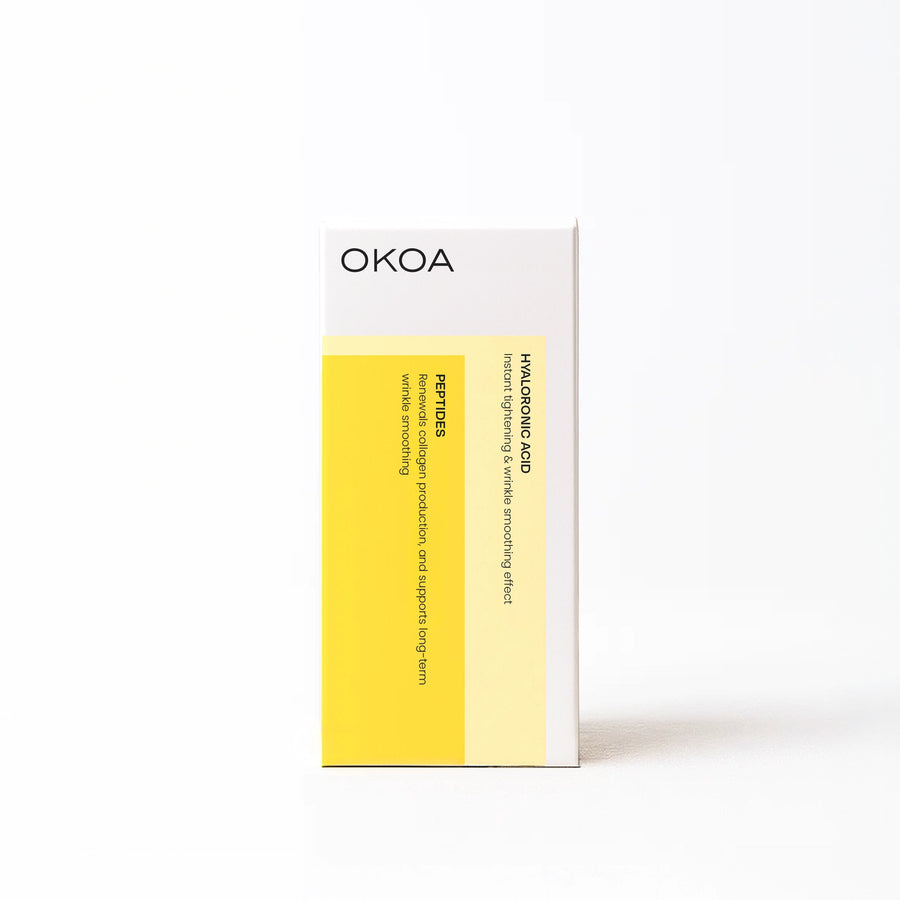
Okoaskin Dual Action Lifting Cream
The firming step before you consider a procedure
Powered by IDEALIFT peptide: an immediate smoother look plus firming that builds. In IDEALIFT-maker Sederma's two-month, placebo-controlled study, 80% of participants reported firmer-looking skin and jowl sagging measured 11% less.
Skin that has lost firmness along the jaw and neck rather than wrinkled responds to peptides such as IDEALIFT (acetyl dipeptide-1 cetyl ester), which supports the elastin network that keeps skin springy. The Okoaskin Dual Action Lifting Cream is $44.88 on subscription ($61.90 one-time) with a 90-day money-back guarantee.
FAQ
Do lifting creams actually work?
Yes. A good lifting cream improves the appearance of firmness, smoothness, hydration, and radiance, and one with a tightening base shows a visible effect on application. For major structural sagging, pair it with in-office treatment.
What is the best lifting cream for face if I have mature skin?
For mature skin, look for a formula that balances firmness support with hydration and barrier care. Peptides, hyaluronic acid, and nourishing lipids are often a strong combination because mature skin usually needs comfort and consistency as much as active support.
How long does a lifting cream take to show results?
Hydration benefits may show up within days. More cumulative improvements from peptides or retinoids usually take around 8 to 12 weeks of regular use.
Can a lifting cream help with sagging skin or jowls?
Yes, for mild to moderate laxity. A lifting cream with a peptide such as IDEALIFT (acetyl dipeptide-1 cetyl ester) supports a firmer look along the jawline: in its two-month study, jowl sagging measured 11% less. For deeper jowls, pair it with in-office care.
What ingredients should I look for in a skin lifting cream?
Look for peptides, retinoids if your skin tolerates them, hydrating ingredients like hyaluronic acid, barrier-supportive ingredients such as nourishing oils, and supportive antioxidants or niacinamide. The best formulas combine immediate surface support with longer-term skin quality ingredients.
Can I use a lifting cream every day?
Usually, yes. Most lifting creams are designed for daily use. If the formula includes stronger actives such as retinoids, start more slowly and follow the product instructions. If you are pregnant, nursing, or managing a diagnosed skin condition, check with your dermatologist before introducing stronger actives.
What is the Okoaskin Dual Action Lifting Cream and what is in it?
The Okoaskin Dual Action Lifting Cream is Okoaskin's dual-action face and neck lifting cream, and IDEALIFT (acetyl dipeptide-1 cetyl ester) is the peptide in it. 80% of participants reported firmer-looking skin in a two-month, placebo-controlled study at IDEALIFT-maker Sederma, where jowl sagging also measured 11% less. The Okoaskin Dual Action Lifting Cream is $44.88 on subscription and $61.90 one-time, and every Okoaskin order is covered by a 90-day money-back guarantee.
 Okoaskin Dual Action Lifting Cream · IDEALIFT
$44.88 $61.90
Shop now
Okoaskin Dual Action Lifting Cream · IDEALIFT
$44.88 $61.90
Shop now
Read more
Best Immediate Lift + Long-Term Firming A visible lift in minutes, firmer skin over time The dual-action lifting cream pick: instant surface tightening plus peptide-driven ...

Preview The Dual-Action Answer Okoaskin Dual Action Lifting Cream Why choose between firming and lifting? One peptide formula: visible smoothing now, firming that builds....