


Last updated October 25, 2026
What changed
- Updated the opening to answer what helps loose skin by severity.
- Updated the treatment section with a clearer severity guide.
- Reviewed with our R&D cosmetic chemist for accuracy.
Loose skin after weight loss depends on how much weight you lost, how fast, your age and how long the skin was stretched. Mild laxity can improve over several months as you build muscle and keep skin hydrated. Moderate loose skin may respond to radiofrequency, ultrasound or microneedling, and large folds of excess skin usually need surgery. Creams improve texture and the look of firmness, but they cannot remove excess skin. The best body firming creams pair a firming active such as retinol or peptides with enough moisture to smooth crepey texture.
What causes loose skin after weight loss?
Loose skin after weight loss happens because skin stretched to fit a larger body and does not always shrink back once the weight comes off. The bigger and faster the loss, the more skin tends to be left over. It is not a failure on your part, and much of it is out of your control.
Six things decide how noticeable it gets:
- age
- genetics
- how long the skin stayed stretched
- how much weight was lost
- how quickly the weight came off
- cumulative sun exposure, which contributes to collagen decline over time
Younger skin bounces back better. Skin that stayed stretched for years has a harder time.
Why skin does not always tighten on its own
Skin gets its structure from two proteins: collagen, which holds it up, and elastin, which lets it stretch and recoil.
Keep skin stretched for long enough and both can become less able to snap back fully. Age and sun exposure make it worse, because both wear down collagen over time. So loose skin can stay put even after your weight has been stable and healthy for a while.
Where loose skin tends to show up most
Loose skin shows up most often here:
- abdomen
- upper arms
- thighs
- chest
- buttocks
- lower face, including the jawline and cheeks
The face is the one that surprises people. Some of what looks like loose skin on the face is laxity. A lot of it is lost volume, mostly in the cheeks.
Will loose skin after weight loss go away?
Mild loose skin after weight loss often improves on its own over several months, especially if you lost the weight gradually and it has stayed off. Large amounts of excess skin rarely go away without a procedure.
Skin keeps adjusting for months after the scale stops moving, so give it time before you judge. The rebound has a limit, though, and the limit depends on which of these you are dealing with:
How to tell whether you have mild laxity or excess skin
Mild laxity looks like softer definition and a little less firmness, with no real folds.
Excess skin is easy to spot. It hangs, folds over itself or moves when you move. The folds can trap sweat and create friction, which raises the risk of irritation.
A mirror is usually enough to tell which one you have, and the answer decides how much any treatment can do for you.
What skincare and lifestyle changes can improve
Skincare and healthy habits improve skin quality. They help with:
- texture
- dehydration
- crepiness
- the appearance of mild firmness loss
They will not remove skin that hangs. A good cream can leave skin smoother, better hydrated and firmer-looking, but it will not flatten folds on your stomach or tighten your upper arms after a big weight loss.
How to tighten skin after weight loss naturally
You can tighten skin after weight loss naturally with four habits: keep your weight stable, lift weights, recover well and use skincare that supports firmness. That plan improves skin quality and body shape. It will not do much for large amounts of excess skin, but it is worth doing either way.
Build muscle to improve the look of loose areas
Building muscle will not remove loose skin, but it fills out the shape underneath. Arms, legs and glutes look less deflated with more muscle under the skin.
Resistance training matters after weight loss because the shape under your skin has changed. Adding muscle changes how the skin sits over it, even when the skin itself stays the same.
Support skin with protein and hydration plus good recovery
Protein, water, sleep and not smoking all show up in your skin. Enough protein helps your body maintain tissue, water keeps skin comfortable, sleep helps it recover, and smoking is associated with collagen breakdown and poorer skin quality.
None of these will tighten excess skin by themselves. They look after the skin you have and help you keep your results.
Use skincare for crepey texture and mild laxity
Skincare after weight loss works on how skin looks and feels, not on lifting. These ingredients have the best evidence:
Used daily, they can help with mild crepiness and early laxity. On the stomach or upper arms after a large weight loss, expect much less.
Non-surgical vs surgical treatment for loose skin after weight loss
Loose skin after weight loss treatment falls into two groups. In-office procedures help mild to moderate laxity by prompting new collagen. Surgery removes significant excess skin. Choose by how much loose skin you have, not by which sounds easier.
Non-surgical treatments for mild to moderate laxity
The common in-office options for skin tightening are:
- Radiofrequency: uses heat to support collagen remodeling
- Ultrasound-based treatments: target deeper tissue layers to support tightening
- Laser treatments: vary by type, but some can help improve texture and mild laxity
- Microneedling with RF: combines controlled injury with heat-based energy to support collagen activity
They suit mild to moderate looseness, not large folds. You may need several sessions, and the change is subtler than surgery.
When surgery is the better option
Surgery is the better option if you have skin that hangs, folds that stay, or skin that rubs and hurts. The usual procedures are:
- tummy tuck
- arm lift
- thigh lift
- a lower body lift
Each one cuts away the extra skin. You pay for that with downtime, cost and scars. For large amounts of extra skin, though, surgery is often the only thing that fixes the problem.
How to decide which option fits your situation
Match the option to what you see in the mirror:
Then weigh up:
- whether your weight has stabilized
- how much downtime you can tolerate
- your budget
- whether you are comfortable trading laxity for scars
Get your weight stable before you book any procedure.
What to expect by body area including the face
Loose skin after weight loss behaves differently on the face than on the stomach, and the arms and thighs are different again. That is why one-size advice rarely works.
Loose skin on the face after weight loss
On the face, loose skin and lost volume are easy to mix up. After fast weight loss, including on GLP-1 medications, cheeks can look flatter and the jawline softer. The skin is not always the main problem. The cause can be:
- less facial fat
- reduced support in the midface
- mild skin laxity
- a mix of these
That is why "Ozempic face" is a misleading name. The change is often more deflation than loose skin.
Skincare can help mild crepiness on the face, and devices can help a little with mild laxity. Deeper sagging or hollowing usually needs a procedure.
Abdomen and arms plus thighs
The abdomen, upper arms and thighs are less forgiving, because skin there usually stretched further and for longer. Once there are folds, creams will not make a big difference, though they still help comfort and texture.
For visible tightening in these areas, look at procedural treatment.
For arms, stomach and thighs, the best skin firming creams pair hydrators or film-formers that smooth the surface the day you apply them with peptides or a retinoid that work over 8 to 12 weeks. The Okoaskin Lifting Cream is made for the face and neck.
How to approach the next step without wasting money
The costly mistake is paying for a fix that does not match how much loose skin you have. Mild crepiness needs a good skincare routine and time. Moderate laxity is worth a conversation about in-office treatment. Significant excess skin needs surgery, and no cream will change that.
Get your weight stable first, then pick the category that fits your goal:
- skincare for texture and mild firmness support
- in-office treatment for mild to moderate laxity
- surgery for significant excess skin
A simple buy-if or consider-if-not framework
Buy a topical if: your goal is smoother texture, better hydration, and a firmer look on the face and neck. The Okoaskin Dual Action Lifting Cream does both jobs: silicate film-formers give an immediate, temporary smoother look, and IDEALIFT (acetyl dipeptide-1 cetyl ester), a peptide from Sederma (Croda Beauty), works over weeks. In Sederma's own two-month, placebo-controlled study of the peptide, over 80% of participants reported firmer-looking skin. That study is reported in Sederma's IDEALIFT technical bulletin, and the ingredient is listed on Croda Beauty's IDEALIFT page. It contains fragrance, so patch test first if your skin is reactive.
Consider procedures if not: your goal is visible tightening of moderate to severe loose skin, or removal of skin that hangs, folds, or causes discomfort.
Knowing which group you are in saves more money than switching from product to product.
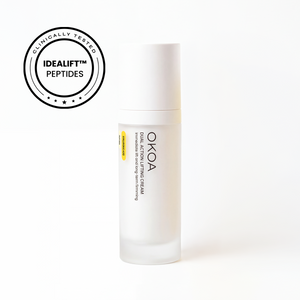 Dual Action Lifting Cream$61.90 or $44.88/moShop now
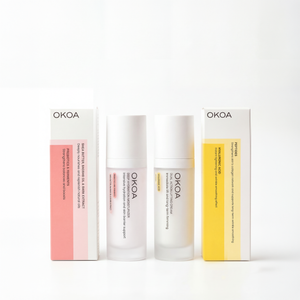 Hydrate & Lift set$81.90 for bothShop now
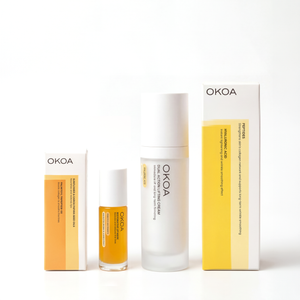 Lift & Restore set$81.90 for bothShop now
Frequently asked questions
Can loose skin after weight loss tighten naturally?
Yes, if it is mild. Mild loose skin often improves over several months, especially after gradual weight loss and once your weight has stabilized. Significant excess skin usually does not tighten on its own.
How long does it take for loose skin after weight loss to improve?
Expect several months. Skin keeps remodeling slowly after your weight stabilizes, and mild laxity can look better with time, muscle-building and supportive skincare. Larger amounts of excess skin are unlikely to change much without treatment.
What is the best loose skin after weight loss treatment?
The best treatment depends on how much loose skin you have. For mild crepiness or early laxity, skincare and healthy habits help. For mild to moderate laxity, in-office treatments like radiofrequency or microneedling with RF are worth discussing. For significant excess skin, surgery is usually the most effective option.
Will I have loose skin after losing 50 or 100 pounds?
Not necessarily. The odds go up with the amount of weight lost, how long the skin was stretched, age, genetics and how quickly the weight came off. Someone losing 100 pounds is usually at higher risk than someone losing 20, but people vary a lot.
Can exercise get rid of loose skin after weight loss?
No. Exercise cannot remove excess skin, but it can improve muscle tone and body contour, which makes looseness less noticeable in some areas. With true excess skin, that improves the look without fixing the cause.
What helps with loose skin after weight loss on the face?
First work out whether the change is mostly loose skin, lost volume or both. For mild surface changes, skincare helps with hydration, texture and firmness. For visible sagging or hollowing, in-office treatments do more than creams alone.
Read more
Learn what jawline tightening really means—and why results depend on the cause. Mild softness can improve with skincare, hydration, and collagen-supporting routines. Deeper jowls, volume l...
Learn what treatments like injectables, lasers, and thread lifts can actually achieve. Inside, you'll discover how to match specific procedures to your unique aging concerns, how to spot misleading...