


Last updated September 16, 2026
What changed
- Added a step-by-step routine for tightening the jawline at home.
- Added the human study on IDEALIFT (acetyl dipeptide-1 cetyl ester) and jowl sagging.
- Added a plan for choosing between at-home care and in-office treatment by starting point.
- Reviewed in-office jawline treatments and where each one fits.
Jawline Tightening
Jawline tightening usually refers to improving the look of early softness along the lower face. That can include mild skin laxity, early jowling, less definition at the mandibular line, and skin that no longer looks as firm as it once did.
Several different issues can create a similar look. Loose skin, volume loss, under-chin fullness and deeper structural aging can all blur the jawline, and each one responds to a different solution.
If your concern is mild, non-surgical jawline tightening, starting with a daily cream for neck and jawline may help. More advanced jowling, significant skin laxity or fullness beneath the chin call for a plan that adds in-office treatment, covered below.
Quick answer: For early softness along the jawline, wear SPF down onto the neck, apply a peptide firming cream after moisturizer morning and night, and add a retinoid a few nights a week. Expect a tighter look within minutes and firmer-looking skin after about two months of consistent use.
Why Does the Jawline Change With Age?
The jawline changes with age because skin, fat and deeper support all shift at the same time. Collagen and elastin decline over time, which can make skin feel thinner, less springy, and slower to bounce back. Sun exposure accelerates that process by contributing to collagen breakdown.
Fat distribution also shifts with age. Some areas lose support, while others collect fullness. That is part of why the lower face can look heavier even when weight has not changed much.
Repetitive facial movement and posture may contribute to creasing and softening, but they are usually not the main cause. Deeper structural support matters too: as skin, fat, connective tissue and facial support change together, the jawline gradually loses definition.
Jawline Tightening vs Double Chin vs Jowls
Jawline tightening, double chin treatment and jowl treatment are related, but they target different things:
- Skin tightening aims to improve mild laxity and surface-level firmness.
- Double chin treatment focuses on submental fullness, which is more about fat distribution than skin quality.
- Jowls involve a mix of laxity, volume shift and structural descent. Our guide on how to tighten sagging jowls covers them in detail.
Can Jawline Tightening Happen Without Surgery?
Yes, for mild to moderate concerns. The result depends on what is causing the loss of definition. If the main issue is early skin laxity or crepey texture, consistent skincare and non-surgical treatments can improve how the jawline looks.
Improvement comes on two timelines. Short-term, a firming cream with a tightening base and good hydration make skin look firmer and more refined within minutes to days. Longer-term improvement comes from ingredients such as peptides and retinoids, or from in-office treatments that work deeper, and it builds over weeks to months.
What Skincare Can Do for the Jawline
Topical skincare can improve the appearance of firmness, texture, crepey skin and early laxity along the jawline. For early jawline softness, those changes add up, which is why the at-home routine below is the starting point for most people.
How to Tighten Your Jawline at Home
To tighten your jawline at home, follow four steps every day, in this order:
- Moisturize. Start with a barrier moisturizer over the face, jawline and neck. Well-hydrated skin looks smoother and less crepey.
- Apply a peptide firming cream. Morning and night, after moisturizer, smooth it up along the jawline and over the front and sides of the neck. This step tightens the look of the skin on application and supports firmness over the following weeks.
- Finish with SPF 30 or higher in the morning. UV exposure is one of the most consistent drivers of visible collagen loss, and many people stop sunscreen at the jaw instead of bringing it down the neck.
- Add a retinoid at night. Retinoids are associated with collagen-related activity over time and help with texture and fine lines. Start with two nights a week, on clean skin before your moisturizer.
Give the routine eight weeks before you judge it, and take a photo in the same light on day one. The change is far easier to see side by side than in the mirror.
Which Ingredients Firm the Jawline?
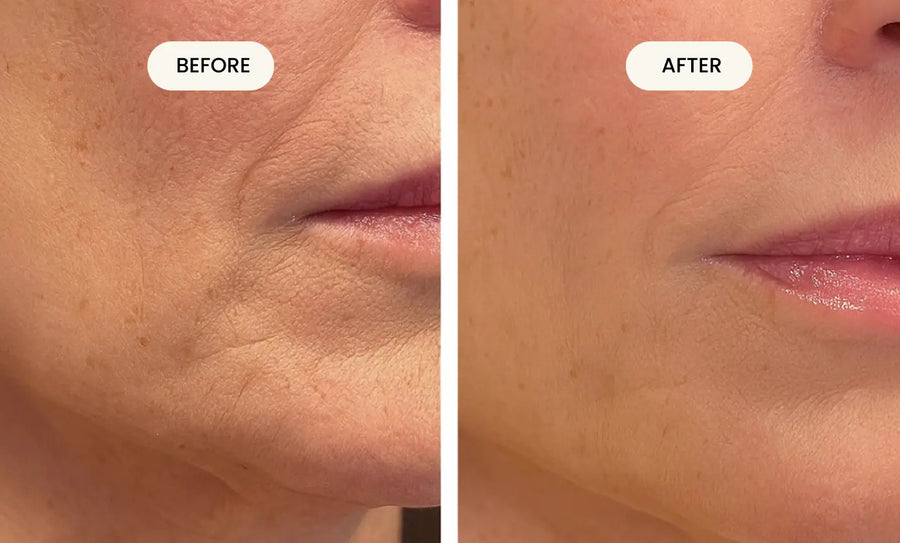
Peptides are the ingredient class aimed at a softening jawline, and the human evidence for them sits right on this part of the face. In a two-month study by Sederma (Croda Beauty), 26 women with visible sagging of the jowls used a 4% IDEALIFT (acetyl dipeptide-1 cetyl ester) cream twice a day and measured 11% less jowl sagging, a result that was statistically significant against placebo.
Over 80% of the participants in that study reported firmer-looking skin. IDEALIFT is the peptide inside the Okoaskin Dual Action Lifting Cream, alongside sodium hyaluronate, glycerin, aloe vera and green tea extract.
The rest of a jawline routine covers three supporting jobs:
- Retinoids for texture, fine lines and collagen-related support, introduced slowly.
- Humectants such as hyaluronic acid and glycerin, which make skin look smoother within days.
- Antioxidants such as green tea extract, which help against daily oxidative stress alongside sunscreen.
For more on how peptides work across the face and neck, see our guide to peptides for skin tightening.

The peptide step for a softening jawline
Tightens the look of the jawline within minutes. IDEALIFT™ reduced jowl sagging by 11% in a two-month study. Backed by a 90-day money-back guarantee.
Shop the Lifting CreamIn-Office Jawline Tightening Treatments
In-office treatments tighten the jawline by working deeper than skincare, and each one fits a different cause.
Radiofrequency treatments are generally used for mild to moderate skin laxity. They aim to support tightening by heating tissue in a controlled way.
Ultrasound-based tightening is also used for laxity and deeper support. It is often considered when the goal is to target tissue beneath the surface without surgery.
RF microneedling combines controlled injury with radiofrequency energy. It may suit people dealing with mild laxity plus textural concerns.
Fillers are different. They do not tighten skin directly. They restore structural support and can sometimes improve jawline definition when volume loss is part of the problem.
Neuromodulators may help in select cases, depending on muscle pull patterns and lower-face balance, but they are not a general jawline tightening solution.
Fat-reduction options for submental fullness are best when the issue is a double chin rather than loose skin. That includes injectable fat-dissolving approaches or device-based options, depending on candidacy.
These treatments are not interchangeable. The best one depends on whether the main problem is skin laxity, jowls, lost support, or fullness under the chin. A daily firming cream works alongside any of them, before treatment and to keep the skin looking smooth afterwards. Our guide to radiofrequency skin tightening covers its benefits, risks and results.
Do Jawline Exercises Actually Work?
Jawline exercises can strengthen certain facial and neck muscles and improve posture awareness, but the evidence for meaningful skin tightening from jawline exercise is limited. Many online claims blur muscle engagement with skin lifting, and the two are not the same thing.
Be especially cautious with chewing devices or aggressive jawline exercise tools. They may strain the jaw joint, aggravate tension, or cause discomfort without improving sagging skin.
Where exercise does help is posture. If forward-head posture is part of the picture, better posture awareness can sharpen how the lower face and neck hold themselves, which is a big part of the appeal for men looking to improve their jawline. For loose skin itself, a firming routine does more.
How to Choose a Jawline Tightening Plan
The right jawline tightening plan depends on your starting point:
- Early softness, mostly surface-level: start at home with daily SPF, a peptide firming cream and consistency. This is where at-home care does its best work.
- Mild jowling or volume loss: keep the at-home routine and add a professional assessment, since volume loss changes what the jawline needs.
- Under-chin fullness: look at fat-reduction options, since the issue is fat rather than skin.
- Advanced jowling or structural sagging: book a consultation with a qualified dermatologist or facial aesthetics provider, and keep the daily firming cream for the look of the skin itself.
Men looking to improve their jawline often fall into the same categories. Some want a sharper contour and focus on submental fat reduction or structural definition rather than surface texture.
Start with the at-home step
Apply after moisturizer, morning and night, along the jawline and neck. Subscribe for $44.88 a month, or buy once for $61.90.
See Price & Subscription OptionsFAQ: Jawline Tightening
Does jawline tightening really work?
Yes, when the approach matches the cause. For early softness, skincare improves the appearance of firmness and texture, and a firming cream with a tightening base shows a difference on application. In-office treatments go further for deeper laxity. Our guide to loose face skin explains how laxity, volume loss and under-chin fullness differ.
Can skincare tighten the jawline and reduce jowls?
Skincare improves the appearance of early laxity and makes the jawline look smoother and firmer over time. Peptides have jowl-specific data: in a two-month study, 26 women using a 4% IDEALIFT (acetyl dipeptide-1 cetyl ester) cream measured 11% less jowl sagging. For moderate to severe jowls, pair the cream with in-office treatment.
Do jawline exercises or a jawline exercise tool make a difference?
Sometimes a small one. Exercises can help posture awareness or subtle muscle tone, but evidence for real skin tightening is limited, and tools that rely on intense chewing or strain are more likely to irritate the jaw than tighten skin.
What is the best non-surgical treatment for jawline tightening?
It depends on the cause. Radiofrequency, ultrasound-based treatments and RF microneedling suit laxity, fillers suit volume loss, and fat-reduction approaches suit under-chin fullness. For early softness, a daily peptide firming cream is the place to start.
How long does jawline tightening take to show results?
A firming cream with a tightening base shows a tighter look within minutes, and hydration improves texture within days. Peptides and retinoids need about 8 to 12 weeks of consistent use, and the IDEALIFT study measured its result at two months. In-office treatments take several weeks to months, depending on the method.
Can you improve a sagging jawline naturally?
Yes, for mild sagging. Consistent sunscreen, a peptide firming cream, good barrier care and attention to posture improve the appearance of a mildly sagging jawline over time.
What is the best product for sagging jowls?
The best product for sagging jowls combines a tightening base for a same-day effect with a peptide backed by human data on jowls. The Okoaskin Dual Action Lifting Cream pairs both, with IDEALIFT (acetyl dipeptide-1 cetyl ester), tested by Sederma in a two-month placebo-controlled study on women with visible jowl sagging and a mean age of 62.
How can I lift my jawline without surgery?
Lift the look of your jawline without surgery by combining daily SPF, a peptide firming cream applied along the jawline and neck morning and night, and a retinoid a few nights a week. For deeper laxity, add ultrasound or radiofrequency treatment on top of the routine.
Read more
Preview ✓ Expert Reviewed Written ByAshley MangtaniContent Writer Reviewed ByLindi GraceR&D Cosmetic Chemist Last updated September 16, 2026 What changed ...
Learn what actually helps loose skin after weight loss, and what won’t. Mild laxity can improve with time, skincare, muscle-building, and consistent habits. Significant excess skin usually...