


Last updated October 25, 2026
What changed
- Added the IDEALIFT study result on jowl sagging to the evidence and the FAQ.
- Updated the 12-week routine so the firming cream follows moisturizer, morning and night.
- Updated the guidance on when to add in-office treatment to an at-home routine.
How to tighten sagging jowls
If you are searching for how to tighten sagging jowls, you are probably looking for two things at once: a straight answer and a plan you can actually follow.
Jowls can look firmer and more defined with the right at-home routine. Mild jawline softening, crepey skin, and early loss of firmness often respond to consistent skincare, including a lifting and firming cream, alongside supportive habits. More advanced jowling, where deeper tissue has descended or skin excess is significant, calls for adding in-office treatment to that routine.
💡 Sagging jowls along the lower cheeks and jawline can look firmer and more defined with at-home care: daily sunscreen, a retinoid if you tolerate it, and a peptide cream such as one built on IDEALIFT (acetyl dipeptide-1 cetyl ester) for the look of firmer skin over 8 to 12 weeks. Once the jawline is heavy with descended fat or excess skin, ultrasound, radiofrequency, or a lower facelift are the routes that change the structure.
The right approach depends on what is causing the change, so start there.
What causes sagging jowls in the first place?
Jowls are the softened or drooping areas that develop along the lower cheeks and jawline, usually near the corners of the mouth and along the mandibular border. They tend to make the jawline look less sharp and more weighted.
This happens because the lower face changes with age in more than one way at once. Skin can become less firm. Fat pads can shift downward. Bone support can slowly change. Ligaments that once held facial structures more tightly in place can loosen over time.
That mix matters. Sagging jowls are not caused by one single problem, so no single cream, exercise, or treatment works for everyone.
The main drivers behind jowls
Jowls form at every depth of the face at once, from the surface down to the bone.
In other words, jowls are part skin issue and part structural issue. The degree of each varies from person to person, which is also why loose skin on the face behaves differently in two people of the same age.
Why can jowls seem to appear suddenly?
Many people feel as though jowls appeared overnight. Usually the underlying change has been gradual, but a few short-term factors can make it look more obvious:
So if your lower face looks noticeably worse on some days than others, that does not necessarily mean the structure changed all at once. Often the baseline issue is real, but temporary factors are amplifying it.
How much can skincare actually tighten sagging jowls?
Here is the most useful way to answer the question directly: skincare may improve the look of mild sagging jowls by supporting hydration, texture, and firmer-looking skin over time. It cannot lift deeper structural jowling caused by descended fat, loosened support structures, or significant excess skin. Beyond the jawline, mild loose skin and crepey texture can improve with consistent skincare and habits, which is where how to tighten loose skin starts.
That distinction matters, because "sagging jowls" describes very different situations.
If you are dealing with early softness at the jawline, a less crisp profile, mild crepiness, or skin that feels thinner than it used to, topical care may help. If you are seeing heavier tissue descent, marked skin overhang, or pronounced lower-face sagging, pair a face tightening cream with in-office treatment for a more visible change.
Searches like "how to get rid of jowls in 1 week" are understandable. A firming cream with a tightening base can make the jawline look smoother the same day, while firmer-looking skin builds over 8 to 12 weeks.
What skincare may improve
Well-formulated topical skincare can support six visible things:
- firmer-looking skin
- better hydration and surface plumping
- smoother texture
- a softer appearance of fine lines
- a more refined jawline appearance in mild cases
- improved skin quality on the lower face and neck
These changes are cosmetic, but they are not trivial. Better skin quality can make early jowling look less pronounced, especially while laxity is still mild.
What needs more than skincare
Deeper changes, such as descended fat pads, loosened support structures or significant excess skin, are the job of in-office treatment or surgery. A firming routine still keeps the skin itself looking smoother and firmer alongside them.
How long do results usually take?
The timeline depends on which kind of improvement you are looking for:
So yes, some changes can look better quickly. Meaningful improvement in the look of firmness is gradual.
What is the best at-home treatment for sagging jowls without surgery?
The best at-home treatment for sagging jowls without surgery is not one miracle product. It is a consistent routine built around sun protection, ingredients with a reasonable cosmetic rationale, and habits that help preserve skin quality over time.
That is less exciting than viral shortcuts, and usually more effective.
Use daily sunscreen on the full lower face and neck
If you want to tighten sagging jowls as far as home care allows, daily sunscreen is not optional. UV exposure accelerates collagen breakdown, contributes to uneven texture and pigment, and undermines the results of every other product you use.
Most people apply sunscreen well enough on the cheeks and forehead, then taper off around the jawline and neck. That is exactly where many visible aging changes develop.
Apply sunscreen across the full face, under the jaw, and down the neck. Reapply during prolonged sun exposure.
Prioritize the categories with a real rationale
A strong home routine for a softening jawline usually draws on four categories.
Retinoids
Retinoids are among the best-studied topical ingredients for visible aging. They support skin renewal and can improve the appearance of fine lines, texture, and firmness over time. They are not an overnight fix, and they can irritate skin if introduced too quickly. If you want the detail, see retinol for skin firming.
Peptides
For a sagging jawline, peptides such as IDEALIFT (acetyl dipeptide-1 cetyl ester) are the category aimed specifically at the look of lost firmness, and they work alongside a retinoid without adding flaking. In a two-month placebo-controlled study, 26 women using a 4% IDEALIFT cream measured 11% less jowl sagging. More on how the category works in peptides for skin tightening.
Vitamin C and other antioxidants
Antioxidants help defend against oxidative stress from UV and pollution. Vitamin C is especially useful in a morning routine, because it supports brighter, more even-looking skin and complements sunscreen.
Hyaluronic acid and humectants
These ingredients pull water into the upper layers of skin, making it look plumper and less crepey. The effect is real, but hydration-driven rather than structural.
Barrier-supporting ingredients
Barrier support matters more than many people realize. A compromised barrier makes skin look rougher, drier, and older. Aloe vera, nourishing oils, and barrier-support ingredients help reduce water loss and support resilience across the lower face and neck.
Supportive habits that matter more than they seem
Skincare works better when the basics are not working against it. A few habits make a visible difference over time:
- Keep weight relatively stable where possible, since repeated fluctuations can worsen laxity
- Do not smoke, since smoking accelerates visible aging
- Eat enough protein, which matters for overall tissue health
- Prioritize sleep, because chronic sleep disruption worsens inflammation and skin recovery
- Watch posture and screen habits, especially if you spend hours with your head angled downward
- Extend skincare below the jawline, rather than treating the face and neck as separate zones
None of these are glamorous. All of them are useful.
Do facial exercises and massage help jowls? What about tapes and at-home devices?
These approaches attract attention because they feel active and immediate. The reality is more mixed.
- Facial massage may temporarily reduce puffiness and improve circulation
- Tapes may create short-lived visual tightening for an event, but they do not create lasting structural change
- Facial exercises have limited evidence for meaningful jowl lifting, and overuse may even deepen expression patterns in some people
- At-home devices such as microcurrent or radiofrequency tools may offer modest benefits for some users, but results are usually subtle and depend heavily on consistency, device quality, and starting severity
A balanced view is best here. Some people enjoy these tools and see mild contouring or depuffing benefits. Just do not mistake modest support for a true lift.
Which ingredients are worth looking for in a jowl-firming product?
When evaluating products for sagging jowls, look at mechanism first. Ignore vague language like "sculpting", "age-defying", or "instant contouring" unless the formula actually contains ingredients that justify the claim.
It also helps to separate ingredients that improve hydration and skin texture from those intended for longer-term firmness support. Both matter, and they do different jobs.
One misconception to drop: topical collagen does not replace lost collagen in the skin. Collagen molecules in a cream mainly function as surface moisturizers. That is not useless, but it is not the same as rebuilding structural support. The longer version is in collagen cream vs peptides.
Retinoids and peptides for longer-term support
If your goal is firmer-looking skin over time, these are the two categories worth focusing on.
Retinoids support collagen renewal and skin turnover. They are especially helpful for fine lines, rough texture, and early laxity. Results take time, and tolerance matters.
Peptides may improve the appearance of firmness with consistent use. They pair well with retinoids, covering firmness while the retinoid works on lines and texture. IDEALIFT (acetyl dipeptide-1 cetyl ester), the lipopeptide from Sederma (Croda Beauty), is the example most often used for a softening jawline and lower face, and how it works is covered in what is Idealift.
For many people this is the most realistic long-term topical pairing: one category for stronger remodeling support, one for ongoing firming support.
Hydrators and barrier support for crepey texture
If the lower face looks papery, dull, or more lined when dry, hydrating and barrier-focused ingredients improve the look of it quickly.
Look for:
- hyaluronic acid
- aloe vera
- nourishing oils and emollients
- barrier-support ingredients
These can improve the look of dehydration-linked slackness, soften roughness, and make early jowls appear less noticeable. They do not create true lifting, but they usually improve how the area presents.
Antioxidants for prevention and skin quality
Antioxidants like vitamin C are better understood as prevention-focused support than as tightening ingredients.
They help defend skin from environmental stress and support brighter, healthier-looking skin over time. Prevention and maintenance are part of any realistic anti-aging strategy, particularly once early jowling begins.
How do you choose a cream or serum for sagging jowls?
A product is worth trying when its ingredient profile matches your use case, its texture is one you will actually use consistently, and the risk feels reasonable for the price.
That is a more useful test than asking whether it is expensive, trendy, or heavily advertised.
What to look for on the label
For a jowl-focused cream or serum, look for:
- peptides
- antioxidants
- aloe vera
- nourishing oils
- hydrating support
- a formula you can comfortably use on the lower face and neck
Also think about tolerance. A product you use regularly will outperform a stronger one that sits unused because it stings, pills, or feels too heavy. And check the fragrance line if your skin reacts easily, because fragrance is a common cause of cosmetic contact dermatitis.
When Okoa may be worth considering
Okoa's Dual Action Lifting Cream is worth considering for mild jawline laxity, crepey texture, or early softening along the lower face and neck. It is used on the face and on the neck, not one or the other.
Where it suits this use case is the dual approach behind the name. The formula is built around IDEALIFT (acetyl dipeptide-1 cetyl ester), a lipopeptide from Sederma (Croda Beauty), and pairs it with silicates in the base that give immediate visible smoothing at the surface, while the peptide is the part intended to support firmer-looking skin over weeks. Alongside those sit hyaluronic acid and sodium hyaluronate, green tea extract, aloe vera, and jojoba and calendula oils.
On evidence: in Sederma's two-month, single-blind placebo-controlled study of 26 women with an average age of 62, 80% of participants reported firmer-looking skin and around 70% said their face looked less saggy and more lifted, while net elasticity (the cutometer measure R25) improved 14%, and jowl sagging measured 11% less, a result that was statistically significant against placebo. That study is reported in Sederma's IDEALIFT technical bulletin, and the ingredient is listed on Croda Beauty's IDEALIFT page.
The formula contains fragrance, so patch test on the side of the neck first if your skin reacts easily.
Why the 90-day guarantee matters
Firming results take weeks of consistent use to judge, which is why the 90-day money-back guarantee matters. It covers the full two months the IDEALIFT study ran, with time left over to decide.
Buy if this sounds like you
Consider Okoa's Dual Action Lifting Cream if:
- you have mild sagging or early jawline softening
- your skin also feels crepey, dry, or less resilient
- you want a topical-first approach before considering a procedure
- you prefer a formula that combines immediate visible smoothing at the surface with peptide support for firmer-looking skin over time
- you value a 90-day guarantee when starting a new routine
Add in-office treatment to the routine if:
- your main concern is heavier structural jowling
- you have pronounced tissue descent
When is at-home treatment not enough for jowls?
At-home care reaches its limit when jowls are driven more by structural descent than by skin quality alone.
If your jawline has become noticeably heavier, the tissue along the lower face has shifted downward, or excess skin is a major part of the picture, professional treatment usually makes more sense.
Non-surgical options for mild to moderate jowls
A dermatologist or facial plastic surgeon may consider several categories, depending on the main driver:
- Ultrasound-based tightening for skin laxity support
- Radiofrequency or RF microneedling to target skin quality and collagen stimulation
- Fillers in selected cases, to restore structure or improve the jawline transition
- Neuromodulators in selected cases where muscle pull contributes to lower-face imbalance
- Combination approaches, which are common because jowls are usually multifactorial
The key is matching the tool to the problem. Laxity, volume loss, and fat fullness do not respond to the same treatment in the same way. A wider comparison of the routes sits in non-surgical facelift options.
When surgery becomes the more realistic option
For significant skin excess, deeper tissue descent, or advanced jowls, surgery is often the option that produces the most meaningful correction.
That typically means a consultation about a facelift, lower facelift, or neck lift, depending on anatomy and goals. This is not because skincare failed. It is because the problem sits at a deeper structural level than topical products or many non-surgical treatments can reach.
What results and downtime typically look like
Thinking in trade-offs is more useful than thinking in miracles. Skincare is the lowest-disruption route, with a visible change on application that builds over weeks, non-surgical treatments sit in the middle and usually need maintenance, and surgery carries the most recovery and the most correction.
If you are uncertain where you fall, a good consultation should tell you whether your main issue is skin laxity, volume change, fat descent, or skin excess.
What are the most common myths about sagging jowls?
A lot of search traffic around jowls is driven by misleading promises. Most are built on urgency, dramatic before-and-after photos, or the suggestion that one trick can reverse complex structural aging.
It usually cannot.
Myths to ignore
"You can get rid of jowls in 1 week."
No. You may reduce puffiness or improve hydration quickly, but meaningful tightening takes time and depends on severity.
"Facial exercises will lift jowls significantly."
Evidence is limited. Some people enjoy them, but they are not a reliable standalone strategy for visible jowl correction.
"Collagen creams replace lost collagen."
They do not. They may moisturize the surface, but they do not replace structural collagen in the skin.
"The most expensive cream works best."
Often untrue. Ingredient profile, formulation quality, consistency, and fit matter more than price alone.
A 12-week at-home routine for early jowls
If you are dealing with early jowls and want a practical place to start, this is a reasonable 12-week routine.
Morning
- Gentle cleanser
- Vitamin C or another antioxidant serum
- Moisturizer
- Lifting and firming cream on the full face, jawline, and neck
- Broad-spectrum sunscreen on the full face and neck
Evening
- Gentle cleanser
- Retinoid 2 to 3 nights per week to start, increasing gradually as tolerated
- Moisturizer, then your lifting and firming cream on the face, jawline, and neck, every night
- If skin feels dry or crepey, a hydrating layer with humectants and nourishing oils
A few rules matter:
- patch test new products first
- add one new active at a time
- do not expect day-to-day changes
- continue below the jawline rather than stopping at the face
If you are pregnant, nursing, or under the care of a dermatologist for a skin condition, check before introducing stronger active ingredients such as retinoids.
How to judge progress without misleading before and after photos
If you want to know whether your routine is helping, track progress under the same conditions:
- same lighting
- same angle
- same time of day
- every 4 weeks, not every day
Daily checking distorts perception. True change from skincare is measured over weeks, not days.
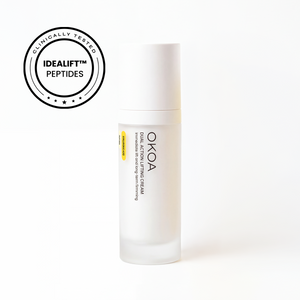 Dual Action Lifting Cream$61.90 or $44.88/moShop now
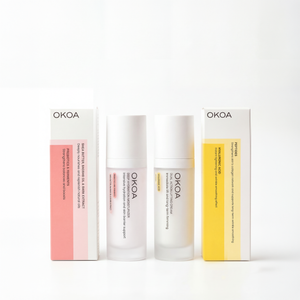 Hydrate & Lift set$81.90 for bothShop now
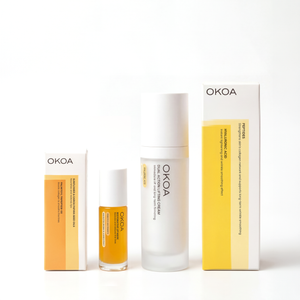 Lift & Restore set$81.90 for bothShop now
FAQ
Can you really tighten sagging jowls without surgery?
Yes, for mild to moderate jowls. At-home skincare improves the appearance of sagging jowls by supporting hydration, texture, and firmer-looking skin over time, and in-office treatment adds more for deeper, structural jowls.
How long does it take to see improvement in sagging jowls?
Hydration-related improvement may show within days to a couple of weeks. Firmer-looking skin from peptides or retinoids usually takes 8 to 12 weeks or longer of consistent use. A firming cream with a tightening base also makes the jawline look smoother from the first application.
What is the best at home treatment for sagging jowls without surgery?
The best at-home approach is a consistent routine rather than a single product. Daily sunscreen, a retinoid if tolerated, peptide support, antioxidants, hydration, and barrier care carry the strongest cosmetic rationale. If your concern is mild jawline softening and crepey skin, a peptide cream such as Okoa's Dual Action Lifting Cream is built for that part of the routine.
Do facial exercises get rid of jowls?
Facial exercises have limited evidence for lifting jowls, and repeated strong contraction may deepen expression lines in some people. They can feel worthwhile as a habit, but they are not a reliable way to correct a sagging jawline on their own.
Which peptide is used for a sagging jawline?
IDEALIFT (acetyl dipeptide-1 cetyl ester) is the lipopeptide from Sederma (Croda Beauty) used in firming creams aimed at a sagging jawline and lower face. In Sederma's two-month, single-blind placebo-controlled study of 26 women, 80% of participants reported firmer-looking skin, net elasticity (the cutometer measure R25) improved 14%, and jowl sagging measured 11% less.
At what age do jowls usually start?
Jowls most often become noticeable from the 40s onward, as collagen and elastin decline and facial fat begins to shift downward. Genetics, sun exposure, smoking, and repeated weight fluctuation can make them appear earlier or progress faster.
Read more
Learn the benefits of vitamin C for skin, from brightening to antioxidant support, plus how to use it, choose the right formula, and avoid irritation.
Crepey skin under eyes can come from collagen loss, dryness and sun damage. Learn what causes it, what actually helps, and the best treatment options