


Last updated October 4, 2026
What changed
- Added a way to tell crepey texture apart from hollows, puffiness and dark circles before you buy anything.
- Added the 28-day study results behind the Okoaskin Comprehensive Caffeine Eye Cream.
- Added what to expect week by week over the first 8 to 12 weeks.
- Reviewed the professional treatment options and when each one is the better route.
Crepey skin under the eyes looks thin, crinkled and papery, and it shows up first in the one place where the skin has the least to spare. The area is thinner than the rest of the face and has fewer oil glands, so dehydration and collagen loss become visible there years before they show on the cheeks. Concealer catching in fine lines is usually the moment people notice.
Good news first: surface texture is the part of under-eye aging that responds best to what you put on your skin. Hydration changes how the area looks within days, and the ingredients that support firmness keep working for as long as you use them. This guide covers what causes the texture, what a cream can change, and where a procedure does more.
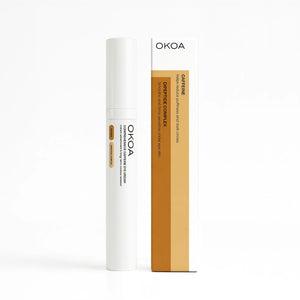 Caffeine Eye Cream$44.90Shop now
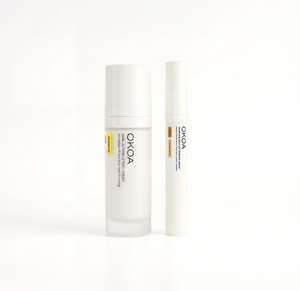 The Double Lift set$79.90 for bothShop now
 Deep Hydration Moisturizer$29.90 or $24.91/moShop now
What crepey skin under eyes actually is
Crepey under-eye skin is a texture change. The surface looks finely lined and papery rather than deeply creased, and it usually looks worst when the area is dry or when overhead light rakes across it. In cosmetic terms that puts it in the same family as crepey skin anywhere else on the body, such as a crepey neck, with one difference: the skin here is among the thinnest on the body, so the same amount of collagen loss shows more.
Before you buy anything, work out which under-eye problem you actually have. Most people have two at once, and they do not respond to the same thing.
Crepey under eyes vs wrinkles, hollows and puffiness
- Crepey skin looks thin, lightly crinkled and dry-textured
- Dynamic lines deepen when you smile or squint, driven by repeated muscle movement
- Hollows create a sunken look and cast shadows, from volume loss
- Puffiness looks swollen or raised, often from fluid or prominent fat pads
- Dark circles come from pigment, visible blood vessels, shadowing or bone structure
Dryness and surface texture are the two a cream can change. Hollowness and pronounced fat-pad puffiness sit deeper, and those are a conversation with a practitioner.
What causes crepey skin under eyes to develop
Four things do most of the damage: collagen and elastin decline with age, cumulative UV exposure breaks down the skin's structural support, dehydration makes every fine line easier to see, and the barrier gets less resilient over time. Constant movement adds to it, since the area folds thousands of times a day.
Habits matter more here than anywhere else on the face. Smoking speeds up visible aging. Dry indoor air pulls water out of skin that has little to give. Skipping sunscreen around the orbital bone leaves the UV damage running. Rubbing the area, tugging at makeup and cleansing hard all add friction to skin about as thick as a sheet of paper.
If the change is one-sided, sudden in a way you cannot explain, or paired with irritation that will not settle, get it looked at rather than treating it as ordinary aging.
Why it can seem to appear suddenly
Under-eye crepiness often looks like it arrived overnight. What usually happened is that the area hit a tipping point. Thinning had been building for years, and then a week of bad sleep, a cold snap, an illness, weight loss or one active ingredient too many made it visible all at once.
Common triggers that make crepey texture look worse
- dehydration
- over-exfoliation
- retinoids applied too close to the lash line
- powder-heavy or drying makeup
- skipping daily SPF around the orbital area
- rubbing hard when removing eye makeup
- barrier disruption from too many actives at once
Every item on that list is something you control, which is why removing the trigger is often the fastest visible improvement anyone gets.
Do treatments for crepey skin under eyes work?
Yes. Crepey skin under eyes responds to treatment, and the right treatment depends on the cause. Dryness and early thinning are what topicals handle well: hydration plumps the surface within days, and peptides support firmer-looking skin over weeks. Deeper volume loss and advanced sun damage are what in-office treatments handle better, at a different cost and with downtime.
Two timelines run at once, and it helps to keep them apart. Hydration changes how the area looks almost immediately, and that change lasts as long as the routine does. Firmness support builds slowly and needs 8 to 12 weeks before it is fair to judge.
People often ask how to tighten under eye skin permanently. Nothing cosmetic is permanent, including procedures, which is why this is a routine rather than a one-time fix. A peptide eye cream keeps supporting the look of firmness for as long as you keep using it.
What skincare improves
- dehydration-driven crinkling
- mild to moderate crepey texture
- early fine lines
- barrier weakness that makes the area look dull or fragile
- the appearance of mild laxity, with consistent use
Where a procedure does more
An in-office treatment is the better route when the main issue is lost volume rather than texture, when there is genuine excess eyelid skin, or when sun damage goes deeper than the surface. Fillers address hollowness, resurfacing addresses photodamage, and blepharoplasty addresses excess skin. A cream keeps working on texture and hydration alongside any of them.
The best at-home approach for crepey under eyes
Simple routines win here. Careful cleansing, daily sunscreen, steady moisturizing and two or three well-chosen actives beat a crowded shelf, because irritation makes crepey texture look worse before anything gets a chance to help.
These are the ingredient categories that matter for this concern:
- humectants to draw in water and plump surface texture
- caffeine to constrict blood vessels temporarily, which reduces the look of morning puffiness and shadowing
- emollients such as squalane to soften the papery look and support the barrier
- peptides for gradual support of firmer-looking skin
- antioxidants to help defend against environmental stress
- retinoids, introduced slowly and only if tolerated, for longer-term collagen support
A caffeine eye cream covers most of that list in one step, which is the practical reason it is the usual starting point for this concern rather than adding four separate products around the eye.
Ingredients worth looking for
Hyaluronic acid and other humectants improve the look of papery, dehydrated texture quickly by holding water at the surface.
Squalane and similar emollients reduce water loss and take the tight, flaky edge off the area, which matters when skin feels reactive.
Peptides are the long game. They signal skin to support collagen and elastic tissue instead of speeding up cell turnover, so they suit routines aimed at mild laxity and texture.
Caffeine works on the same morning that you apply it. It narrows blood vessels temporarily, so the area looks less puffy and less shadowed. Our breakdown of what caffeine eye cream does covers how long that effect lasts.
Stronger actives, especially retinoids and exfoliating acids, go on slowly near the eyes. More is not better in this area.
How to apply products without making texture worse
- use a small amount and press it in, rather than massaging hard
- keep strong retinoids away from the lash line unless the formula is made for it
- avoid layering several actives on the same spot
- take makeup off with as little friction as you can manage
- use sunscreen around the orbital bone every day
Where the Okoaskin eye cream fits
The Comprehensive Caffeine Eye Cream is built for exactly this pattern: texture and puffiness in the under-eye area. Caffeine handles the immediate de-puffed look, while Bioskinup Contour 3R, a clinically tested complex of Pfaffia, Marapuama and White Lilly, works on firmness and the look of eyelid bags over time. Squalane keeps the area comfortable, which is what makes daily use realistic.
What the study measured. In a 28-day study, volunteers applied a 5% Bioskinup Contour 3R formula twice daily to the area around the eyes. 92% reported an improvement in skin firmness, 81% noticed a significant improvement in dark circle color intensity, 71% confirmed visible reduction in periorbital wrinkles, and 67% saw measurable reduction in eyelid bags. Okoaskin backs it with a 90-day money-back guarantee, which is three times the length of that study.
If your firmness concern runs past the eye area to the cheeks, jawline or neck, the lifting cream category is the one built for that, and the Okoaskin Dual Action Lifting Cream is our formula for it. Use it on the face and neck and keep the eye cream for the orbital area, since the two are formulated for different skin.
When professional treatment makes more sense
Crepey texture that comes with deep hollows, true eyelid laxity or excess skin needs more than a routine. Office-based options work at different depths:
- Laser resurfacing for surface texture, fine lines and photodamage
- Microneedling or RF microneedling for collagen remodeling in selected patients
- Injectables for shadowing caused by volume loss, with careful assessment around the eye
- Blepharoplasty for true excess skin or more advanced structural change
These are not interchangeable. Dryness, crinkling, pigment and volume loss each answer to something different.
When to see a dermatologist or oculoplastic specialist
- persistent irritation around the eyes
- sudden asymmetry
- pronounced hollowness
- eyelid laxity or apparent excess skin
- a change that worsened sharply without an obvious reason
- interest in lasers, fillers, RF microneedling or blepharoplasty
If you are pregnant, nursing or managing a diagnosed skin condition, check with your dermatologist before adding stronger actives near the eye area.
Caffeine Eye Cream$44.90Shop now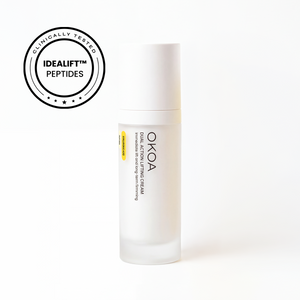 Dual Action Lifting Cream$61.90 or $44.88/moShop nowThe Double Lift set$79.90 for bothShop now
A realistic plan for smoother-looking under eyes
Start by naming the main issue. Dehydration and fine texture point to a routine. Volume loss, pronounced puffiness or pigment point somewhere else. From there the plan is short:
- protect the area with sunscreen daily
- rebuild hydration and barrier comfort first
- cut the friction and the irritants
- add firmness-supporting actives once the area is calm
- reassess after 8 to 12 weeks, not after a few days
What to expect over the first 8 to 12 weeks
Hydration and barrier repair show up first. Skin looks less papery, makeup sits better, and dehydration lines soften within days to a couple of weeks.
Firmness follows a slower curve. Peptides and cautious retinoid use need steady application, and the 28-day study behind Bioskinup Contour 3R is a reasonable marker for when the firmness change becomes noticeable. Individual results vary.
Our comparison of 11 caffeine eye creams is the place to go if you want to see how the options differ before choosing one.
Medical disclaimer. This article is for general information and is not medical advice. Cosmetic products improve the appearance of skin. For any eye or eyelid symptom, sudden change, or before starting a procedure, speak to a dermatologist, ophthalmologist or oculoplastic surgeon.
FAQ
What causes crepey skin under eyes?
Crepey skin under the eyes comes from a mix of age-related collagen decline, cumulative UV exposure, dehydration, constant movement and a weakening barrier. The area is naturally thin with few oil glands, so dryness and thinning show there earlier than on the rest of the face.
Can crepey skin under eyes be reversed?
The look of it can improve a lot. Sunscreen, hydration, barrier support and firmness-supporting actives all change how the area reads, and in the 28-day study behind Bioskinup Contour 3R, 71% of volunteers confirmed visible reduction in periorbital wrinkles. What a cream does not do is recreate lost fat under the eye, so hollowness needs a different route.
What is the best treatment for crepey skin under eyes?
For dryness and early texture change, the combination that works is daily sunscreen, humectants, an emollient such as squalane, and peptides for firmness. A caffeine eye cream covers most of that in one step. For deeper volume loss or significant sun damage, lasers, microneedling, injectables or surgery do more.
How long does it take to see a difference?
Hydration shows within days, and the de-puffing effect of caffeine shows the morning you apply it. Firmness takes longer: give any routine 8 to 12 weeks of daily use before you judge it, and in the 28-day Bioskinup Contour 3R study 92% of volunteers reported an improvement in skin firmness.
Does caffeine help crepey under eyes?
Caffeine works on the puffiness and shadowing that make crepey texture more obvious, by temporarily narrowing blood vessels in the area. It is not the ingredient that supports firmness over time, which is why a formula pairing caffeine with peptides and an emollient suits this concern better than caffeine alone.
Can I use a retinol eye cream on crepey under eyes?
You can, if your skin tolerates it. Retinoids support collagen over months, and they also cause flaking and irritation in this area more than anywhere else, which makes crepey texture look worse in the meantime. Start twice a week, keep it off the lash line, and use a peptide formula instead if irritation keeps coming back.
How do you tighten under eye skin permanently?
Nothing cosmetic is permanent, including procedures, which all need maintenance. Treat this as a routine: sunscreen, hydration and a peptide eye cream keep supporting the look of firmness for as long as you use them. Surgery is the only route that removes excess eyelid skin outright.
Why did my under-eye area get crepey so suddenly?
It rarely forms overnight. Thinning builds quietly, and then dehydration, poor sleep, illness, weight loss, dry air or one active too many pushes it over the line where you notice it. That also means backing off the irritants often brings a visible improvement within a week or two.
Should I use an eye cream or a face cream around my eyes?
Use a product formulated for the orbital area on the orbital area. Eye formulas are built for thinner, more reactive skin and for use close to the lash line. A face or neck firming cream is the right tool from the cheekbones outward, so plenty of people use both: an eye cream around the eyes, a lifting cream on the face and neck.
Read more
Learn how to tighten sagging jowls with realistic at-home strategies, skincare, and non-surgical options, plus when procedures make more sense.
Tech neck wrinkles form from repeated neck folding, collagen loss and sun exposure. Learn how to reduce neck lines at home and which treatments work best.