


Last updated September 16, 2026
What changed
- Added a step-by-step routine for tightening neck skin at home, from moisturizer to SPF.
- Added the human study behind IDEALIFT (acetyl dipeptide-1 cetyl ester) and what it measured on sagging.
- Added a guide to telling crepey neck skin, sagging and turkey neck apart.
- Reviewed in-office neck tightening options and where each one fits.
How to Tighten Neck Skin
Yes, you can tighten the look of neck skin at home. Mild looseness, crepey texture and fine lines respond to a consistent routine, and the right routine, built around a peptide neck firming cream, may improve the appearance of neck skin over time.
Neck skin shows age early because it is thinner than facial skin, bends all day and gets far less sunscreen. The same things make daily care on the neck worth doing. Of the four steps below, the firming cream is the one that works on two timelines: it tightens the look of the skin within minutes and supports firmer-looking skin over about two months.
Quick answer: Wear SPF on your neck every day, apply a peptide firming cream after moisturizer morning and night, and add a retinoid a few nights a week for lines. Expect a tighter look within minutes and firmer-looking skin after about two months of consistent use.
Why Does Neck Skin Get Loose?
Neck skin gets loose because collagen and elastin decline with age, and the neck shows that loss sooner than most of the face. Ultraviolet light breaks down that support year after year, and most people stop their sunscreen at the jawline. Neck skin is also thinner than facial skin, has fewer oil glands, and folds every time you look down at a phone.
The change rarely happens suddenly. It becomes noticeable suddenly, usually when a photo, a haircut or weight loss shows the neck from an angle you never see in the mirror.
Why Loose Neck Skin Is Common at 40
Loose neck skin at 40 is common, even for people with a careful facial routine. By the early 40s, years of gradual collagen loss and unprotected sun exposure start to show as fine horizontal lines and a softer line under the jaw. The face often looks younger than the neck at this age for a plain reason: the face got the moisturizer and the SPF.
How Weight Loss Changes the Neck
Weight loss can make neck skin look looser because the volume underneath shrinks faster than the skin adapts. It is common after rapid weight loss, including on GLP-1 medications. In many cases the skin did not suddenly lose its firmness. The fullness that kept it smooth is simply gone, and mild looseness after weight loss responds to the same routine as age-related laxity.
Crepey Neck, Sagging or Turkey Neck: Which One Do You Have?
Crepey neck skin, sagging and turkey neck are three different problems, and knowing which one you are looking at tells you what will help:
- Crepey neck skin looks thin and finely crinkled, like crepe paper, and gets worse with dehydration and sun damage. It responds best to skincare: hydration smooths it within days, and firming ingredients improve it over weeks.
- Mild sagging shows as a softer line under the jaw and skin that folds when you tilt your head down. A firming cream with a tightening base improves how it looks on application, and daily use supports a firmer look over time.
- Turkey neck is looseness that gathers under the chin and down the front of the neck. Early turkey neck behaves like mild sagging. Advanced turkey neck, with hanging skin or strong vertical bands, is structural, and in-office treatment is the right tool for it.
How to Tighten Neck Skin at Home
To tighten neck skin at home, follow four steps every day, in this order:
- Moisturize. Start with a barrier moisturizer on the front and sides of the neck. Thin neck skin dries out faster than the face, and dry skin creases more.
- Apply a peptide firming cream. Morning and night, after moisturizer, smooth it over the front and sides of the neck and up along the jawline. This is the step that tightens the look of the skin on application and supports firmness over the following weeks.
- Finish with SPF 30 or higher in the morning. Take it down the neck and onto the chest. Daily sunscreen slows the collagen breakdown that loosens neck skin in the first place.
- Add a retinoid at night for lines. Start with two nights a week and apply it on clean skin before your moisturizer.
Skip harsh scrubs on the neck. Irritated skin looks older, not tighter.
What Ingredients Firm Neck Skin?
A neck firming cream should cover four jobs, and each one has a clear ingredient type:
- Peptides for the look of lost firmness over weeks.
- Humectants such as hyaluronic acid and glycerin, which hold water in thin, crepey skin.
- Antioxidants such as green tea extract for daytime protection.
- A tightening base that firms the surface on application, so you see a difference the same day.
Peptides are the ingredient class aimed at sagging. In a two-month study by Sederma (Croda Beauty), 26 women using a 4% IDEALIFT (acetyl dipeptide-1 cetyl ester) cream twice a day measured 11% less jowl sagging, a result that was statistically significant against placebo.
Over 80% of the participants in that study reported firmer-looking skin. IDEALIFT is the peptide inside the Okoaskin Dual Action Lifting Cream, alongside sodium hyaluronate, glycerin, aloe vera and green tea extract.
Retinoids do a different job. They improve the appearance of fine lines over several months, which makes them the pick for horizontal neck lines. Plenty of neck routines use both: a retinoid at night for lines and a peptide firming cream for firmness.
Is Retinol Safe for the Neck?
Retinol is safe for the neck when you introduce it slowly. The neck has fewer oil glands than the face, so the retinol your forehead handles well can leave neck skin dry and flaky.
Start with a low strength two nights a week and increase only if your skin stays comfortable. If the area stings, flakes or stays red, go back a step. For strengths and timing, see our guide to retinol for skin firming.
If you are pregnant, nursing, or under dermatologic care for a skin condition, check with your clinician before starting a retinoid.

The peptide step in your neck routine
Tightens the look of neck skin within minutes. IDEALIFT™ reduced jowl sagging by 11% in a two-month study. Backed by a 90-day money-back guarantee.
Shop the Neck Firming CreamHow Long Does It Take to Tighten Neck Skin?
Neck skin can look tighter within minutes, and firmer after about two months. The two timelines come from different ingredients.
The immediate change comes from a tightening base, which smooths and firms the surface on application. Hydrating ingredients add to it within days, so crepey texture looks smoother by the end of the first week or two. The firming change takes longer: the IDEALIFT study measured its result after two months of twice-daily use, so give a peptide cream that long before you judge it. Retinoids need 8 to 12 weeks for lines.
Progress shows first as softer horizontal lines, less crepey texture and a neater line under the jaw. Take a photo in the same light on day one and again after eight weeks. The change is far easier to see side by side than in the mirror.
How to Get Rid of Turkey Neck
How you get rid of turkey neck depends on how far it has progressed. Early turkey neck, where the skin under the chin is starting to soften and crease, responds to the at-home routine above: moisturizer, a firming cream over the front and sides of the neck and up along the jawline morning and night, and daily SPF.
Posture matters too. Looking down at a screen for hours folds the same line of skin again and again, which deepens horizontal creases. Holding your phone closer to eye level takes that fold out of the day.
Advanced turkey neck, with hanging skin or strong vertical bands, calls for one of the in-office options below. Many people combine the two: a treatment for the structure, and a daily firming cream to keep the skin itself looking smooth.
Which In-Office Treatments Tighten Neck Skin?
In-office treatments tighten neck skin by working deeper than a cream reaches, and each one suits a different stage:
- Ultrasound tightening heats deep layers to stimulate collagen and suits mild to moderate laxity.
- Radiofrequency heats tissue to tighten laxity, and is sometimes combined with microneedling.
- Microneedling targets crepey texture and fine lines.
- Injectables soften visible neck bands caused by the muscle underneath.
- A neck lift removes excess skin and tightens muscle for advanced sagging.
We cover ultrasound skin tightening and microneedling for skin tightening in their own guides. A daily firming cream still has a place alongside any of them, before treatment and to keep the skin looking smooth afterwards. If you are weighing creams against each other, compare the best neck firming creams side by side.
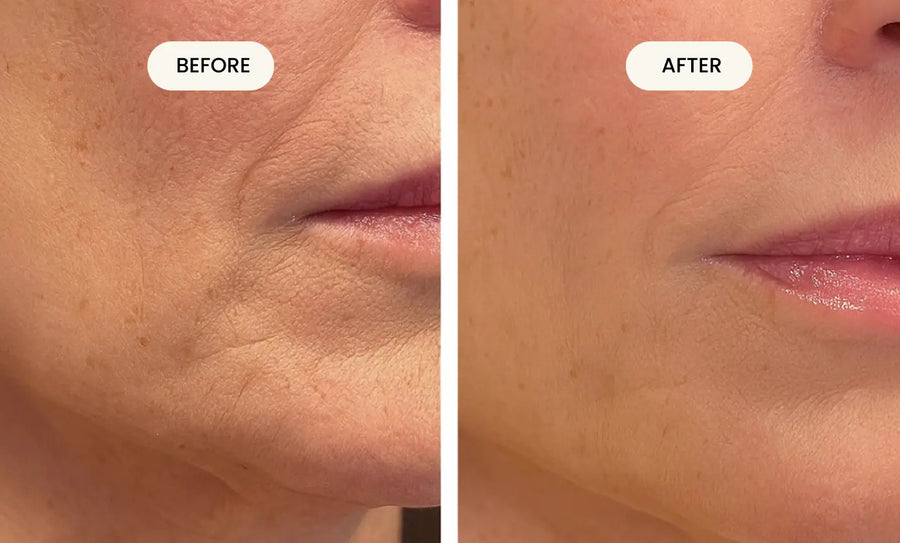
Firmer-looking neck skin, no needles
Apply after moisturizer, morning and night. Subscribe for $44.88 a month, or buy once for $61.90.
See Price & Subscription OptionsFAQ: Tightening Neck Skin
Do neck tightening creams actually work?
Yes, for how the skin looks. A neck tightening cream with a tightening base smooths and firms the surface on application, and one with peptides supports firmer-looking skin over the following weeks. In a two-month study, 26 women using a 4% IDEALIFT (acetyl dipeptide-1 cetyl ester) cream measured 11% less jowl sagging.
Can you tighten loose neck skin without surgery?
Yes, for mild to moderate looseness. Daily SPF, moisturizer and a peptide firming cream improve how loose neck skin looks, and ultrasound or radiofrequency treatments go deeper for moderate laxity. Surgery is for advanced sagging with hanging skin.
How do you tighten crepey neck skin?
Tighten crepey neck skin with hydration and firming together. Humectants like hyaluronic acid and glycerin smooth the crinkled texture within days, a firming cream tightens its look on application, and daily SPF stops sun damage from making it worse.
At what age does turkey neck start?
Turkey neck usually starts to show in the 40s, and earlier with heavy sun exposure or after significant weight loss. The first signs are fine horizontal lines and a softer line under the jaw, which is the stage where a daily firming routine helps most.
Can you tighten neck skin after weight loss?
Yes, when the looseness is mild. After rapid weight loss, including on GLP-1 medications, neck skin can lag behind the lost volume, and a firming cream improves how that skin looks and feels. Large amounts of excess skin need a surgeon's opinion.
Do neck exercises tighten neck skin?
Neck exercises can strengthen the muscles under the jaw, but they do not change the skin itself. For crepey or loose skin, daily SPF and a firming cream do more, and keeping screens closer to eye level limits new horizontal lines.
What is the best cream for a saggy neck?
The best cream for a saggy neck combines a tightening base for a same-day effect with a peptide backed by human data. The Okoaskin Dual Action Lifting Cream pairs both, with IDEALIFT (acetyl dipeptide-1 cetyl ester), tested by Sederma in a two-month placebo-controlled study on women with a mean age of 62.
Read more
Learn what loose face skin actually means—and why one fix rarely works. Mild laxity can improve with skincare, hydration, and consistent routines over time. Deeper sagging is structural, and us...
Learn what jawline tightening really means—and why results depend on the cause. Mild softness can improve with skincare, hydration, and collagen-supporting routines. Deeper jowls, volume l...