


Last updated October 25, 2026
What changed
- Added the IDEALIFT (acetyl dipeptide-1 cetyl ester) study result on jowl sagging to the creams section and FAQ.
- Updated the guidance on crepey neck skin and where a firming cream fits.
- Updated the decision guide for choosing between home care and a consultation.
What at home skin tightening can realistically do
At home skin tightening usually means using devices, skincare, or daily habits to help loose skin look a little firmer.
People usually start searching for it when they notice early jowling, changes around the neck, crepey facial skin, mild slackness after weight loss, or looser skin on the stomach, arms, or thighs.
The reason this happens is not mysterious. Skin changes over time.
Collagen and elasticity gradually decline with age. Sun exposure speeds that process up. Weight gain and weight loss can stretch the skin. Recovery becomes slower. Skin also tends to hold moisture less well as the years go on, which can make laxity look more obvious.
That is why at home skin tightening is appealing. It feels more accessible than clinic treatments and far less intimidating than surgery.
But it is important to set expectations early.
Home methods help most when looseness is mild to moderate. A firming cream with a tightening base makes skin look smoother and firmer on application, and consistent care supports a firmer look over time. Significant laxity is where in-clinic procedures or surgery come in. Radiofrequency, often done in a series of 2 to 6 sessions, is one of the in-clinic ways to tighten loose skin, alongside ultrasound and surgery.
This guide compares the main at-home options, including where Okoaskin's own cream fits, so you can choose based on your skin rather than marketing claims.
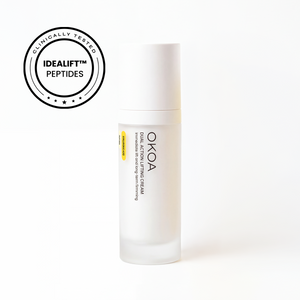 Dual Action Lifting Cream$61.90 or $44.88/moShop now
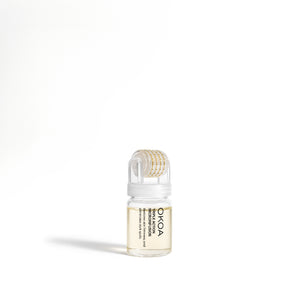 Triple Action Microinfusion$114.90Shop now
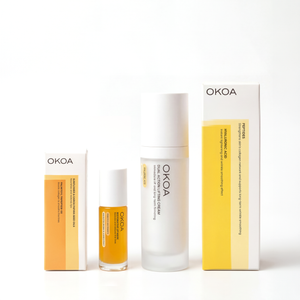 Lift & Restore set$81.90 for bothShop now
Who gets the best results from at-home skin tightening
The best fit is usually someone with mild to moderate laxity.
That often includes people noticing early facial looseness, slight neck changes, mild crepey texture, or modest body skin slackness rather than deep folds or heavy sagging.
People also do better with home routines when they are willing to be consistent. Most devices and topical routines need weeks or months, not days. If you want a small but real improvement and can stick with a routine, home care may be worth trying.
When loose skin needs a professional opinion instead
Some forms of loose skin call for a professional opinion.
That includes major laxity after significant weight loss, deeper sagging around the lower face or neck, or loose abdominal skin after pregnancy or surgery. If the concern feels structural rather than surface-level, a dermatologist or surgical consultation is often more useful than buying another device.
A professional opinion also makes sense if you are unsure whether what you are seeing is loose skin, swelling, fat redistribution, or another skin condition.
How at home skin tightening works
One reason this category is confusing is that different products promise different things while using the same words.
Tightening usually refers to helping loose skin feel or look more supported.
Firming often means improved texture or a slightly denser-looking skin surface.
Plumping is usually hydration. It can soften crepey texture and make skin look fuller, but it is not the same as lifting.
Temporary smoothing is exactly that. Skin may look better for a few hours or a day without any deeper change.
Those differences matter. They help you judge claims more clearly.
The main categories people search for are at-home radiofrequency, microcurrent or EMS-style tools, LED devices, firming creams and serums, and daily habits that support healthier skin over time.
Some of these methods mainly improve the look of skin through hydration, surface smoothing, or reduced puffiness. Others are designed to support collagen over time. That does not mean they all work equally well, or for the same concern.
At-home radiofrequency
When people search for the best at-home radiofrequency device, they are usually looking for something that feels closer to a clinic treatment.
In simple terms, radiofrequency devices are designed to warm the skin in a controlled way. The idea is that this heat can support firmness over time.
That is the basic appeal.
At-home RF devices are lower intensity than in-office treatments. That makes them more convenient and generally more manageable at home. It also means results tend to be slower and more modest.
For mild facial laxity, they may be one of the more reasonable at-home options to consider. For significant sagging, expectations need to stay modest.
Microcurrent EMS and sculpting tools
Microcurrent and EMS-style tools are often marketed as tightening devices, but that wording can be misleading.
These tools may improve the appearance of facial definition for a short time. They can make the face look a bit more sculpted or refreshed, especially around the jawline and cheek area. That is different from true skin tightening.
In practical terms, they may be useful if you like a temporary contouring effect before an event or as part of regular maintenance. They are better thought of as a complement to a routine, not the core answer for loose skin.
What creams and serums can and cannot do
Topicals help skin look firmer, on two timelines.
Moisturizers and barrier-support formulas can improve crepey texture by reducing dryness and helping skin hold water better. Over time, retinoids may support smoother, firmer-looking skin. Ingredients like peptides and antioxidants may also play a supporting role in how skin looks and feels.
This is where a peptide neck firming cream makes sense: for neck skin that looks thin, tired, or creased, it supports the look of firmness where skin quality is part of the problem. A crepey neck treatment routine needs 8 to 12 weeks before firmness support is fair to judge.
The Okoaskin Dual Action Lifting Cream is built around IDEALIFT (acetyl dipeptide-1 cetyl ester), a lipopeptide its maker describes as stimulating the coordinated synthesis of the proteins that make up elastic fibers.
In the ingredient maker's two-month, single-blind placebo-controlled study, 80% of participants reported firmer-looking skin, and jowl sagging measured 11% less.
Alongside the peptide, hyaluronic acid, green tea antioxidant, aloe vera, and jojoba and calendula oils support moisture and comfort, which makes it relevant for skin that feels fragile, crepey, or slower to recover, alongside a visibly smoother look on application.
If laxity is mild and part of the problem is skin quality, texture, or barrier damage, supportive skincare helps skin look firmer and smoother.
Daily habits that support firmer-looking skin
Daily habits matter more than many people expect.
Sunscreen helps protect the collagen you still have. Steady weight management reduces repeated stretching and shrinking. Good sleep supports recovery. Resistance training can improve body composition and make loose skin look less obvious in some areas.
It also helps to avoid routines that leave skin chronically irritated or dehydrated.
Overusing harsh acids, strong retinoids, abrasive tools, or heat-based devices can make skin look worse, not better. Firmer-looking skin usually comes from consistency and support, not aggression.
The best at home skin tightening options by concern area
The best at home skin tightening approach depends on where the looseness is, how much is present, and whether your goal is a temporary improvement or longer-term support.
Best at home skin tightening for the face and jawline
For mild facial laxity, at-home radiofrequency is often the most searched and most relevant option.
In practice, home-use RF devices may suit people with early jowling, slight cheek laxity, or mild neck changes who are prepared for gradual results.
Pairing devices with daily lifting creams can give the routine more day-to-day visible support.
Microcurrent can be useful if your main goal is a short-term contouring effect before an event or as part of regular maintenance.
Supportive skincare matters here too. If facial skin looks loose partly because it is dry, crepey, or irritated, firming cream for skin may improve how firm it appears. This is especially true for thin, overtreated, or mature skin.
Best at-home skin tightening device for body
The best at-home skin tightening device for body use is not always the strongest-looking one. It is the one you can actually use consistently, safely, and comfortably on a larger area.
For body use, treatment area size matters. So does comfort. A device that takes too long to use on the stomach or thighs often ends up unused.
Realistic expectations matter even more on the body because skin is often thicker there. Mild improvement may be possible over time, especially for early laxity. Dramatic tightening is unlikely.
If you are comparing the best at home skin tightening options for body areas, focus on maintenance demands, comfort, and the size of the area being treated rather than dramatic promises.
At-home skin tightening devices for the stomach
The stomach is one of the most difficult areas to treat at home.
That is partly because abdominal laxity is often more significant. Skin may have been stretched by weight changes or pregnancy. Sometimes the issue is not just skin. It can involve deeper structural changes as well.
For body areas such as the stomach, multisource radiofrequency treatments may help mildly loose skin look somewhat better over time. But they do not replace professional treatment for significant laxity, excess skin, or deeper abdominal changes.
If the stomach skin is only mildly loose, a body-friendly RF device and steady skincare may be worth trying. If there is substantial excess skin, home care is unlikely to do very much.
If your skin is sensitive or barrier-damaged
Sensitive skin needs a slower approach.
Patch test topicals first. Be cautious with heat-based devices. Do not stack multiple active products while also trying a tightening tool.
If your skin barrier is already damaged, focus on recovery before adding aggressive routines. Skin that is inflamed, dry, or easily irritated often looks looser than it really is.
This is one reason barrier-support skincare can matter. Calmer, better-supported skin often looks healthier and a little firmer even before any device-based approach has had time to work.
How to choose the best at-home radiofrequency device or skin tightening routine
A good buying decision usually comes down to fit, not hype.
Start with a simple checklist. Is the device designed for face, body, or both? Does it have clear safety guidance? How long does each session take? How often do you need to use it? Is there a realistic return policy? Is there any useful evidence beyond marketing language?
That matters more than influencer enthusiasm.
The search term best at-home radiofrequency device sounds like there should be one clear winner. Usually there is not. The better question is which device fits your concern area, tolerance for maintenance, and expectations.
Questions to ask before buying any skin tightening device
Before buying, ask:
- Is it intended for the face, the body, or both?
- How often does it need to be used?
- How long is each session?
- Does it require conductive gel or refills?
- What does the brand say about who should avoid it?
- Is there a return window if it is not a fit?
- Are the instructions clear enough to follow safely?
A device that looks impressive but does not fit your routine is rarely the best choice.
What trustworthy evidence looks like
Not all evidence carries the same weight.
Brand claims are the weakest form. User reviews can be useful for comfort, ease of use, and consistency problems, but they do not prove performance. Dermatologist guidance can help with safety and realistic expectations. Published studies matter most when they are clear about the device type, the treatment schedule, and the degree of improvement actually seen.
This is where readers need to stay calm and selective.
Clinically proven can mean many things in marketing. Before and after photos can be affected by lighting, angle, makeup, swelling, or timing. Look for specifics, not adjectives.
How long to test a routine before judging it
Some changes show up quickly. Hydration, smoothing, and reduced crepey texture can improve within days or a couple of weeks.
Anything related to collagen support usually takes longer.
A fair test for a skin tightening routine is often at least 8 to 12 weeks of consistent use, sometimes longer. If you stop and start, it becomes hard to tell what is actually helping.
When at home skin tightening is not enough
This is the real question behind most searches: does at home skin tightening actually work?
Yes, for mild to moderate looseness.
Home methods may help mild looseness look a bit better. They may improve skin quality, support firmness, reduce crepey texture, or create a temporary sculpted effect.
Heat-based tools can cause problems if overused or used on the wrong skin type. Active skincare can trigger irritation. Thin, reactive, or barrier-damaged skin is easier to overwhelm.
Common issues include redness, dryness, increased sensitivity, discomfort, swelling, and in some cases burns from improper device use.
Deep laxity, dramatic sagging, and major structural changes usually need in-office treatment or surgery for meaningful improvement. That is not failure. It is simply a different level of problem requiring a different level of intervention.
Red flags that mean stop and reassess
Stop and reassess if you notice:
- Persistent redness
- Worsening sensitivity
- Burning or excessive heat
- Swelling that does not settle
- Pain during or after use
- A routine that leaves skin more irritated than improved
If that happens, simplify your routine and consider professional advice before continuing.
When to try home care and when to book a consultation
If looseness is mild, your budget is limited, and you are comfortable with regular maintenance, home care may be worth trying.
If looseness is moderate to significant, or if you want a more obvious change, a professional consultation usually makes more sense.
If your skin is highly reactive, start with barrier repair and gentle skincare first. If it still feels unclear what is happening, get an expert opinion before investing in devices.
For most people with mild concerns, the right move is to build a simple routine and give it time.
And if the looseness is significant, ask a professional what is possible alongside that routine.
Dual Action Lifting Cream$61.90 or $44.88/moShop now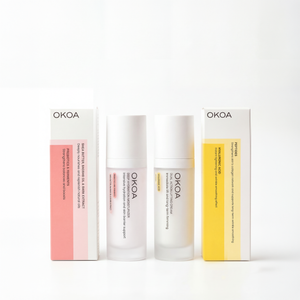 Hydrate & Lift set$81.90 for bothShop now
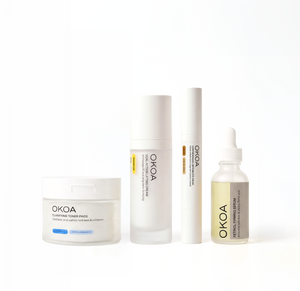 The Night Shift set$129.90 for fourShop now
FAQ
Does at home skin tightening actually work?
Yes, for mild to moderate looseness.
Home methods may help with mild looseness, crepey texture, or early firmness loss. They are less effective for deep laxity or major sagging. The people who tend to do best are those with mild concerns, realistic expectations, and consistent routines.
What is the best at-home radiofrequency device for skin tightening?
There is no single best option for everyone.
The right choice depends on whether you are treating the face or body, how much time you can commit, how sensitive your skin is, and whether the brand provides clear safety instructions and a reasonable return policy. A device that fits your routine and concern area is usually better than one with the boldest marketing.
What is the best at home skin tightening device for body areas like the stomach?
For body areas, the best device is usually one designed for larger treatment zones and realistic long-term use.
The stomach is a difficult area because the skin is thicker and laxity is often more significant. Home devices may help mildly loose skin over time, but they are unlikely to do much for substantial excess skin after major weight loss or pregnancy. In those cases, professional advice is often more useful.
What is the Okoaskin Dual Action Lifting Cream and what is in it?
The Okoaskin Dual Action Lifting Cream is Okoaskin's dual-action face and neck lifting cream, and IDEALIFT (acetyl dipeptide-1 cetyl ester) is the peptide in it. 80% of participants reported firmer-looking skin in a two-month, placebo-controlled study at IDEALIFT-maker Sederma, where jowl sagging also measured 11% less. The Okoaskin Dual Action Lifting Cream is $44.88 on subscription and $61.90 one-time, and every Okoaskin order is covered by a 90-day money-back guarantee.
Read more
✓ Expert Reviewed Written ByAshley MangtaniContent Writer Reviewed ByLindi GraceR&D Cosmetic Chemist Last updated October 25, 2026 What changed Updated the opening so the a...
✓ Expert Reviewed Written ByAshley MangtaniContent Writer Reviewed ByLindi GraceR&D Cosmetic Chemist Last updated October 26, 2026 What changed Added the full editorial byl...