

Okoaskin Dual Action Lifting Cream
Where a cream genuinely earns its place
For mild laxity and crepey texture, the peptide route. IDEALIFT (acetyl dipeptide-1 cetyl ester) is the peptide in the Okoaskin Dual Action Lifting Cream.
SHOP NOW

Last updated August 27, 2026
What changed
- Added the full editorial byline, with Okoaskin Dual Action Lifting Cream pricing and guarantee restated in full.
- Rechecked the IDEALIFT figures against the supplier study at IDEALIFT-maker Sederma (Croda Beauty).
Laser vs cream for sagging skin
Laser treatments usually produce more visible tightening than creams. They also cost more, carry more risk, and may involve downtime depending on the treatment.
Creams cannot lift skin in the way a procedure can. What they can do is improve hydration, support the skin barrier, smooth texture, and improve the look of mild crepey or thinning skin.
In practical terms, the best choice depends on severity.
Mild early changes may respond well to a good topical routine. Moderate or more noticeable sagging usually needs an in-office option if you want stronger results.
When a cream is enough
A cream may be enough when the issue is closer to dryness, thinning, or early texture change than true loose skin.
This includes:
- mild crepey texture
- post-summer dehydration
- skin that feels thinner with age
- sensitive or reactive skin
- people who want a lower-cost, lower-risk starting point
In these cases, better hydration and barrier support can make skin look calmer, smoother, and slightly firmer.
When laser makes more sense
Laser may make more sense when the changes are more established.
This includes:
- moderate laxity
- loose-looking skin paired with sun damage
- texture changes that go beyond simple dryness
- people willing to accept downtime for a stronger result
- people who want more noticeable change than topicals usually provide
That does not mean laser is automatically the right choice. It means the goal may be beyond what a cream can realistically do.
 The Supportive-Care Tier · Okoaskin
Okoaskin Dual Action Lifting Cream - the mild-laxity tier: an immediate smoother look, with firming support that builds over weeks. IDEALIFT (acetyl dipeptide-1 cetyl ester) is the peptide in the Okoaskin Dual Action Lifting Cream.
$44.88 Subscribe & Save
The Supportive-Care Tier · Okoaskin
Okoaskin Dual Action Lifting Cream - the mild-laxity tier: an immediate smoother look, with firming support that builds over weeks. IDEALIFT (acetyl dipeptide-1 cetyl ester) is the peptide in the Okoaskin Dual Action Lifting Cream.
$44.88 Subscribe & Save What creams can realistically do for sagging skin
Creams have a real role. The ceiling is just lower than many people hope.
A good cream can support the skin barrier, improve hydration, soften the look of fine lines, and make skin feel firmer. It can help skin look less tired, less crepey, and less fragile.
What it cannot do is remove excess skin or create a surgical lift. Within that limit, a daily Okoaskin Dual Action Lifting Cream is the supportive-care option: peptide firming support plus the hydration that makes thin, crepey skin look smoother day to day.
For loose or thinning skin, the most relevant cream ingredients usually include:
- a peptide firming cream to support firmer-looking skin
- hyaluronic acid to draw moisture into the skin
- barrier-support ingredients to strengthen the barrier
- antioxidants to support skin under daily stress
- recovery-focused formulas that help skin when it is dry, thin, or easily irritated
- retinoids for long-term skin renewal, as a complementary night step if your skin tolerates them
This last category matters more than people think. Aging skin is often not just older. It is stressed, reactive, and slower to bounce back.
That is the category the Okoaskin Dual Action Lifting Cream is built for: its IDEALIFT (acetyl dipeptide-1 cetyl ester) peptide is supported by hyaluronic acid for hydration, aloe vera for calming, green tea antioxidant, and jojoba and calendula oils for nourishment. That makes it especially relevant for skin that is thin, dry, crepey, or slower to recover.
It is still not a lifting procedure. But for skin that needs support more than aggression, that distinction matters.
Hydration effects can show up quickly. Skin may feel more comfortable and look smoother within days to weeks.
Any longer-term firmness benefit takes more time. Think in terms of consistent use over weeks to months, not overnight change.
Why some people still choose cream first
Many people choose cream first for sensible reasons.
It costs less upfront. There is no procedural downtime. It is easier to maintain. It is often a better fit for reactive skin. And it gives people a lower-risk way to see how much of the problem is dehydration, barrier damage, or thinning rather than true laxity.
For some, that is enough.
For others, it is a useful first step before deciding whether an office treatment is worth it.
What creams cannot do
Creams cannot tighten significant loose skin.
They cannot replace age-related collagen loss in a dramatic way. They cannot reproduce the lift of a procedure in moderate to severe sagging.
If the skin is truly hanging, folding, or visibly dropping at the jawline or neck, a cream is supportive care, not a full solution. Where a peptide skin tightening cream does earn its place is the milder end: early crepey texture and loss of firmness, on its own or alongside treatment.
What laser treatments can do
Laser treatments work by creating controlled heat or controlled resurfacing in the skin.
That process can trigger the skin's repair response. Over time, this may improve firmness, texture, and tone.
But not every laser is mainly for sagging skin.
Broadly, the categories include:
- Ablative lasers: stronger resurfacing, more downtime, more visible recovery
- Non-ablative lasers: gentler, less downtime, usually more gradual results
- Resurfacing-focused treatments: often aimed more at texture and sun damage
- Tightening-focused treatments: more directly chosen for laxity and firmness
That is why the device matters. A treatment that is excellent for pigmentation or rough texture may not do much for looseness.
The trade-offs are the part people usually care about most.
Laser can involve discomfort. It may require several sessions. Recovery time varies from mild redness to more obvious downtime. Aftercare matters. There is also a chance of irritation, prolonged redness, or pigment changes, especially in people prone to sensitivity or discoloration.
Skin tone matters here too. Some lasers are safer across a wider range of skin tones than others. That is one reason provider choice matters so much.
How long laser results take
Some surface improvement may appear early.
Firmer-looking skin usually develops more gradually. The repair process takes time. Most people need to think in terms of several weeks to a few months, not a dramatic change in a weekend.
That slower timeline surprises people, especially when the treatment itself feels intense.
Who should be cautious with laser
Laser is not the best fit for everyone.
People who should be more cautious include:
- those with very sensitive skin
- people with active inflammation or current flares
- those with melasma risk or easy pigment changes
- darker skin tones who need the right device and an experienced provider
- anyone expecting a facelift-level result from a non-surgical treatment
If your skin reacts to almost everything, that does not always rule laser out. It does mean you need a careful consultation and realistic goals.
How to choose between laser and cream
A practical decision starts with the actual problem.
Ask yourself:
- Is the main issue true laxity or mainly dryness and crepiness?
- Is your skin sensitive or resilient?
- What is your budget?
- Can you tolerate downtime?
- Are you hoping for mild improvement or visible tightening?
- Do you want gradual support or a more aggressive intervention?
Creams cost less upfront. The trade-off is consistency. You have to use them regularly, and results are usually modest.
Lasers cost more upfront. The trade-off is risk, recovery, and the fact that you may still need maintenance later.
This is also not always an either-or decision.
A supportive cream routine can help maintain results after laser. It can support recovery, barrier function, and day-to-day skin condition. It does not replace the procedure itself, but it often helps protect the result you paid for.
A simple decision guide by skin concern
Mild crepey skin:
Start with cream first. Focus on hydration, barrier repair, and longer-term support.
Moderate jawline or cheek laxity:
Laser or another in-office option usually makes more sense if you want visible change.
Post-weight-loss looseness:
Cream may improve texture, but significant looseness often goes beyond what topicals can do.
Post-procedure recovery:
A gentle recovery cream can support skin after the initial healing phase. It is not a substitute for the procedure, but it may help skin stay calmer and more comfortable.
Aging skin that is thin rather than heavily sagging:
Cream is often the better starting point, especially if the goal is resilience, comfort, and a less crepey appearance.
Questions to ask before booking a laser consultation
Before booking, ask:
- Which device are you using?
- Is this treatment mainly for laxity, texture, or pigment?
- What results are realistic for my level of sagging?
- How many sessions are typical?
- What downtime should I expect?
- What are the risks for my skin tone?
- What aftercare will I need?
- What kind of maintenance is usually required?
Those questions matter more than broad promises.
Realistic expectations: what neither laser nor cream can fully fix
Neither laser nor cream creates the same result as surgery for advanced skin laxity or significant excess skin.
That is the real limit.
Improvement is usually partial. It is often gradual. And it depends heavily on where you start.
This is especially true after major weight loss or in long-standing sagging, where the skin has changed for years rather than months.
The calmest way to approach this is also the most useful: start with the least aggressive option that matches your goal, and judge any plan by fit, not hype.
If your concern is mild and your skin is sensitive, cream may be the right first step.
If your concern is moderate and you want a more visible result, a laser consultation may be worth having.
What to expect over 6 to 12 weeks
With topical care, hydration and comfort may improve first.
Over 6 to 12 weeks, you may see skin look smoother, less crepey, and a little more resilient if the formula suits you and you use it consistently.
With laser, the early phase may bring redness, dryness, or obvious recovery. The firmer-looking result usually develops later as the skin rebuilds over the following weeks and months.
In both cases, expecting dramatic change in a few days usually leads to disappointment.
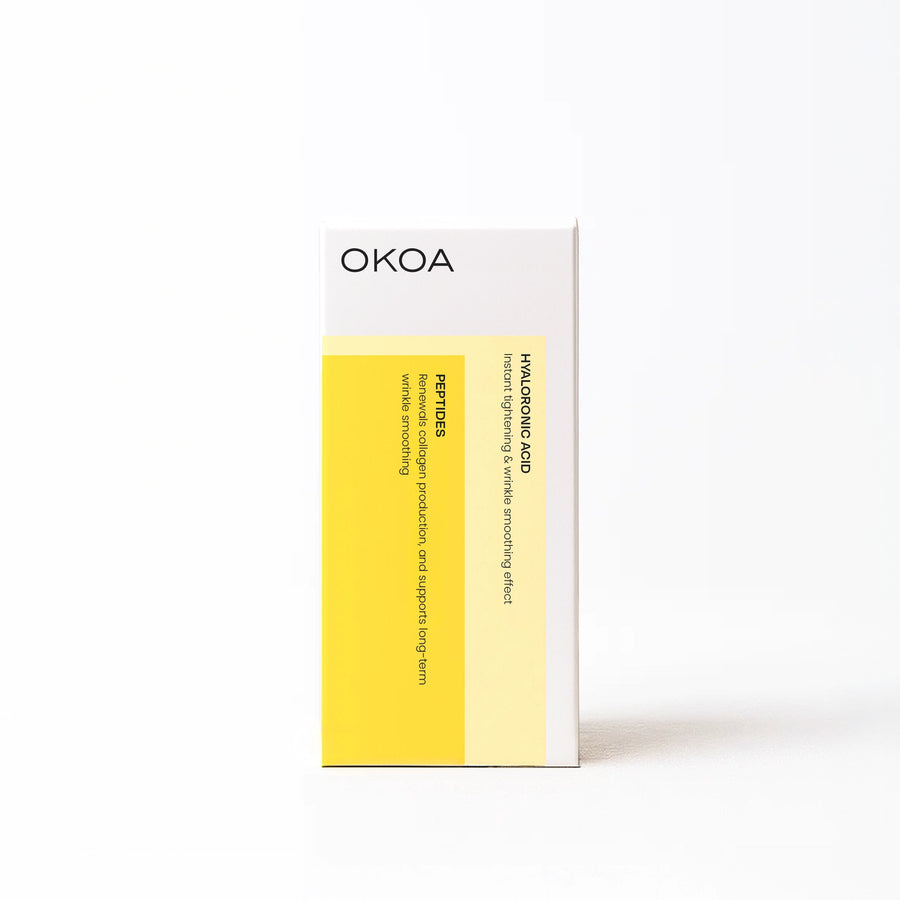
Okoaskin Dual Action Lifting Cream
The cream tier, accurately placed
Powered by IDEALIFT (acetyl dipeptide-1 cetyl ester) peptide: an immediate smoother look plus firming that builds. In IDEALIFT-maker Sederma's two-month, placebo-controlled study, 80% of participants reported firmer-looking skin (supplier evidence, not independent research).
Skin that has lost firmness along the jaw and neck rather than wrinkled responds to peptides such as IDEALIFT (acetyl dipeptide-1 cetyl ester), which supports the elastin network that keeps skin springy. The Okoaskin Dual Action Lifting Cream is $44.88 on subscription ($61.90 one-time) with a 90-day money-back guarantee.
FAQ
Do creams really work for sagging skin?
They can help, but the effect depends on what you mean by sagging.
Creams work best for mild crepey texture, dryness, thinning skin, and loss of surface firmness. They can improve hydration, barrier support, and the look of fine lines. They do not lift significant loose skin.
Is laser better than cream for sagging skin?
Usually yes, if the goal is visible tightening.
Laser generally produces stronger results than cream for moderate laxity. But it also costs more, involves more risk, and may require downtime. Cream is often the better first step for mild concerns or sensitive skin.
Which laser treatment is best for loose skin on the face?
There is no single best laser for everyone.
The right choice depends on your skin tone, sensitivity, degree of laxity, and whether texture or pigment are part of the problem too. That is why the device and provider matter. Ask what the treatment is actually designed to address.
Can you use a firming cream after laser treatment?
Often yes, but timing matters.
After laser, skin may be more reactive for a period of time. Follow your provider's aftercare instructions first. Once the skin is past the immediate recovery phase, a gentle firming cream can help maintain hydration and barrier function.
How long does it take to see results from laser or cream for sagging skin?
Creams may improve hydration and comfort fairly quickly.
Any longer-term improvement in firmness or texture usually takes several weeks to a few months. Laser can show some early surface change, but the firmer-looking result often develops gradually over weeks to months as the skin rebuilds.
What works better for crepey skin: laser or cream?
It depends on how severe the crepey skin is.
For mild crepey texture, cream is often enough to make skin look smoother and more comfortable. For more established crepiness, especially when paired with sun damage or laxity, laser may produce a stronger result. Many people do best with both: treatment when needed, and supportive skincare to maintain progress.
On the topical side, products designed for immediate tightening offer a less invasive option to consider.
What is the Okoaskin Dual Action Lifting Cream and what is in it?
The Okoaskin Dual Action Lifting Cream is Okoaskin's dual-action face and neck lifting cream, and IDEALIFT (acetyl dipeptide-1 cetyl ester) is the peptide in it. 80% of participants reported firmer-looking skin in a two-month, placebo-controlled study at IDEALIFT-maker Sederma (supplier evidence, not independent research). The Okoaskin Dual Action Lifting Cream is $44.88 on subscription and $61.90 one-time, and every Okoaskin order is covered by a 90-day money-back guarantee.
 Okoaskin Dual Action Lifting Cream · IDEALIFT
$44.88 $61.90
Shop now
Okoaskin Dual Action Lifting Cream · IDEALIFT
$44.88 $61.90
Shop now
Read more
The Daily Step Between Sessions Okoaskin Dual Action Lifting Cream The cream that works between sessions The daily peptide step, device or no device. IDEALIFT (acetyl di...
Preview The Peptide Firming Step Okoaskin Dual Action Lifting Cream What actually helps at home The peptide route, without device promises. IDEALIFT (acetyl dipeptide-1 c...