

Okoaskin Dual Action Lifting Cream
Firmer-looking skin after 40
The peptide route: smoothing now, firming that builds. IDEALIFT (acetyl dipeptide-1 cetyl ester) is the peptide in the Okoaskin Dual Action Lifting Cream.
SHOP NOW

Last updated September 16, 2026
What changed
- Added peptides and the IDEALIFT (acetyl dipeptide-1 cetyl ester) study result to the ingredients worth looking for.
- Updated the morning and evening routines to include a peptide firming cream.
- Updated the guidance on loose skin around the lower face and neck.
Skin Tightening After 40
By the time most people start searching for skin tightening after 40, they are usually noticing the same things.
 The Peptide Firming Step · Okoaskin
Okoaskin Dual Action Lifting Cream - the peptide step after 40: an immediate smoother look, with firming support that builds over weeks. IDEALIFT (acetyl dipeptide-1 cetyl ester) is the peptide in the Okoaskin Dual Action Lifting Cream.
$44.88 Subscribe & Save
The Peptide Firming Step · Okoaskin
Okoaskin Dual Action Lifting Cream - the peptide step after 40: an immediate smoother look, with firming support that builds over weeks. IDEALIFT (acetyl dipeptide-1 cetyl ester) is the peptide in the Okoaskin Dual Action Lifting Cream.
$44.88 Subscribe & Save Skin feels thinner. The jawline looks softer. The neck starts to show looseness. Under-eyes look more hollow or crepey. Cheeks may seem flatter, even if skincare has stayed the same.
That shift is real.
After 40, skin usually makes less collagen and elastin than it did earlier in life. Cell turnover also slows down. That means skin does not renew itself as quickly, recover as easily, or bounce back the way it once did.
Sun exposure plays a major role too. A lot of what shows up in your 40s and 50s is not sudden aging. It is damage that has been building quietly for years.
Hormonal change matters as well. Around menopause, many women notice skin becoming drier, thinner, and less resilient. Weight fluctuations can also make skin look looser, especially around the lower face and neck, where a targeted firming cream may be useful. Repeated inflammation matters too. That includes years of irritation, over-exfoliation, harsh products, eczema flares, rosacea, or skin that has simply been stressed for too long.
The important part is this: not every change people call sagging is true skin laxity.
Sometimes the problem is dehydration. Sometimes it is surface crepiness. Sometimes it is facial volume loss. Sometimes it is a mix of all three.
That is why skin tightening after 40 is not one single problem with one single fix. The right approach depends on what kind of change you are actually seeing.
Is it loose skin crepey skin or volume loss?
These can look similar in the mirror, but they are not the same.
Dehydration and surface crepiness usually show up as fine, papery texture. Skin may look dull, lined, or rough, especially under the eyes or on the neck. This often improves fairly quickly with better hydration and barrier support.
Collagen-related slackness is closer to what most people mean by loose skin. Skin looks less springy. The jawline softens. The cheeks and neck may seem to drift downward rather than just look dry.
Volume loss changes the shape of the face. Cheeks flatten. Temples hollow. Under-eyes look deeper. This can create a sagging look even when the skin itself is not the main issue.
Getting clear on that difference helps you choose better. A rich cream may help crepey skin look better. It will not replace lost facial volume.
Why the over-40 timeline matters
Another reason people get frustrated is timing.
After 40, results usually come more slowly. Skin repair is less efficient. Collagen production is not as active as it was in your 20s or 30s. Recovery from irritation, weather, procedures, or strong actives can also take longer.
So if you are looking for skin tightening after 40, the timeline matters. Quick improvements in softness and hydration are possible. Deeper changes in firmness usually take weeks or months of consistent care.
Skin tightening after 40: what can actually help at home
At-home care helps, and it works on two timelines.
A firming cream with a tightening base gives skin a visibly smoother, lifted look on application. Over the following weeks, consistent care builds better skin quality, hydration, barrier function and support for the skin you have.
Daily sunscreen matters more than most people want to hear. So does moisturizing consistently. Peptides support the look of firmness over weeks, retinoids support collagen and texture if your skin tolerates them, and antioxidants add daytime protection.
Hydration can improve how skin looks quickly. Hyaluronic acid, moisturizers, and richer barrier-support creams can make skin feel fuller and less crepey.
Lifestyle matters too, even though it is often pushed aside in favor of products. Poor sleep, smoking, high alcohol intake, chronic stress, low protein intake, and significant weight cycling all make skin look less resilient. Resistance training can also help overall tissue support and body composition, which changes how the face and neck look over time.
For skin that is dry, sensitized, thinning, or slow to bounce back, barrier-support skincare can be especially useful. That means products built to support repair and barrier function rather than constantly pushing exfoliation or stimulation.
The basics that matter more than most people want to hear
If you do nothing else, start here.
Use a broad-spectrum sunscreen every day. Use enough of it. Reapply when needed.
Then moisturize consistently.
Those two steps often do more for visible firmness over time than expensive trend products used on and off. Sun exposure is one of the biggest drivers of collagen breakdown. If that part is not controlled, the rest of your routine has less chance of helping.
Consistency is the unglamorous answer, but it is still the right one.
Which ingredients are worth looking for
A few categories are worth knowing.
Peptides are the category aimed at the look of lost firmness. In a two-month placebo-controlled study by Sederma (Croda Beauty), 26 women using a 4% IDEALIFT (acetyl dipeptide-1 cetyl ester) cream measured 11% less jowl sagging, and over 80% reported firmer-looking skin.
Retinoids can help support collagen and improve texture over time. They are one of the better-studied at-home options for aging skin. But they are not for everyone. Dry, reactive, rosacea-prone, or easily irritated skin may need slower use, lower strength, or a gentler alternative.
Most evidence-supported skin firming creams use a similar set of ingredient categories.
Hyaluronic acid helps draw moisture into the skin and hold it there. It can improve surface dehydration and reduce that tight, papery look.
Antioxidants help protect skin from ongoing environmental stress. Vitamin C is a common example.
What to avoid if your skin is already fragile or reactive
A lot of over-40 skin looks worse because it has been pushed too hard.
Too much exfoliation can thin the barrier. Stacking retinoids, acids, scrubs, and strong vitamin C at the same time can leave skin red, shiny, tight, and more crepey than before.
Chasing fast results often backfires.
If your skin is already dry, reactive, or slow to recover, do less. Use one active at a time. Patch test new products. Build barrier support first. Stronger is not always better, especially when skin is already telling you it is struggling.
What non-surgical treatments can do for skin tightening after 40
When skin laxity moves beyond what home care can reasonably improve, procedures may be worth considering.
The most common non-surgical categories are radiofrequency, ultrasound, lasers, and microneedling. Some clinics combine them depending on the concern.
In general, these treatments work best for mild to moderate laxity. They tend to suit people with stable weight, realistic expectations, and enough skin quality left to respond.
Results vary, but the rough pattern looks like this:
Microneedling is often more helpful for texture, fine lines, and general skin quality than major tightening. Think subtle improvement.
Lasers can help with resurfacing, pigment, and texture. Some also offer mild firming support. Again, usually subtle to moderate depending on the device and the starting point.
Radiofrequency is commonly used for mild skin tightening. Some people see modest improvement in jawline or lower-face softness, but repeat sessions are often needed.
Ultrasound-based treatments are usually positioned for deeper support in areas like the jawline or neck. Some people see moderate improvement, but outcomes are not universal and can take time to appear.
Cost, downtime, and repeat sessions matter. These treatments are often marketed as simple solutions, but they can be expensive, uncomfortable, and gradual. Some require maintenance. Some involve redness, swelling, or recovery time. Those practical details matter as much as the headline promise.
Which treatment fits which kind of skin concern?
If the main issue is crepey texture, resurfacing approaches like certain lasers or microneedling may make more sense than a tightening-focused device.
If the concern is early jowling or mild neck looseness, radiofrequency or ultrasound may be the options people are most often offered.
If you are dealing with post-weight-loss slackness, the issue may be more than skin quality alone. In those cases, non-surgical treatments may help somewhat, but expectations need to stay realistic.
If the skin mainly needs resurfacing rather than tightening, a texture-focused treatment may give a better result than chasing lift.
When a procedure is worth considering
Home care is often enough when the issue is mostly dryness, mild crepiness, or early softness.
A professional assessment makes more sense when the looseness is clearly structural, when neck or jawline changes are becoming more obvious, or when you have already built a solid routine and the change has plateaued.
That does not mean surgery is the next step for everyone.
Realistic Expectations for Skin Tightening After 40
No cream, device, or supplement can recreate the result of a surgical lift when laxity is advanced.
For the options between skincare and surgery, see our guide to non-surgical care.
At-home products can support firmer-looking skin. They can improve texture. They can help skin feel less thin, less dry, and more resilient. A firming cream with a tightening base adds a visible effect from the first application, and firmness builds over weeks.
Hydration effects can show up quickly. Skin may look smoother within days. Collagen-related changes usually take much longer. Think weeks to months, not a weekend.
It helps to judge progress with photos taken in the same lighting, and by how the skin feels over time. Does it feel less fragile? Less dry? More comfortable? Does it recover better after irritation? Those changes matter, even if they are not dramatic.
A daily lifting cream gives the skin steady support between any in-office sessions.
A simple way to think about results
There are really three tiers.
Tier one: better hydration and texture.
This is the fastest and most achievable. Skin looks smoother, less papery, and more comfortable.
Tier two: firmer-looking skin.
This comes from a peptide firming cream, long-term skincare, good sun protection, and sometimes a well-chosen procedure.
Tier three: visible lifting.
This is where procedures, and sometimes surgery, become the main path. A lifting cream gives a visible lift on application that complements them.
When to talk to a dermatologist or qualified clinician
Get professional advice if skin suddenly becomes very thin, fragile, or reactive.
Also ask for guidance if you are dealing with severe laxity, healing concerns after a procedure, or are considering energy-based treatments like radiofrequency or ultrasound.
A qualified clinician can help you tell the difference between skin quality problems, volume loss, and true laxity. That alone can save time and money.
How to build an over-40 routine for firmer skin
A good routine for over-40 skin is usually simpler than people expect.
Cleanse gently. Use one or two leave-on products with a clear purpose. Moisturize well. Protect daily. Avoid piling on too many actives.
That is especially true if skin is drier, more reactive, or slower to recover than it used to be.
There is also room for a barrier-support product when skin feels thin, irritated, overworked by retinoids, stressed by weather, or is recovering after a procedure once your clinician says topical care is appropriate.
The aim is not to chase a younger face.
It is to help skin look stronger, calmer, and better supported.
A simple morning routine
Use a gentle cleanser if you need one. Some drier skin does well with just water in the morning.
Apply a hydrating layer if helpful.
Use a moisturizer that supports the barrier.
Apply a peptide firming cream over the face, jawline and neck.
Finish with broad-spectrum sunscreen every day.
A simple evening routine
Cleanse gently.
Use one active if tolerated, such as a retinoid.
Moisturize, then apply your peptide firming cream.
If your skin is reactive, start slowly. One new product at a time is still the safest rule.
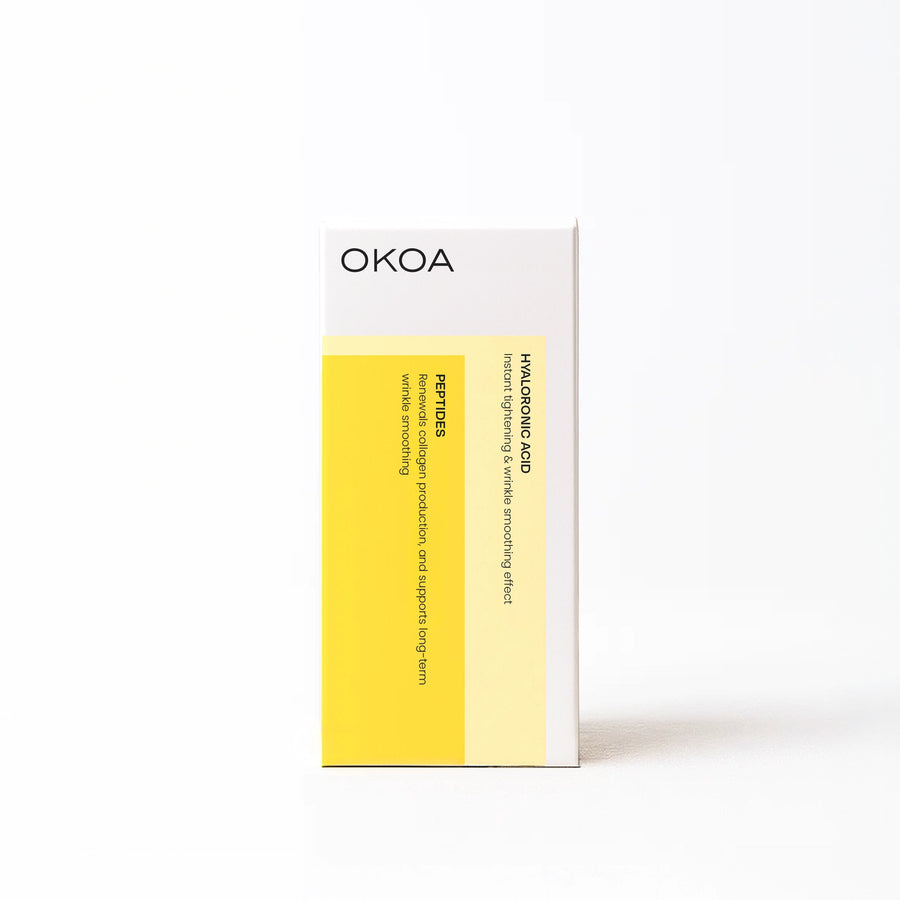
Okoaskin Dual Action Lifting Cream
The firming step after 40
Powered by IDEALIFT (acetyl dipeptide-1 cetyl ester) peptide: an immediate smoother look plus firming that builds. In IDEALIFT-maker Sederma's two-month, placebo-controlled study, 80% of participants reported firmer-looking skin and jowl sagging measured 11% less.
Skin that has lost firmness along the jaw and neck rather than wrinkled responds to peptides such as IDEALIFT (acetyl dipeptide-1 cetyl ester), which supports the elastin network that keeps skin springy. The Okoaskin Dual Action Lifting Cream is $44.88 on subscription ($61.90 one-time) with a 90-day money-back guarantee.
FAQ
Can you really tighten skin after 40?
Yes.
You can support firmer-looking skin after 40 through sunscreen, consistent skincare, good barrier support, and in some cases procedures. But the level of change depends on whether the issue is dehydration, crepey texture, volume loss, or true laxity.
What is the best treatment for skin tightening after 40?
It depends on the concern.
For mild concerns, daily sunscreen, moisturizing, a peptide firming cream, and retinoids if tolerated are a sensible place to start. For more obvious laxity, treatments like radiofrequency, ultrasound, lasers, or microneedling may be worth discussing with a qualified clinician.
How long does skin tightening after 40 take to show results?
Hydration-related improvement can show within days.
More meaningful firmness changes usually take weeks to months of steady care. A firming cream with a tightening base also shows a smoother look on application.
Does retinol help with skin tightening after 40?
It can help support firmer-looking skin over time.
Retinol and other retinoids are among the better-supported at-home ingredients for texture and collagen support. But they work slowly, and they can irritate dry or reactive skin if introduced too aggressively.
Can loose neck skin improve without surgery after 40?
Yes, for mild to moderate looseness.
If the issue is mild and partly related to dryness or early laxity, a peptide firming cream tightens the look on application and supports firmness over weeks, and ultrasound or radiofrequency treatments go deeper. If the looseness is advanced, surgery gives the most visible result.
Why does my skin suddenly look crepey after 40?
It is often a mix of factors.
Lower collagen, slower renewal, sun damage, hormonal change, dehydration, and barrier stress can all make skin suddenly look thinner or more papery. Sometimes what looks like sudden aging is actually dryness or irritation layered on top of longer-term change.
What is the Okoaskin Dual Action Lifting Cream and what is in it?
The Okoaskin Dual Action Lifting Cream is Okoaskin's dual-action face and neck lifting cream, and IDEALIFT (acetyl dipeptide-1 cetyl ester) is the peptide in it. 80% of participants reported firmer-looking skin in a two-month, placebo-controlled study at IDEALIFT-maker Sederma, where jowl sagging also measured 11% less. The Okoaskin Dual Action Lifting Cream is $44.88 on subscription and $61.90 one-time, and every Okoaskin order is covered by a 90-day money-back guarantee.
 Okoaskin Dual Action Lifting Cream · IDEALIFT
$44.88 $61.90
Shop now
Okoaskin Dual Action Lifting Cream · IDEALIFT
$44.88 $61.90
Shop now
Read more
Learn what non-surgical facelift options actually do, and why most don’t “lift” in the way people expect. From fillers to lasers, each treatment solves a different problem, meaning the right ch...
Preview ✓ Expert Reviewed Written ByAshley MangtaniContent Writer Reviewed ByLindi GraceR&D Cosmetic Chemist Last updated September 16, 2026 What changed ...