
Best Anti Aging Cream for 60s: What Actually Helps Wrinkles, Dryness, and Sagging Skin
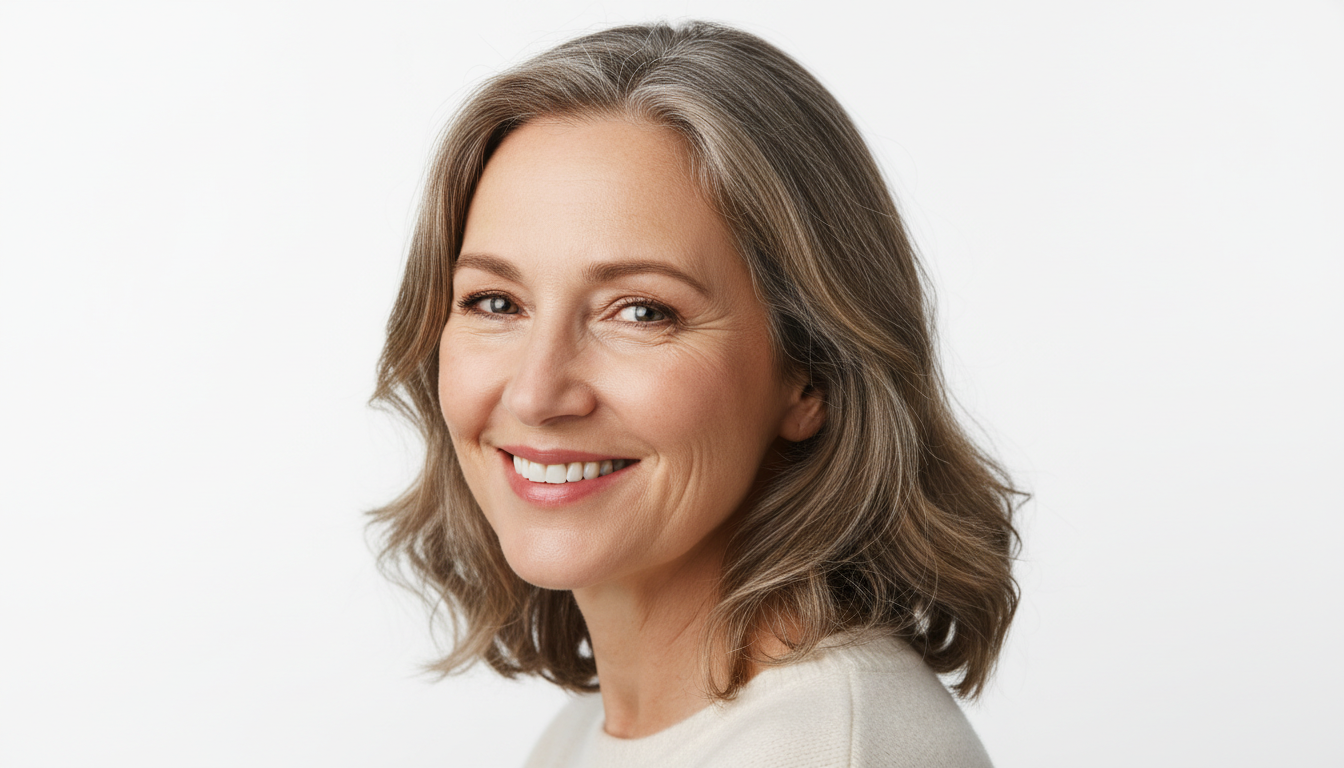
What makes the best anti aging cream for 60s different
Anti-aging creams tend to overpromise. That is especially obvious once you reach your 60s, when a basic moisturizer often stops being enough on its own.
In this decade, skin often feels drier, thinner, and less resilient than it did before. Cell turnover slows. Wrinkles can look more established. Tone may appear less even after years of sun exposure. Mild to moderate laxity also becomes more noticeable, particularly around the cheeks, jawline, and neck.
That does not mean one cream needs to do everything. In practice, the best anti aging cream for 60s depends on three things: your main concern, your skin's tolerance level, and whether your priority is hydration, firmness support, wrinkle softening, or barrier repair.
Looking at top lifting creams gives you a sense of which formulas suit mature skin.
Why skin in your 60s often needs a different approach than in your 40s or 50s
Skin needs shift with age. Someone shopping for the best anti aging cream for 40s may be focused on early fine lines, uneven tone, and prevention. The best anti aging cream for 50s often needs to do more around dryness, texture, and visible firmness. By your 60s, those concerns usually deepen, and skin is often less forgiving of aggressive routines.
That is why stronger is not always better. A cream that worked well in your 40s may now feel too light, too irritating, or too narrow in what it addresses. Mature skin often responds best to formulas that combine active ingredients with meaningful barrier and moisture support.
The short answer: what the best face cream for wrinkles and sagging skin should do
A good anti-aging cream for this age group should do four things well:
- support hydration
- reinforce the skin barrier
- include evidence-aware actives such as retinoids, peptides, antioxidants, or niacinamide
- set realistic expectations about what topical skincare can and cannot do
In other words, the best face cream for wrinkles and sagging skin should improve skin quality. It should not pretend to replace a procedure.
Which ingredients matter most in the best anti aging skin care products for 60s
Ingredients matter more than packaging, price, or vague claims about "lifting" and "renewal." The most useful formulas for skin in your 60s usually combine a few well-chosen active categories rather than relying on one headline ingredient.
The main ones worth looking for are retinoids, peptides, ceramides, hyaluronic acid, niacinamide, antioxidants, and nourishing emollients. Some give faster cosmetic improvement. Others work more gradually with consistent use.
Retinoids for wrinkles, texture, and long-term renewal
Retinoids remain one of the benchmark ingredients for visible aging concerns. They can improve the appearance of fine lines, uneven texture, and dullness over time by encouraging skin renewal and supporting collagen production.
That said, skin in your 60s is often drier and more reactive. A lower-frequency approach usually works better than pushing for maximum strength too quickly. Using a retinoid two or three nights a week, then increasing slowly if tolerated, is often smarter than daily use from the start.
Peptides for firmness support when skin is becoming more fragile or sensitive
Peptides are a useful option when firmness is a concern but stronger actives feel too irritating. They work more gradually than retinoids, but they are often easier to tolerate and fit well into a long-term routine.
For women whose skin feels thinner, more fragile, or consistently dry, peptide-led creams can make sense as a steadier, lower-irritation approach. The tradeoff is patience. Results tend to be cumulative rather than dramatic.
Ceramides, hyaluronic acid, and nourishing lipids for dryness and crepey texture
Hydration matters more in your 60s than many product labels admit. Ceramides help reinforce the barrier. Hyaluronic acid draws in water and can quickly improve the look of surface dehydration. Richer lipids and oils help reduce tightness and make skin feel more comfortable.
This can make fine lines and crepey texture look less pronounced fairly quickly. But it is important to separate plumping from lifting. Well-hydrated skin often looks smoother. That does not mean the cream has structurally tightened deeper sagging.
Vitamin C, niacinamide, and antioxidants for tone, dullness, and photodamage
If your main issue is not just wrinkles but also dark spots, sallowness, or a general loss of radiance, antioxidant support matters. Vitamin C can help brighten the look of skin and support collagen-related pathways. Niacinamide is a strong all-rounder that can help with tone, barrier support, and overall resilience. Other antioxidants help address the visible effects of cumulative sun and environmental exposure.
These ingredients tend to work best as part of a broader routine rather than a single miracle cream.
Daily use of skin firming creams adds steady barrier and surface support.
How to choose the right cream based on your main concern
Most women in their 60s are not looking for a cream in the abstract. They are trying to solve a specific problem. That is the better way to shop.
If your main concern is wrinkles and rough texture
Look for a retinoid-led or peptide-led cream with solid barrier support built in. If your skin still tolerates retinoids well, they usually offer more visible change in texture over time. If irritation has become a recurring issue, peptides may be the better long-term fit.
The real decision is not strongest versus weakest. It is effectiveness versus tolerability.
If your main concern is dry, dull, or crepey skin
Prioritize richer creams with humectants, ceramides, antioxidants, and nourishing oils. These formulas often give the fastest visible improvement because dehydration makes mature skin look older than it is.
They can improve comfort, softness, and the appearance of fine lines. But if what you are seeing is significant sagging rather than surface crepiness, that is a different issue.
If your main concern is sagging or loss of firmness
This is where many searches for the best face cream for wrinkles and sagging skin get frustrated. Mild visible laxity may improve somewhat with peptide-rich or firming-focused creams. Skin can look smoother, better hydrated, and a bit more refined.
Deeper structural sagging is different. Topical skincare has a ceiling here. It may support skin quality, but it cannot recreate lost facial volume or produce procedure-level lifting.
If your skin is sensitive or you have not tolerated stronger actives well
Take the gentler path. Choose a barrier-supportive cream with ceramides, peptides, niacinamide, and soothing emollients. Introduce one new product at a time. Patch test first. Avoid the common mistake of layering too many actives at once.
If you are pregnant, nursing, or managing a diagnosed skin condition, check with your dermatologist before introducing stronger actives.
If you want the best results from a cream you will actually use consistently
Consistency matters more than buying the most expensive jar. Texture, fragrance tolerance, routine simplicity, and price-to-value all affect whether a cream becomes part of your daily routine.
A cream that is elegant enough to use every day will usually outperform a more aggressive formula that sits unopened after two weeks.
Do anti-aging creams in your 60s actually work? Realistic expectations and limitations
This is the right question. Scepticism is warranted.
Anti-aging creams can work, but only within the limits of topical skincare. Some improvements are realistic. Some are not.
Hydration effects can show up quickly, sometimes within days. Peptide and retinoid benefits build more slowly over weeks to months of consistent use. Most worthwhile creams improve the appearance of skin quality rather than changing deeper facial structure.
What a good anti-aging cream can improve
A good cream may improve:
- skin softness and comfort
- hydration and the look of dryness
- smoother-feeling texture
- the appearance of fine lines
- visible radiance
- mild surface crepiness
- some aspects of mild laxity
What even the best anti aging cream for 60s cannot do
Even an excellent cream cannot:
- remove excess skin
- recreate lost facial fat or volume
- lift advanced sagging the way in-office treatments can
- erase deep structural folds
That limitation is not a failure of skincare. It is just the boundary of what topical products are able to do.
When to consider procedures or dermatologist guidance instead of another cream
If you are dealing with marked sagging, persistent irritation, rapidly changing pigmentation, or a concern that does not respond to well-chosen skincare, it may be time for a different conversation.
Dermatologist guidance can help if you need prescription-strength treatment, a more structured plan, or clarity on whether a procedure would better match your goals.
Best anti aging cream for 60s: product categories and who each one suits best
There is no single universal winner here. The best option depends on what you want the cream to do.
Best if you want immediate visible smoothing plus longer-term firmness support
Okoa Dual Action Lifting Cream is worth considering if your goal is a dual-action formula rather than a retinol-first treatment. According to the Okoa product page, it uses IDEALIFT technology for an immediate visible lift and a surface-level "Botox effect," with long-term transformation through peptide activity.
The formula is also positioned as suitable for all skin types and includes clinically-proven peptides, ceramides, antioxidants, Aloe Vera, Baobab, and nourishing oils. That makes it a reasonable fit for women who want visible smoothing now, but also want a cream that supports longer-term skin quality.
Why Okoa may appeal to some readers but not all
The strongest practical differentiator is the 90-day money-back guarantee. That matters because skincare takes time, and it lowers the risk of trying a newer brand.
It is also fair to say that, as a newer brand, Okoa has less long-term independently published clinical history than some established clinical-grade competitors. The guarantee is how the brand answers that gap honestly.
Buy it if you want a peptide-led, dual-action cream with immediate visible smoothing and a lower-risk trial window. Consider another route if your top priority is a classic retinol-led treatment with a longer established clinical track record.
Best if you want a retinol-led cream and can tolerate stronger actives
If wrinkle smoothing and texture are your main priorities, and your skin still handles stronger actives well, a retinol-focused cream may be the better fit. This category tends to offer more visible long-term payoff for roughness and fine lines.
The tradeoff is tolerability. Very dry, fragile, or reactive skin may not do well here without careful pacing and barrier support.
Best if your priority is barrier support and comfort
If your skin feels tight, fragile, flaky, or easily irritated, richer ceramide-forward creams often make the most sense. They may not give the most dramatic visible anti-aging effect, but they can improve comfort, hydration, and overall skin quality enough that the skin looks healthier and less stressed.
That is often the right starting point when mature skin has been overtreated.
How to compare value, risk, and fit before buying
Compare products by asking:
- Does the ingredient profile match my main concern?
- How likely is this formula to irritate my skin?
- Will I enjoy using this texture every day?
- Is the price reasonable for the benefit category?
- Is there a guarantee or low-risk trial option?
- Can I realistically stay consistent with it for at least 8 to 12 weeks?
These questions are usually more helpful than chasing the most expensive product on the shelf.
How to build a simple anti-aging routine in your 60s that supports your cream
Even the best cream works better inside a routine that is simple and consistent.
Morning routine: antioxidant support, moisturizer, and SPF
In the morning, keep it straightforward: gentle cleanse if needed, antioxidant or treatment step if you use one, moisturizer, then sunscreen.
SPF remains non-negotiable. No anti-aging routine works well if daily UV exposure continues to break down collagen and worsen pigmentation. This is especially true if you are using retinoids or exfoliating acids.
Evening routine: repair, hydration, and active rotation
At night, focus on repair. This might mean using a retinoid a few evenings a week, with your cream layered around it for support. Or it may mean using a peptide-rich cream nightly if your skin is dry or sensitive and your goal is steady improvement with less irritation.
You do not need a complicated routine. Cleanser, one main active or treatment cream, and a supportive moisturizer is often enough.
Common mistakes that make a good cream seem ineffective
A well-formulated cream can look disappointing if the routine around it is working against it. Common problems include:
- inconsistent use
- over-exfoliation
- skipping sunscreen
- adding too many new products at once
- expecting structural lifting from a topical cream
The closer your routine is to simple, steady, and well-matched to your skin, the better your odds of seeing real improvement.
FAQ
What is the best anti aging cream for 60s with dry skin?
Usually, the best option for dry skin in your 60s is a richer cream with ceramides, hyaluronic acid, emollients, and supportive actives like peptides or niacinamide. If dryness is severe, barrier support should come before stronger exfoliating or retinoid-focused formulas.
Do anti-aging creams really work for wrinkles and sagging skin in your 60s?
They can improve the appearance of fine lines, texture, dryness, radiance, and mild laxity. They do not replace procedures for significant sagging or deeper structural changes. The most realistic expectation is better skin quality, not a surgical lift in a jar.
Outside of in-office options, creams for tightening effects offer a softer, daily approach.
Should women in their 60s use retinol or peptides?
It depends on tolerance and goals. Retinol usually offers stronger long-term improvement for wrinkles and texture, but peptides are often easier to tolerate and can be a better fit for dry, fragile, or sensitive skin. Many women do well with one or the other, or with a routine that uses both carefully.
Can I use the same face cream in my 60s that I used in my 40s or 50s?
You can, but it may no longer be the best fit. Skin in your 60s often needs more barrier support, more hydration, and a gentler balance of actives. A formula that once felt ideal may now feel too light or too irritating.
How long does it take to see results from an anti-aging cream in your 60s?
Hydration benefits can show up quickly, often within days. Peptide and retinoid benefits usually take several weeks to a few months of consistent use. A fair evaluation window is about 8 to 12 weeks, assuming the product is used regularly.
What ingredients should I look for in the best anti aging skin care products for 60s?
Look for ingredients that match your main concern: retinoids for wrinkles and texture, peptides for firmness support, ceramides and hyaluronic acid for dryness, niacinamide for barrier and tone support, antioxidants like vitamin C for dullness and photodamage, and nourishing lipids for comfort and resilience.
Read more

What changes in your skin during your 50s, and what an anti-aging cream can realistically do By your 50s, skin often needs more than a basic moisturiser. Collagen production declines with age, cell...
What the best lifting cream can and cannot do Skepticism around lifting creams is reasonable. A lot of formulas use language that implies a facelift in a jar, and that is where the category loses t...