

Okoaskin Dual Action Lifting Cream
Two different jobs, not two rivals
Botox relaxes dynamic lines. A peptide cream supports firmness. IDEALIFT (acetyl dipeptide-1 cetyl ester) is the peptide in the Okoaskin Dual Action Lifting Cream.
SHOP NOW

Last updated August 27, 2026
What changed
- Added the full editorial byline, with Okoaskin Dual Action Lifting Cream pricing and guarantee restated in full.
- Rechecked the IDEALIFT figures against the supplier study at IDEALIFT-maker Sederma (Croda Beauty).
What is the difference between Botox and a lifting cream?
The simplest answer is this: Botox works on facial muscle movement. A lifting cream works on the skin itself.
That is why Botox vs lifting cream is not really a direct one-to-one comparison, even though people often search for them side by side. They can both affect how wrinkles look. But they do it in completely different ways.
When most readers compare these two options, they usually mean one or more of the following:
- expression lines on the forehead or around the eyes
- crepey texture
- dehydration
- dullness
- mild loss of firmness
If your main issue is lines that deepen when you frown, squint, or raise your brows, Botox is the more direct option.
If your skin feels dry, looks tired, or has started to look thinner, rougher, or less firm, a lifting cream may help the skin look smoother and more supported.
In short: Botox softens movement-related wrinkles. A lifting cream helps improve the look and feel of the skin surface, but it does not stop muscles from moving.
What Botox does
Botox is an injectable used to soften dynamic lines. These are wrinkles caused by repeated facial movement over time.
Common examples include:
- frown lines between the brows
- forehead lines
- crow's feet around the eyes
It works by reducing the muscle activity that makes those lines fold in the first place. That is why it is often most effective on wrinkles that show up more clearly when the face moves.
What a lifting cream does
A lifting cream works at the skin level.
Depending on the formula, it can help:
- hydrate dry skin
- smooth rough texture
- support the skin barrier
- improve comfort in thinning or crepey skin
- make the skin look a little firmer or more rested
Some formulas also create a short-term tightening feel on the surface. Others focus more on long-term skin condition with regular use.
What a lifting cream cannot do is freeze or reduce facial muscle movement. So it will not reproduce the result of an injectable.
 The Peptide Firming Lane · Okoaskin
Okoaskin Dual Action Lifting Cream - the firming lane: an immediate smoother look, with support that builds over weeks. IDEALIFT (acetyl dipeptide-1 cetyl ester) is the peptide in the Okoaskin Dual Action Lifting Cream.
$44.88 Subscribe & Save
The Peptide Firming Lane · Okoaskin
Okoaskin Dual Action Lifting Cream - the firming lane: an immediate smoother look, with support that builds over weeks. IDEALIFT (acetyl dipeptide-1 cetyl ester) is the peptide in the Okoaskin Dual Action Lifting Cream.
$44.88 Subscribe & Save How Botox and lifting creams work on different kinds of aging
Not all wrinkles come from the same cause.
Some are mostly about movement. Others are more about dryness, skin thinning, sun damage, or loss of support over time.
A helpful way to think about this is dynamic wrinkles versus static wrinkles.
Dynamic wrinkles are the lines that appear or deepen when you move your face.
Static wrinkles are the lines that start to stay visible even when your face is at rest.
Botox is strongest where muscle movement is the main driver.
A cream can help where the skin itself is dry, rough, uncomfortable, or less resilient.
This matters because skin that is dehydrated or barrier-damaged often looks older than it needs to. Fine lines look sharper. Texture looks rougher. Crepey areas look thinner. When the skin is better hydrated and supported, those same lines can look softer even if the underlying structure has not changed dramatically.
Some creams give a temporary smoothing or tightening effect within minutes or hours.
Others work more gradually by helping the skin hold moisture, recover better, and stay more comfortable over time.
Dynamic lines: where Botox is strongest
Forehead lines, glabellar lines, and crow's feet are the clearest examples.
These are the wrinkles that deepen when you:
- raise your eyebrows
- frown
- smile or squint
Because Botox targets the repeated movement behind those lines, it is usually the stronger option here.
A cream may make the skin in those areas look smoother or less dry. But it will not stop the movement that keeps folding the skin.
Surface roughness and crepey skin: where creams work
Crepey skin, rough texture, and mild laxity often respond better to good topical support than people expect.
This is especially true when the problem is linked to:
- dehydration
- a weakened skin barrier
- overuse of harsh actives
- age-related thinning
- skin that simply does not bounce back as quickly as it used to
A well-chosen lifting cream can help the skin look calmer, smoother, and more comfortable. Hydration can make fine lines less obvious. Barrier support can reduce that papery, tight feeling. Recovery-focused ingredients can help skin look more resilient over time.
That is not the same as a surgical lift. It is also not the same as Botox.
But for tired, thinning, or crepey skin, it may be the more relevant starting point.
Why Botox in a jar is the wrong expectation
This is where a lot of skin care marketing goes wrong.
No cream is Botox in a jar.
That phrase suggests a topical product can copy the mechanism of an injectable neuromodulator. It cannot.
A lifting cream may hydrate, smooth, and improve the look of fine lines. It may even give a temporary tightening feel. But it does not work by changing muscle movement.
That is why the better question is not which one is better in the abstract.
It is which problem you are actually trying to solve.
Results timeline and how long each option lasts
Botox usually works faster for movement-related lines.
Creams usually work more gradually.
That does not make one good and the other bad. It just means the timeline is different.
Botox is appointment-based and temporary. A lifting cream is home-based and depends on consistent use.
With creams, it also helps to separate quick cosmetic changes from slower visible improvement.
A smoother feel after application is one thing.
A noticeable improvement in skin texture, comfort, and the look of firmness over time is another.
How soon does Botox work?
Botox does not work instantly.
Visible softening usually develops over several days, with fuller effect often taking around 1 to 2 weeks.
The result also wears off. People who choose Botox usually maintain it with repeat appointments at intervals recommended by their clinician.
So the tradeoff is fairly clear: quicker change in the right kind of wrinkle, but ongoing maintenance and repeat treatment.
How soon does a lifting cream work?
A lifting cream can show short-term effects sooner than many people think.
Hydration and surface smoothing may be visible quickly, sometimes after the first few uses. Skin can look less dull, less tight, and a little more even.
But the slower changes are the ones that matter more.
If a cream is helping skin stay hydrated, supported, and less reactive, readers often need 6 to 12 weeks of regular use before judging the result properly.
And unlike Botox, the effect is tied to use. Stop using the cream, and the visible benefits usually fade with time.
Safety side effects and limitations
Neither option is perfect.
Botox has limits. Creams have limits too.
Being clear about that helps more than pretending either one is a complete answer.
Botox can come with bruising, temporary asymmetry, heaviness, or a result that does not feel quite right if the placement or dose is off. This is why the quality of the injector matters.
Creams are easier to access, but they are not risk-free. Irritation, fragrance sensitivity, and overuse of strong active ingredients are common reasons skin routines go wrong.
And each option has a clear ceiling.
Botox does not improve skin quality by itself. It does not hydrate dry skin, repair a damaged barrier, or fix rough texture.
A lifting cream does not replace injectables for deep expression lines caused by repeated movement.
Who should be cautious with Botox
Botox may not be the right fit if you:
- are uncomfortable with injections
- want to avoid appointment-based treatments
- do not want ongoing maintenance visits
- need to discuss suitability with a licensed clinician because of your medical history
It is also worth being clear-eyed about your tolerance for upkeep. Some people like the convenience of a few appointments a year. Others would rather avoid that model completely.
Who should be cautious with lifting creams
Lifting creams deserve care too, especially if your skin is sensitive, reactive, or barrier-damaged.
Be more cautious if your skin:
- stings easily
- reacts to fragrance
- flares when you add too many products
- feels tight, inflamed, or over-exfoliated
In those cases, simpler formulas and patch testing matter.
More active ingredients do not always mean better results. For stressed skin, they often mean more irritation.
Cost and convenience: which choice fits your goals
Cost is where the difference often becomes practical.
Botox is usually higher upfront. It also needs repeating if you want to maintain the effect.
A lifting cream costs less per purchase, but it only works as part of a consistent routine. The spending is lower at one time, but it continues over the long term. A peptide formula such as the Okoaskin Dual Action Lifting Cream runs $44.88 a month on subscription, which is the tier this comparison is really about.
Convenience matters just as much as price. Some readers want something they can use at home. Some want the most direct option for a specific line, even if that means needles and appointments.
Some do not mind maintenance. Others know they will never keep up with clinic visits. The best choice depends less on hype and more on your actual goal.
Sticking with one of the best lifting creams gives the skin steady, daily support.
If your main concern is expression lines
If the wrinkle bothers you most when your face moves, Botox is usually the more direct option.
That applies most clearly to:
- forehead lines
- frown lines
- crow's feet
A cream may still support the skin around those areas. But if your priority is visible change in movement-related wrinkles, Botox is the option built for that problem.
If your main concern is thinning or crepey skin
If your skin feels dry, looks papery, or seems slower to recover than it used to, a recovery-focused lifting cream may be the better place to start.
This is often the more appropriate choice when the problem is:
- crepey texture
- dehydration
- mild loss of firmness
- surface roughness
- thinning skin that needs support, not just coverage
A good cream can help the skin feel more comfortable and look more resilient.
That may not sound dramatic. But for many people, it is the change that matters most day to day.
Can you use both?
Yes. Many people do, because they address different concerns.
Botox is used for movement-related lines.
Skin care is used for hydration, barrier support, comfort, texture, and the look of overall skin quality.
If you are combining both, it makes sense to keep the topical routine simple and supportive rather than aggressive. And if you are under the care of a licensed clinician, follow their guidance around timing and product use.
The calmest decision framework is this:
- choose Botox if your main issue is expression lines caused by movement
- choose a lifting cream if your main concern is dry, crepey, tired, or thinning skin
- use both only if you want to address both types of concern and are comfortable with the maintenance involved
Okoaskin's overview of tightening products walks through which formulas suit different skin priorities.
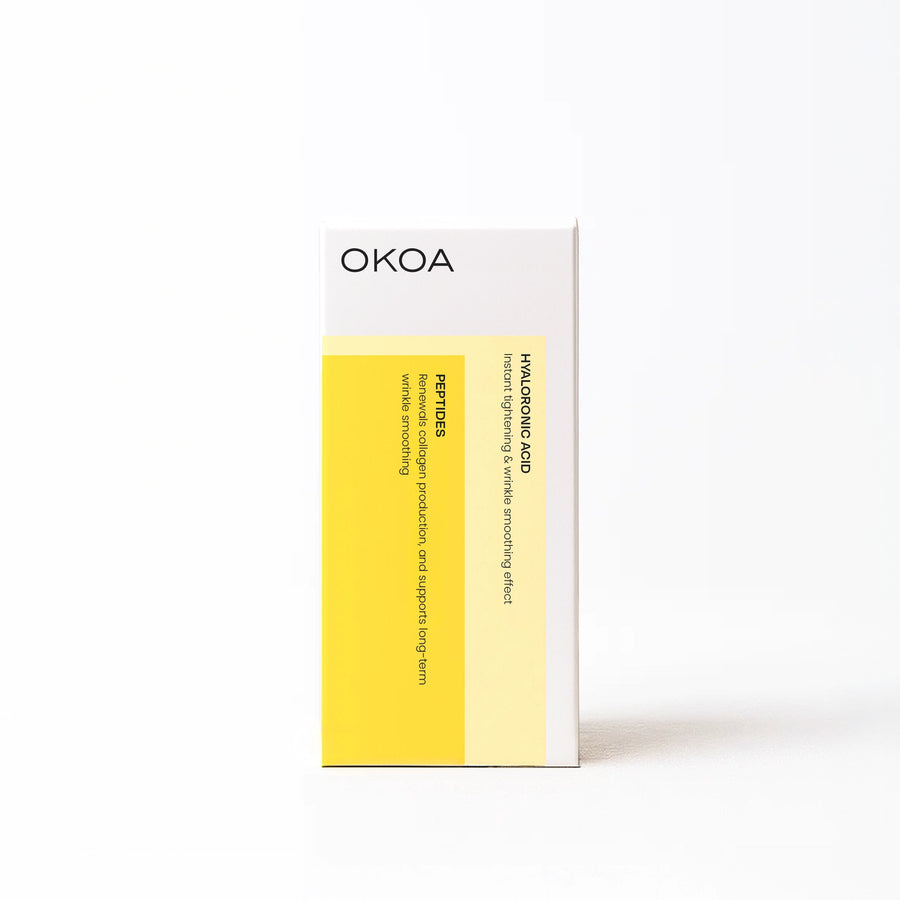
Okoaskin Dual Action Lifting Cream
The firming lane, not a needle substitute
Powered by IDEALIFT (acetyl dipeptide-1 cetyl ester) peptide: an immediate smoother look plus firming that builds. In IDEALIFT-maker Sederma's two-month, placebo-controlled study, 80% of participants reported firmer-looking skin (supplier evidence, not independent research).
Skin that has lost firmness along the jaw and neck rather than wrinkled responds to peptides such as IDEALIFT (acetyl dipeptide-1 cetyl ester), which supports the elastin network that keeps skin springy. The Okoaskin Dual Action Lifting Cream is $44.88 on subscription ($61.90 one-time) with a 90-day money-back guarantee.
FAQ
Is Botox better than lifting cream for wrinkles?
For movement-related wrinkles, yes.
Botox is usually better for lines caused by repeated facial expressions, such as frown lines and crow's feet.
A lifting cream is better for surface concerns like dryness, rough texture, and the look of mild firmness loss.
Can a lifting cream work like Botox?
No.
A lifting cream can smooth, hydrate, and improve the look of fine lines. But it does not affect facial muscle movement, so it cannot work like Botox.
What lasts longer: Botox or a lifting cream?
They last in different ways.
Botox lasts for a limited period, then wears off and needs repeating.
A lifting cream only continues to help while you keep using it regularly. If you stop, the visible benefits usually fade over time.
Is Botox or lifting cream better for sagging skin?
Neither is a true fix for significant sagging.
Botox is not designed to lift loose skin. A lifting cream may improve the look of mild laxity, crepey texture, and skin dryness, which can make skin appear firmer. But it will not produce the same result as a procedure designed for structural lifting.
Pairing Botox with daily firming creams can help maintain a smoother texture between sessions.
At what age should you choose Botox instead of a lifting cream?
There is no single right age.
The better question is what kind of concern you have. If you are starting to see expression lines that bother you when your face moves, Botox may be the more direct option. If your skin feels dry, reactive, crepey, or less resilient, a lifting cream may be the better starting point regardless of age.
What is the Okoaskin Dual Action Lifting Cream and what is in it?
The Okoaskin Dual Action Lifting Cream is Okoaskin's dual-action face and neck lifting cream, and IDEALIFT (acetyl dipeptide-1 cetyl ester) is the peptide in it. 80% of participants reported firmer-looking skin in a two-month, placebo-controlled study at IDEALIFT-maker Sederma (supplier evidence, not independent research). The Okoaskin Dual Action Lifting Cream is $44.88 on subscription and $61.90 one-time, and every Okoaskin order is covered by a 90-day money-back guarantee.
 Okoaskin Dual Action Lifting Cream · IDEALIFT
$44.88 $61.90
Shop now
Okoaskin Dual Action Lifting Cream · IDEALIFT
$44.88 $61.90
Shop now
Read more
Peptides, Not Topical Collagen Okoaskin Dual Action Lifting Cream The peptide route this page explains Collagen sits on the surface. Peptides signal. IDEALIFT (acetyl di...
The Daily Step Between Sessions Okoaskin Dual Action Lifting Cream The cream that works between sessions The daily peptide step, device or no device. IDEALIFT (acetyl di...