


Last updated October 25, 2026
What changed
- Updated the routine order to answer the morning, every-night and moisturizer questions first.
- Added how often to use retinol by skin type and strength, next to the week-by-week schedule.
- Added a table of what to mix and what not to mix with retinol.
- Reviewed with our R&D cosmetic chemist for accuracy.
Apply retinol at night, on clean and fully dry skin, after cleansing and before moisturizer. Start with one to three nights a week, build toward every other night over about six weeks, then nightly if your skin stays comfortable, and wear sunscreen every morning. That is the whole routine for most people, and it works for serums and creams alike.
The details are where people get stuck: whether retinol can go on in the morning, whether moisturizer goes first, how fast to build to nightly use and which products to keep off the same night. This guide answers each one with a simple schedule you can follow week by week.
Should you apply retinol morning or night?
Retinol belongs in your evening routine. Sunlight breaks retinol down, and your skin is more sun-sensitive while you use it, so night is when it has the best chance to work and the least chance to irritate.
Using it at night does not remove the need for sunscreen. Because retinol can make skin more sensitive to UV, a broad-spectrum SPF 30 or higher every morning protects both your skin and the progress you are building.
Can you use retinol in the morning?
You can, but there is little reason to. A morning layer sits under daylight all day, needs a strict sunscreen routine on top and competes with your vitamin C or SPF for space. If your evenings are unpredictable, pick a fixed time such as right after your evening shower rather than moving retinol to the morning.
Can you use retinol morning and night?
Not with over-the-counter retinol. Twice a day doubles the irritation risk without a clear benefit. One evening application, used consistently, is the standard routine.
Where retinol goes in your skincare routine
Retinol is the treatment step in a short evening routine. Put it on after cleansing and before moisturizer:
- Cleanse with a mild, non-exfoliating cleanser.
- Pat dry and wait a few minutes until your skin is fully dry. Damp skin can pull retinol in faster and raise irritation.
- Apply a pea-sized amount of retinol to the whole face. Dot it on the forehead, cheeks and chin, then spread it out. Keep it away from the lash line, lips and the creases of the nose.
- Moisturize to cut down dryness and support your skin barrier, for example with the Okoaskin Deep Hydration Moisturizer.
Retinol before or after moisturizer?
Before moisturizer, for most people. Retinol goes on bare skin so it reaches the skin directly, and moisturizer seals it in.
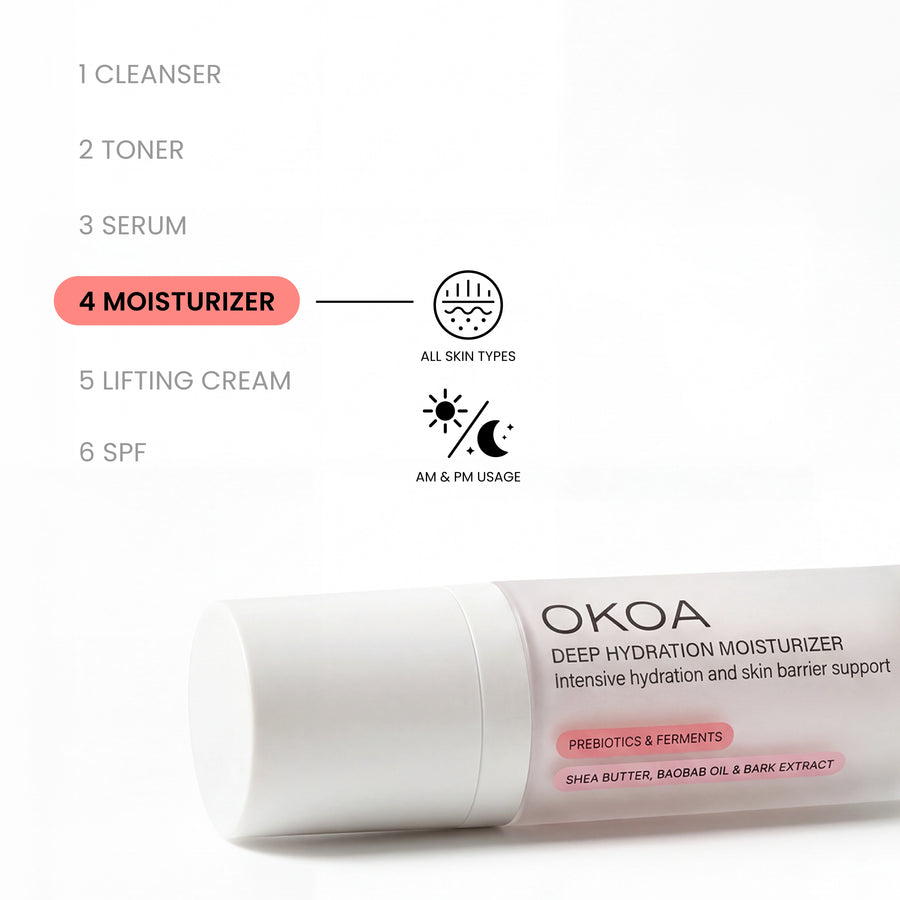
If your skin stings or flakes, switch to the sandwich method: a thin layer of moisturizer, then retinol, then more moisturizer. The first layer slows how quickly retinol reaches your skin, which makes it easier to tolerate. Many people use the sandwich method for the first month and then drop the bottom layer.
Does the order change for retinol serum vs retinol cream?
The order stays the same. A retinol serum is thinner and goes on first, followed by your moisturizer. A retinol cream often has emollients built in, so on dry or normal skin it can work as your last step. On very dry skin, add moisturizer on top of either. The full skincare routine order puts cleanser, toner and serum before moisturizer, with sunscreen last in the morning.
Your AM and PM routine with retinol
Split your actives between morning and night so they do not compete:
Vitamin C in the morning and retinol at night is the easiest way to use both without stacking two strong actives in one sitting.
How often to use retinol
Start with one to three nights a week and increase only when your skin stays comfortable: one night if your skin is dry or sensitive, two or three if it is oily or already used to exfoliating acids. A slow start gets you further than a fast one, because irritation is the main reason people quit retinol in the first month.
The 1-2-3 rule for starting retinol
The 1-2-3 rule is a common ramp-up for first-time users. Each 🌙 is a retinol night; the other nights are cleanser and moisturizer only.
If your skin starts stinging, peeling or feeling tight, step back to the previous week's schedule for a week before trying again.
How often to use retinol for your skin type
Oily and acne-prone skin usually handles retinol well, so it can move up the schedule on time. Dry, sensitive and mature skin does better spending two weeks at each step and using the sandwich method: a thin layer of moisturizer, then retinol, then moisturizer again. If you have rosacea or eczema, ask a dermatologist before you start, because retinol can irritate both.
Does retinol strength change how often you use it?
Yes. The stronger the retinol, the slower the start. A gentle, low-strength formula can usually reach nightly use within six to eight weeks, while a high-strength one may stay at every other night for good. If you are new to retinol, a lower strength you can use most nights will do more for you than a strong one your skin only tolerates once a week.
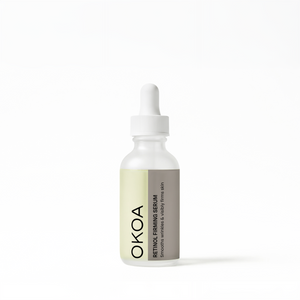
Our Retinol Firming Serum pairs retinol with bakuchiol, squalane and hyaluronic acid. Its directions start at two to three nights a week and build to nightly as your skin allows, with sunscreen the next morning. If your skin is dry or sensitive, use it on the slower 1-2-3 schedule above.
Can you use retinol every night?
Yes, once your skin has adjusted. Most people can reach nightly use after six to eight weeks. Some skin never needs to: if every other night gives you steady results without irritation, that schedule is enough.
Nightly use is not the goal in itself. The goal is a schedule you can keep for months, because retinoid results build gradually over several months.
Is once or twice a week enough?
It can be, if that is all your skin tolerates. Retinol works through steady use over months, so the best frequency is the highest one your skin handles without stinging or peeling. For reactive skin that may stay at twice a week, and a schedule you keep beats a nightly one you give up on.
How long does retinol take to work?
Take a photo in the same light on day one. Progress is slow enough that most people only see it when they compare.
Purging or irritation?
A short breakout phase can happen when you start, mostly in acne-prone skin and in the areas where you usually break out. That is purging, and it tends to settle within four to six weeks.
Irritation looks different: burning that does not fade, redness across areas you never break out in, heavy peeling, or plain moisturizer suddenly stinging. Cut back to fewer nights, keep the rest of your routine bland, and stop and see a dermatologist if it does not improve.
What not to mix with retinol
Keep other strong actives off your retinol nights. Retinoids can irritate on their own in the first months, and adding exfoliants on the same night makes a damaged barrier more likely.
If you use a prescription acne or pigment treatment, ask your dermatologist before adding retinol on top.
Retinol Firming Serum$44.90Shop now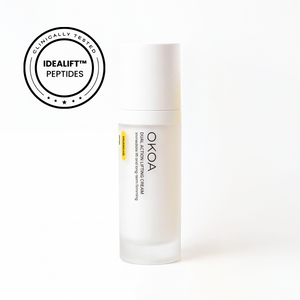 Dual Action Lifting Cream$61.90 or $44.88/moShop now
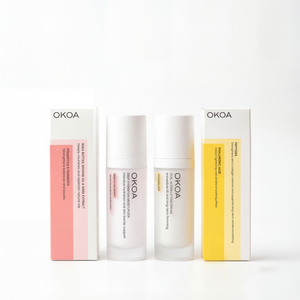 Hydrate & Lift set$81.90 for bothShop now
How to start a retinol serum at night
A retinol serum fits the same five-step evening routine every time:
- Cleanse and pat your skin dry.
- Wait until your skin feels fully dry.
- Apply a few drops, or a pea-sized amount, across the face.
- Follow with a plain moisturizer.
- Skip exfoliating acids that night, and wear SPF the next morning.
The Okoaskin Retinol Firming Serum follows this routine. Its label directions say to start two to three times a week at night, build toward nightly use as tolerated, follow with moisturizer and wear SPF the next morning. The formula is powered by bakuchiol, a plant-derived retinol alternative that in a 12-week double-blind trial smoothed wrinkles and evened tone about as well as retinol, with less stinging and scaling. Here it works alongside retinol and retinyl palmitate in a squalane-rich base with no added fragrance, and it is made for evening use only.
Where to use retinol and where to go slower
Use retinol on the whole face, avoiding the eyelids, the corners of the nose and the lip line, where skin is thinner and irritates first.
Is 40 too late to start retinol?
No. Retinol can soften the look of fine lines, uneven tone and rough texture at any age, and studies of retinoids on aging skin include people well past 40. Drier, more mature skin often needs the sandwich method and a slower start, but it can still reach steady use.
What retinol can and cannot do
Retinol can soften the look of fine lines, rough texture, uneven tone and clogged-looking pores over months of steady use. It will not lift deep sagging or replace an in-office procedure. What it does well, over months, is help skin look smoother and firmer: in a 24-week vehicle-controlled trial, 0.4% retinol reduced fine wrinkles and increased collagen in aged skin. Within the retinoid family, retinol in skincare is the over-the-counter member, gentler and slower than prescription tretinoin because skin has to convert it to retinoic acid first.
If you want a firmer look while you wait for retinol to work, finish your retinol nights with the Okoaskin Dual Action Lifting Cream, for face and neck. Its silicates give an instant tightening film. It contains fragrance, so patch test first if your skin is reactive.
Check with a dermatologist before using retinol if you are pregnant or breastfeeding, if you have eczema or rosacea, or if you already use a prescription retinoid such as tretinoin or adapalene.
Frequently asked questions
When should I apply retinol in my routine?
At night, after cleansing and once your skin is fully dry, before moisturizer. Wear broad-spectrum sunscreen the next morning.
Can I use retinol in the morning?
You can, but night is better. Sunlight breaks retinol down and your skin is more sun-sensitive while you use it, so keep retinol for your evening routine and wear SPF every morning.
Do I apply retinol before or after moisturizer?
Before moisturizer for most people. If your skin stings or flakes, use the sandwich method: a thin layer of moisturizer, then retinol, then more moisturizer.
Can I use retinol every night?
Yes, once your skin has adjusted, usually after six to eight weeks of building up. If every other night works without irritation, that schedule is also fine.
What is the 1-2-3 rule for retinol?
It is a ramp-up schedule: one night in week one, two nights a week in weeks two and three, and three nights a week after that, moving toward every other night or nightly use as your skin allows.
How long should I wait after washing my face to apply retinol?
Wait until your skin is fully dry, usually a few minutes. Damp skin can make retinol more irritating.
What should I not mix with retinol?
Keep glycolic acid, lactic acid, salicylic acid and benzoyl peroxide off your retinol nights. Niacinamide, hyaluronic acid and peptides are fine to use with it. Of those, peptides for skin tightening are short chains of amino acids that may help the skin support its own structure over time, which makes them a good firming partner for retinol.
Read more
Learn what aloe vera can realistically do for your skin, where it falls short, and how to use it properly for the best results. We’ll also cover who it works best for, potential side effects, and h...
Learn the real difference between hyaluronic acid and sodium hyaluronate, how they hydrate skin, what labels mean, and how to choose the right formula.