


Last updated October 25, 2026
What changed
- Updated the opening with a one-paragraph definition of retinol.
- Added a beginner product option and a link to our routine guide.
- Reviewed with our R&D cosmetic chemist for accuracy.
Retinol is a form of vitamin A used in skincare to speed up skin cell turnover and support collagen, which over months softens fine lines, smooths rough texture, evens tone and makes clogged pores look clearer. It is the over-the-counter member of the retinoid family: gentler and slower than prescription tretinoin because the skin has to convert it to retinoic acid first.
Why retinol gets so much attention
Retinoids are among the most studied topical ingredients in skincare because they influence skin cell turnover and collagen-related pathways. That is why they come up so often in conversations about acne, texture, and fine lines.
A large part of retinol's reputation comes from the fact that it is one of the few over-the-counter ingredients with a long history of meaningful research behind it. That does not mean every retinol product is equally effective. It means the ingredient category itself has a credible basis for its popularity.
What concerns retinol may help with
With consistent use, retinol may help improve:
- the appearance of fine lines
- firmness (see retinol for skin firming)
- uneven skin texture
- clogged-looking pores and rough, uneven texture
- the look of dark marks left by past breakouts
- the appearance of enlarged pores
- rough, bumpy texture
The key phrase here is may help improve. Retinol can support visible change, but results depend on the formula, your skin tolerance, and how consistently you use it.
How retinol works
One of the biggest gaps in retinol content online is the conversion chain. This is the part that explains why over-the-counter retinol works more gradually than prescription tretinoin. Retinal has to convert only once to reach retinoic acid, which is why retinal vs retinol usually ends with retinal as the faster-acting of the two.
In the skin, vitamin A derivatives move through this pathway:
retinyl esters → retinol → retinaldehyde → retinoic acid
Retinoic acid is the form the skin can use directly. Each conversion step takes work, and each step generally reduces potency. That is why over-the-counter retinol is not simply "tretinoin, but weaker." It is a different delivery route that depends on the skin converting it.
Why OTC retinol is different from prescription tretinoin
Unlike OTC retinol, prescription tretinoin is retinoic acid. It bypasses the conversion process, which is why it tends to work faster and more forcefully. The tradeoff is tolerability. Faster activity often means more irritation, especially early on.
Retinaldehyde, often shortened to retinal, sits in the middle. It is one conversion step closer to retinoic acid than retinol. For some people, that makes it a useful middle ground: more active than retinol, but often easier to tolerate than prescription tretinoin.
Retinol vs retinal vs tretinoin
None of these is automatically "best." The right fit depends on your goals, skin sensitivity, and how much of a learning curve you are willing to manage.
Why a label that just says retinol tells you very little
A product label that says "retinol" sounds informative, but it often is not. Performance depends on far more than the ingredient name.
Concentration matters. There is a meaningful difference between a very low-strength formula and one built around a much higher percentage, yet many brands do not clearly disclose the amount. Packaging matters too.
Retinol is not especially stable, so opaque, air-limiting packaging tends to protect it better than jars that expose the formula repeatedly to light and air. Formula helps too: water-free, oil-based serums with vitamin E, the antioxidant retinol suppliers use to stabilize it, give retinol a kinder home than watery gels.
What results to expect from retinol
Retinol is a long game. The first thing many people notice is not smoother skin. It is irritation.
That can be discouraging, but it is also common. Visible improvements usually take weeks to months of consistent use. Clogged pores can look busier for a few weeks before they settle, which is often called purging. Texture often improves before pigmentation does. Fine lines generally take longer than hydration-based changes from moisturizers.
The adjustment phase has a name: retinization. This refers to the period when skin is adapting to a retinoid. Dryness, flaking, mild redness, and some tightness are common during this window. That is not the same thing as automatic damage. On the other hand, intense burning, cracking, persistent swelling, or ongoing dermatitis is not normal and usually means the product is too strong, too frequent, or layered badly for your skin.
Retinol also has a clear ceiling. It can improve the look of texture, tone, clogged pores and fine lines over time. Breakouts that keep coming back need a dermatologist, not a cosmetic serum, and retinol will not do what in-office procedures do for deeper structural concerns.
The first 4 to 8 weeks of adjustment
The first month or two is where most people either settle into retinol successfully or overdo it and give up.
Common early effects include:
- dryness
- flaking
- mild redness
- temporary sensitivity
- a feeling of tightness after cleansing
This adjustment window is why slow introduction matters. Starting a strong retinol every night usually does not build faster results. It usually builds irritation. A slower start tends to produce better long-term adherence, which is what actually determines whether retinol helps.
Does retinol thin the skin?
This myth persists because it contains one piece of truth taken out of context.
Retinol can thin the stratum corneum, which is the outermost layer of dead skin cells. That is part of why skin may flake and feel more delicate early on. But that is not the full story.
Over time, retinoids are associated with changes deeper in the skin that support dermal structure, including collagen-related activity. Working toward the same goal from a different angle, peptides for skin tightening support firmness without the adjustment period retinol often brings.
So while the surface layer may become more compact, the deeper skin is not being weakened in the way the myth suggests. The more accurate takeaway is that retinol can refine the surface while supporting stronger-looking skin over time.
How to start using retinol without wrecking your barrier
The best beginner protocol is usually simple.
Start with a low strength. Use it 2 to 3 nights per week. Apply it to fully dry skin. Increase slowly based on how your skin responds.
That gradual approach matters more than trying to find the "strongest" product. Consistency beats intensity, especially in the first two months. Skin that tolerates retinol calmly is much more likely to benefit from it than skin stuck in a cycle of overuse and recovery.
The neck and eye area deserve extra caution. Both are often more reactive than the rest of the face, so they may need less frequent application, a lower strength, or a delayed start.
A simple beginner routine
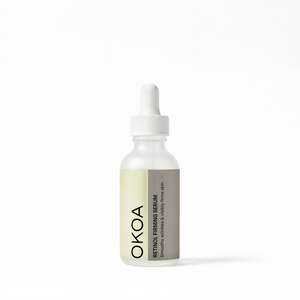
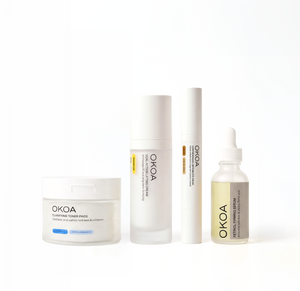
For a first retinol, the Okoaskin Retinol Firming Serum is built to be eased into. It is powered by bakuchiol (Sytenol® A), a plant-derived retinol alternative that in a 12-week double-blind trial smoothed wrinkles and evened tone about as well as retinol, with less stinging and scaling. Here it works alongside retinol and retinyl palmitate in a squalane-rich base with no added fragrance. Its directions start at two to three nights a week and build to nightly use as your skin allows. For the routine order step by step, see when to apply retinol.
A straightforward evening routine is enough:
- Gentle cleanser
- Wait until skin is fully dry
- Apply retinol
- Follow with moisturizer
That is all most beginners need. You do not need a crowded routine around retinol, and in the beginning, simpler is usually better.
The sandwich method for sensitive skin
If your skin is reactive, the sandwich method can help.
Apply a light layer of moisturizer first. Then apply retinol. Then seal with another thin layer of moisturizer.
This buffers the active without fully cancelling it. It is a practical option for people who want to stay consistent but find direct application too irritating at first.
What not to mix with retinol
A lot of retinol advice gets flattened into hard rules that are not always accurate. The better question is usually whether two ingredients are incompatible, or whether they are simply too irritating together for your skin right now.
Used in the same application, benzoyl peroxide can reduce retinol effectiveness. Strong AHAs or BHAs can also be too much during the adjustment phase, especially if your barrier is already strained.
By contrast, niacinamide, ceramides, hyaluronic acid, and plain moisturizers are generally supportive. These are not ingredients you need to avoid. They often make retinol more tolerable.
Vitamin C is usually a timing issue, not a universal incompatibility. Many people do well using vitamin C in the morning and retinol at night.
SPF the next morning is non-negotiable. Retinol accelerates turnover, which means newer, less UV-adapted cells reach the surface sooner. If you skip sunscreen, you are working against the results you are trying to build.
Ingredients to separate from retinol
Use caution with:
- benzoyl peroxide in the same routine, because it can reduce retinol stability or effectiveness
- strong AHAs and BHAs, especially early on, because they can compound irritation and over-strip the barrier
Some experienced users alternate these actives successfully, but beginners usually do better separating them onto different nights.
Ingredients that can support retinol use
Helpful companions include:
- niacinamide for barrier support and overall tolerance
- hyaluronic acid for hydration
- ceramides to support barrier function
- plain moisturizers to reduce dryness and flaking
These do not make retinol pointless. They make it easier to keep using.
Who should use retinol
Retinol makes sense when its strengths match your goals. It is not something everyone needs, and it is not the right first choice for every skin type.
When retinol makes sense
Retinol is a strong fit for people dealing with:
- clogged-looking pores
- uneven texture
- early visible aging concerns
- post-inflammatory pigment after breakouts
- roughness that improves with steady cell turnover support
It works best for readers who are patient enough for gradual results and willing to build tolerance slowly.
When to consider another route
Some people may do better with a different option.
If your skin is very sensitive, look at bakuchiol, the plant-derived retinol alternative that caused less stinging and scaling than retinol in a 12-week trial. The Okoaskin Retinol Firming Serum is built around it, though it also contains retinol, so start at two nights a week and patch test first. If you have severe acne, significant inflammation, or want faster medical-level results, prescription guidance is usually more appropriate than trial and error with over-the-counter products. If you are eczema-prone or currently dealing with an impaired barrier, it often makes sense to stabilize the skin first and revisit retinoids later.
Pregnancy deserves a clear answer. The concern comes from oral vitamin A derivatives, which are known to be teratogenic. Topical retinol absorption is low, but not zero, so most dermatologists advise avoiding retinol during pregnancy as a precaution. If you are pregnant, trying to conceive, or nursing, it is worth checking with your dermatologist before starting any retinoid.
Retinol is worth considering when you want one ingredient that can address several concerns at once and you are comfortable with slow, cumulative progress. If you need faster or more medically directed results, another route may be better.
Frequently asked questions
What is retinol in skincare used for?
Retinol is used to improve the look of uneven texture, post-breakout marks, roughness, clogged pores, fine lines and enlarged pores over time. It is not only an anti-aging ingredient.
What is the difference between retinol, retinal, and tretinoin?
Retinol, retinal, and tretinoin are all retinoids, but they differ in how close they are to retinoic acid, the active form the skin uses. Retinol must go through more conversion steps, so it works more gradually. Retinal is one step closer and often acts faster. Tretinoin is already retinoic acid, so it works faster but tends to irritate more.
How long does retinol take to work?
Some irritation and adjustment effects can show up in the first few weeks. Visible improvements usually take several weeks to a few months of consistent use, depending on the concern. Texture may improve earlier than pigmentation or fine lines.
Can I use retinol every night?
Not at first. Most beginners do better starting 2 to 3 nights per week and increasing slowly based on tolerance. Some people eventually use retinol nightly, while others do best with less frequent use long term.
What should you not mix with retinol?
It is usually best to avoid using benzoyl peroxide in the same application as retinol, and to be careful with stronger exfoliating acids like AHAs and BHAs during the adjustment phase. Niacinamide, ceramides, hyaluronic acid, and moisturizers are generally fine.
Is retinol safe to use during pregnancy?
Most dermatologists recommend avoiding retinol during pregnancy as a precaution. Topical absorption is low, but not zero, and the concern comes from the known risks of oral vitamin A derivatives. If you are pregnant or trying to conceive, check with your dermatologist before using retinoids.
Read more
This guide explains what peptides are, how they work, the main types used in skincare, how to use them in a routine, and what kind of results are realistic for firmness, fine lines, and hydration
Sodium hyaluronate appears on more ingredient lists than hyaluronic acid itself - yet most people have never heard of it. This guide explains what sodium hyaluronate is, what it actually does for s...