
Header
Use this content to share information about your store and products.
EXPERT REVIEWS


Last updated October 26, 2026
What is skin longevity? Longevity skincare explained and how to build a routine that lasts
Skin longevity means keeping your skin healthy, strong and resilient as it ages, so it holds water, tolerates products and recovers well for longer. Longevity skincare is the routine behind it: daily sunscreen, a protected skin barrier, and a few proven actives, such as retinoids, peptides and antioxidants, used consistently for months rather than swapped every few weeks.
It still cares about fine lines, firmness, tone and radiance. The difference is the question it asks. Instead of only "how do I look younger right now?", longevity skincare asks "how do I keep my skin working well for longer?", because skin that functions well tends to look better too.
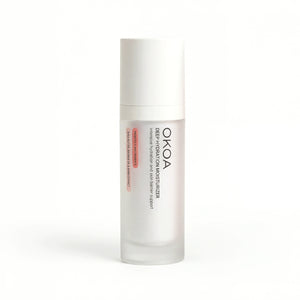 Deep Hydration Moisturizer$29.90 or $24.91/moShop now
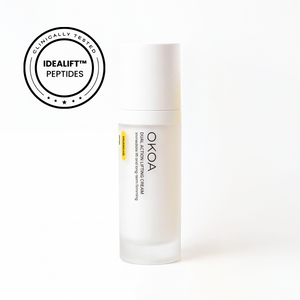 Dual Action Lifting Cream$61.90 or $44.88/moShop now
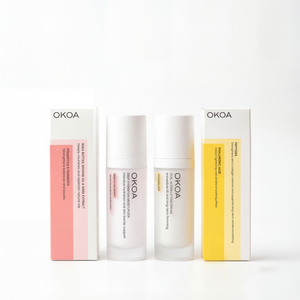 Hydrate & Lift set$81.90 for bothShop now
Skin longevity vs anti-aging
Anti-aging skincare usually starts with what you can see and works to correct it. Skin longevity starts with how the skin functions, its barrier, hydration, recovery and collagen support, and treats visible results as the outcome of that. The two overlap rather than compete: skin that holds water well and recovers easily looks smoother, calmer and more even over time. Age, sun exposure, weight changes, hormones and genetics all overlap in what causes sagging skin.
Why skin longevity is trending
The term follows a wider shift in wellness toward prevention and long-term habits, and skincare in 2026 is moving the same way, with more attention on barrier health, inflammation and recovery and less on aggressive routines. The core ideas are not new. Sunscreen, consistency and well-formulated actives have always done most of the work.
What changes in skin as it ages
Several things drive visible aging at once, including UV exposure, oxidative stress, low-grade inflammation, slower cell turnover, barrier disruption and the gradual decline of collagen and elastin. Some of that is chronological, and some of it is environmental, especially years of sun. That is why two people of the same age can have very different skin, and why no single ingredient addresses all of it.
In practice, those changes show up as fine lines that become more noticeable, skin that looks dull or less elastic, rougher texture, dryness, pigmentation left by past sun exposure, and more reactions to products that used to feel fine. They arrive in a different order and at a different pace for everyone, shaped by genetics and daily habits alike.
Why the skin barrier matters so much
A healthy barrier holds water in and keeps irritants out. When it is compromised, skin feels tight, stings more easily, turns red or flaky and tolerates active ingredients less well, which means even excellent products stop being usable every day. Supporting the barrier keeps skin calmer and better hydrated, and it is what lets every other step in a longevity routine keep working.
The ingredients that matter most for skin longevity
Daily sunscreen
If one habit matters most for skin longevity, it is daily broad-spectrum sunscreen. UV exposure is a major driver of collagen breakdown, uneven pigmentation and visible aging, and sunscreen limits that cumulative damage. Apply it generously to the face, neck and chest every morning; many people stop at the jawline, even though the neck and chest often show sun damage first.
Retinoids and peptides
Of the two, retinoids have the strongest track record for improving fine lines, texture and uneven tone over time. They work well, but they are also the most likely to irritate, so start them slowly, two to three nights a week.
Peptides are the steadier partner. They support firmer-looking skin over time and are generally easier to tolerate than retinoids, which makes them a good fit for a routine you plan to keep for years. OKOA's Dual Action Lifting Cream is a firming cream built around 4% IDEALIFT (acetyl dipeptide-1 cetyl ester), a peptide from Sederma (Croda Beauty), plus a tightening film that smooths the look of the skin within minutes. In Sederma's two-month, placebo-controlled study of IDEALIFT at the same 4% level, 26 women with a mean age of 62 saw the jowl area measure 11.3% more lifted, and over 80% reported firmer-looking skin. That study is reported in Sederma's IDEALIFT technical bulletin, and the ingredient is listed on Croda Beauty's IDEALIFT page. That is supplier research on the ingredient, not an independent trial of the finished cream.
Antioxidants and hydrators
Antioxidants such as vitamin C help defend against environmental stress and support a brighter, more even-looking complexion, which makes them a natural morning step under sunscreen.
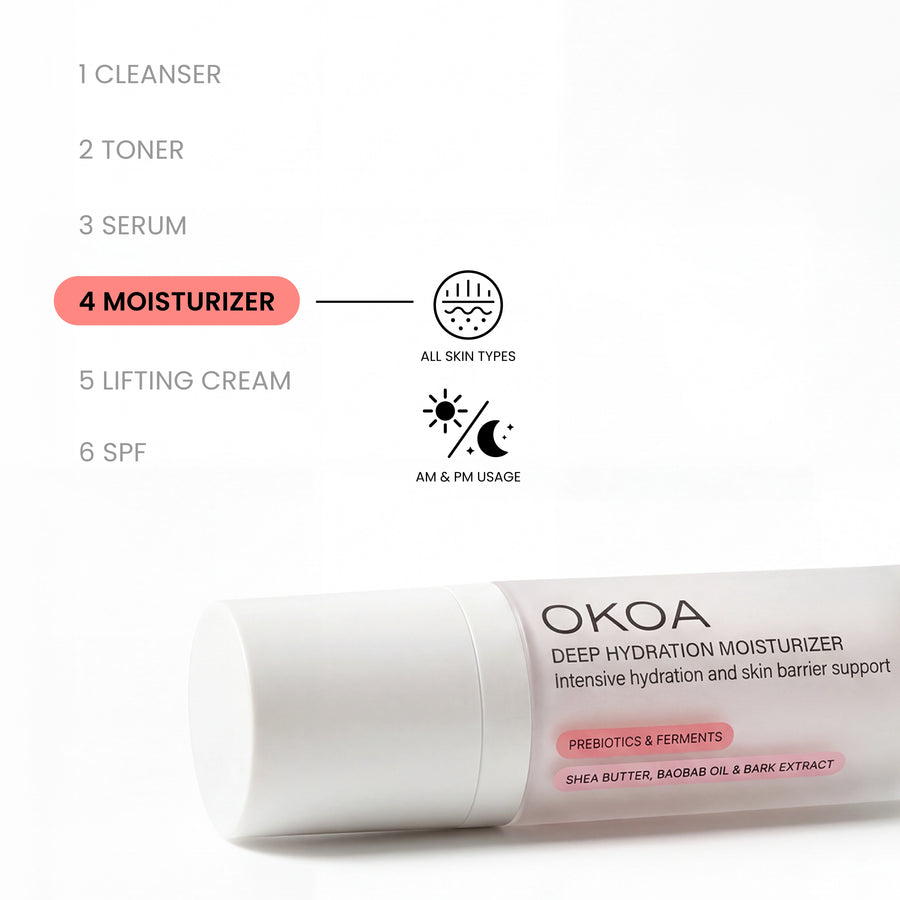
Hydrators come in two kinds. Humectants such as glycerin and hyaluronic acid draw water into the upper layers of the skin and make it look plumper within days. Nourishing lipids such as shea butter and plant oils slow how fast that water escapes. Our hydrating face moisturizer combines both, with glycerin, shea butter, baobab oil and lactobacillus ferment lysate. Hydration smooths the look of skin quickly, and it works alongside firming ingredients rather than replacing them.
Promising but easy to overhype
Longevity skincare often comes wrapped in claims about exosomes, growth factors, NAD and stem cells. Some of these areas are scientifically interesting and may prove useful, but the evidence is not equally mature across them. A routine built on sunscreen, retinoids, peptides, antioxidants and barrier support is easier to judge, because you know what each step is there to do.
How to build a longevity skincare routine you will keep
A longevity routine has to be simple enough to last. In the morning, cleanse gently if you need to, apply an antioxidant serum, moisturize, and finish with broad-spectrum sunscreen on the face, neck and chest. At night, cleanse, use your treatment step, a retinoid two to three nights a week or a peptide firming cream, then moisturize. If skin has already started to loosen, mild laxity, surface crepiness and deeper sagging each respond differently when you work out how to tighten loose skin.
Choose products with a clear job, check that the ingredients match that job, and give each one 8 to 12 weeks before you judge it. For a step-by-step morning and night plan with the order to apply everything, see our skincare routine for mature skin.
Where a firming cream fits
A firming cream earns its place in a longevity routine when you want a step that makes skin look better today and keeps working over the long run. The Dual Action Lifting Cream does both: the tightening film gives a smoother look within minutes, and the peptide supports firmer-looking skin over the following weeks. It contains no retinoid, so it sits alongside retinol rather than competing with it, and it covers the neck as well as the face. It contains fragrance, so patch test first if your skin reacts easily. It comes with a 90-day money-back guarantee, which covers the full length of the IDEALIFT study with a month to spare.
What longevity skincare can and cannot do
Hydration benefits show up quickly, often within days: skin feels more comfortable, looks less dull and shows less surface crepiness. Retinoids and peptides take longer, and visible change in texture, fine lines and firmness usually needs 8 to 12 weeks of steady use. That timeline is normal, and it is why consistency matters more than any single product.
Topical skincare will not remove excess skin, fully correct deep structural sagging or work at the level of muscle and deeper tissue. When laxity is advanced, in-office treatments work at a different level, and skincare shifts to support and maintenance.
How to tell whether your routine is working
Look for practical signs rather than dramatic ones:
- skin feels more comfortable and reacts less often
- hydration and texture are smoother
- tone looks more even
- visible aging signs progress more slowly in photos taken in the same light every few months
How to put skin longevity into practice
Skin longevity is a useful way to think about skincare when it keeps you focused on what works: prevention, barrier health, daily sun protection and proven actives used consistently. You do not need a trend-driven routine or the most expensive products in the room. Choose a few products with clear jobs, use them every day, and give them time.
Dual Action Lifting Cream$61.90 or $44.88/moShop now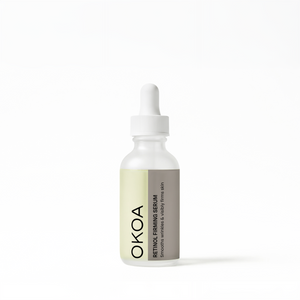 Retinol Firming Serum$44.90Shop now
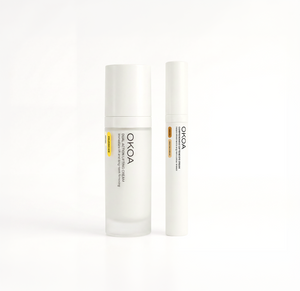 The Double Lift set$79.90 for bothShop now
FAQ
What is skin longevity?
Skin longevity means keeping skin healthy, strong and resilient as it ages, so it holds water, tolerates products and recovers well for longer. Longevity skincare is the routine that supports it: daily sunscreen, barrier care and a few proven actives used consistently.
Does longevity skincare work?
Yes, within realistic limits. A consistent routine improves hydration, texture, radiance and the look of fine lines, and daily sunscreen reduces the cumulative damage that drives visible aging. It cannot stop aging or replace in-office treatments for deeper sagging.
What ingredients are best for skin longevity?
Broad-spectrum sunscreen, retinoids, peptides, antioxidants such as vitamin C, humectants such as glycerin and hyaluronic acid, and nourishing lipids that support the barrier.
At what age should you start a longevity skincare routine?
There is no set age. Daily sunscreen and basic barrier care help at any age, and treatment steps such as retinoids or a peptide firming cream can be added as your skin's needs change.
Is longevity skincare different from anti-aging skincare?
They overlap. Anti-aging skincare focuses on correcting visible signs, while longevity skincare focuses on keeping skin strong, hydrated, protected and functional, with visible results as the outcome.
Can longevity skincare replace in-office treatments?
No. Skincare improves dehydration, mild firmness loss, uneven tone and fine lines, while deeper structural sagging and advanced laxity need in-office treatment. Many people use both, with skincare as the daily maintenance.
Read more
Lifting Cream vs Thread Lift preview ✓ Expert Reviewed Written ByAshley MangtaniContent Writer Reviewed ByLindi GraceR&D Cosmetic Chemist Last updated October 26, 2026 Lifting cream...
COSRX preview ✓ Expert Reviewed Written ByAshley MangtaniContent Writer Reviewed ByLindi GraceR&D Cosmetic Chemist Last updated October 26, 2026 COSRX 6 Peptide Skin Booster review ...