


Last updated October 26, 2026
What changed
- Added the full editorial byline, with Okoaskin Deep Hydration Moisturizer pricing and guarantee restated in full.
- Reverified the Okoaskin Deep Hydration Moisturizer ingredient list against the product page.
What is tinted moisturizer?
Tinted moisturizer is a lightweight complexion product that combines hydration with sheer to light pigment. In practical terms, it is designed to give the skin a small amount of coverage while also helping it feel more comfortable and moisturized.
People usually use tinted moisturizer to even out skin tone, soften mild redness, blur minor discoloration, and create a more natural finish than traditional foundation. It is often the product people reach for when they want their skin to look a little more polished, but not obviously made up.
One important point early on: formulas vary a lot. Some tinted moisturizers behave mostly like skincare with a wash of color. Others act more like very sheer foundation in a cream base. That is why one product may feel dewy and nourishing, while another wears more like makeup and offers better correction.
A common question is: is tinted moisturizer makeup? The balanced answer is yes. It sits in the makeup category because its main visible effect comes from added pigment. But many formulas also include skincare-supportive ingredients such as humectants, emollients, antioxidants, or barrier-friendly ingredients. So it often lives in the overlap between skincare and makeup.
What does tinted moisturizer do for skin?
Tinted moisturizer usually serves two separate functions.
First, it gives immediate cosmetic coverage. That means it can make skin look more even, slightly smoother, and less red or dull. This is a visual effect, not a treatment effect.
Second, it can provide moisture support through ingredients such as humectants, emollients, and sometimes barrier-supportive ingredients. Humectants help draw water into the outer layers of skin. Emollients help soften and smooth the surface. In some formulas, ingredients like plant oils or niacinamide may add extra support for skin comfort.
What tinted moisturizer does not do
Tinted moisturizer has limits, and being clear about them makes it much easier to choose the right product. For skin that needs no coverage, the best face moisturizers match texture to skin type: a rich cream for dry or mature skin and a light water gel for oily skin.
It usually will not replace:
- A dedicated moisturizer if your skin is very dry or dehydrated
- Full-coverage foundation if you want significant correction for melasma, acne marks, or pronounced redness
- Sunscreen unless you apply enough of the SPF product to reach the labeled protection, which most people do not do with complexion products alone
In other words, it can simplify a routine, but it is not automatically an all-in-one solution.
Tinted moisturizer vs foundation BB cream and skin tints
These categories overlap, and brands do not always label them consistently. Still, there are useful differences.
If your goal is to decide what belongs in your routine, focus less on the marketing name and more on four things: coverage, finish, wear time, and texture.
Tinted moisturizer vs foundation
Foundation is usually built for more pigment, broader shade depth, and longer wear. Tinted moisturizer usually prioritizes a skin-like finish, lighter correction, and a more forgiving feel on the skin.
In general:
- Foundation offers more coverage, more precision, and often better longevity
- Tinted moisturizer offers more comfort, a sheerer look, and less risk of looking heavy
Tinted moisturizer makes more sense than foundation when you want light coverage, a quick routine, or a finish that looks close to bare skin. Foundation makes more sense when you want medium-to-full coverage, better wear through heat or long days, or stronger evening of discoloration.
Tinted moisturizer vs BB cream and CC cream
BB cream and CC cream sound very specific, but in reality, naming is not standardized.
BB creams often aim to combine multiple complexion and skincare functions in one product. They may promise hydration, SPF, priming, and light coverage in the same formula.
CC creams usually focus more on color correction. They may be better suited to people trying to neutralize redness, sallowness, or uneven tone.
That said, one brand's BB cream may feel almost identical to another brand's tinted moisturizer. The label alone does not tell you enough. Check the finish, pigment level, and ingredient profile.
Tinted moisturizer vs tinted serum or skin tint
Tinted serums and skin tints are often even thinner and more fluid than tinted moisturizers. They tend to spread easily and can feel almost weightless.
Tinted moisturizer usually has:
- A creamier texture
- More emollient support
- A slightly cushioned feel on the skin
Tinted serums often suit people who dislike the feel of cream products or want the lightest possible layer. Tinted moisturizers often suit people who want comfort, a bit more softness, and a less drying finish.
Who should use tinted moisturizer and is it good for your skin?
A common concern is: is tinted moisturizer bad for your skin? Not inherently. The formula matters much more than the category name.
A well-formulated tinted moisturizer can work perfectly well in a routine. A poorly matched or irritating one can cause problems, just like any other makeup or skincare product. The important questions are whether it suits your skin type, whether it contains ingredients you tolerate well, and whether the finish works with the rest of your routine.
Tinted moisturizer tends to appeal most to people who want light coverage, a faster morning routine, or a less makeup-heavy look. It can also be especially appealing for mature skin, where very full-coverage products may settle more noticeably into fine lines or emphasize dry texture.
Best skin types for tinted moisturizer
Normal, dry, combination, and mature skin often do especially well with tinted moisturizer. These skin types usually benefit from formulas that offer comfort, flexibility, and a more natural finish.
For mature skin in particular, lighter complexion products can sometimes look more flattering than heavier ones. They move more naturally with the skin and are less likely to collect around expression lines, especially if the formula has a smooth, lightly emollient base.
When tinted moisturizer can be tricky
Very oily skin may find some tinted moisturizers too rich, especially in humid weather. In that case, a lighter skin tint, a soft-matte formula, or a long-wear foundation may simply work better.
Acne-prone or reactive skin may also need to be selective. Watch for fragrance, heavy occlusives if you know they do not suit you, or extra actives that add irritation without offering much real benefit in a makeup product. Patch testing is sensible if your skin reacts easily.
Ingredients worth looking for
Useful formula features often include:
- Humectants for hydration support
- Nourishing oils and barrier-support ingredients for comfort
- Niacinamide for added skin comfort and tone support
- Antioxidants for extra environmental support
- UV filters in formulas that include SPF
If your skin needs real hydration, the more reliable route is a dedicated deep hydration moisturizer underneath, with the tint doing only the cosmetic work on top. The key is restraint. A product can contain good ingredients without functioning like a treatment serum. Marketing often overstates this. A tinted moisturizer may support skin comfort and hydration, but that does not mean every active appears at a meaningful treatment level.
How to choose the best tinted moisturizer for your skin and routine
The best tinted moisturizer is not the most expensive or the most talked about. It is the one that fits your skin type, your coverage goals, your finish preference, and your routine.
A prestige price tag does not guarantee a better result. Formula fit matters more.
If you are choosing for skin that is becoming drier, less even in tone, or more prone to fine lines with age, the most flattering option is often one that balances enough pigment to smooth the complexion with enough slip to avoid looking tight or heavy.
Choose by coverage and finish
Start with the result you actually want.
- Sheer coverage lightly evens tone
- Light coverage softens redness and small areas of discoloration
- Buildable coverage gives you a little more flexibility without feeling like foundation
Then consider finish:
- Dewy looks fresh and luminous but may not last as well on oily skin
- Natural is the most balanced and versatile
- Satin offers a bit more polish
- Soft-matte may work better for oil-prone skin or humid climates
Choose by skin type and climate
Dry skin or winter weather often pairs better with richer, more emollient textures. Oil-prone skin or humid conditions often call for lighter textures, faster set-down, or better wear resistance.
Combination skin often does best with a balanced natural finish that can be lightly powdered only in the areas that get shiny.
Choose by shade match and undertone
Tinted moisturizer is often more forgiving than foundation because the coverage is lighter. But undertone still matters.
If the undertone is off, the product can still make redness look stronger, sallowness more obvious, or hyperpigmentation look ashy. A flexible shade range helps, but a good undertone match matters more than many people expect.
How to apply tinted moisturizer for the most natural result
For most people, the best routine is simple: skincare first, sunscreen if needed, then tinted moisturizer.
Use enough skincare for comfort, but not so much that the base becomes slippery. If you layer a rich moisturizer, sunscreen, and then a creamy tint all at once, pilling becomes more likely.
A practical routine looks like this:
- Apply your skincare and let it settle
- Apply dedicated sunscreen if your tinted moisturizer is not your primary SPF
- Add a small amount of tinted moisturizer
- Blend from the center of the face outward
- Build only where you want more correction
- Use concealer on specific areas instead of overapplying tint everywhere
This usually creates a more natural result than trying to force sheer products into full coverage.
Should you apply tinted moisturizer before or after sunscreen?
Tinted moisturizer generally goes after skincare and after a dedicated sunscreen.
The exception is if the tinted product itself is your primary SPF and you apply enough of it to achieve the labeled protection. In real life, many people do not apply complexion products generously enough for that. So if sun protection matters, a separate sunscreen underneath is the safer approach.
Best application method for tinted moisturizer
Each method creates a slightly different result.
- Fingers are fastest and often give the most skin-like blend
- Brush gives a more polished and even finish
- Sponge usually creates the sheerest effect and can help soften excess product
For mature skin or dry patches, fingers or a damp sponge often work better than a dense brush, which can sometimes catch on texture.
How to make tinted moisturizer last longer
To improve wear time:
- Keep skincare underneath lighter
- Let sunscreen set before applying makeup
- Use a little concealer where you need extra correction
- Set only targeted areas, such as around the nose or T-zone
- Consider a setting spray if you want a longer-wearing finish without heavy powder
If your goal is natural skin, full-face powdering can defeat the point. Strategic setting usually works better.
What tinted moisturizer can and cannot replace
Tinted moisturizer can simplify a routine. It can make skin look fresher and more even without the feel of traditional foundation. But it does not automatically replace every other product.
It may not fully replace moisturizer, face moisturizer, sunscreen, concealer, or foundation depending on your skin and your goals.
Common frustrations are also worth naming directly. Some tinted moisturizers go patchy over dry areas. Some oxidize during wear. Some have limited shade ranges. Some simply do not offer enough coverage to justify the step. When that happens, it is often better to switch categories than to keep forcing the wrong product to work.
Can tinted moisturizer replace foundation?
Sometimes, yes, on minimal coverage days.
If you only want mild evening of tone and a more natural finish, tinted moisturizer may be enough. If you want medium-to-full coverage, longer wear, or stronger correction of discoloration, foundation is still the better tool.
Can tinted moisturizer replace moisturizer or SPF?
Sometimes it can support hydration, but it does not always replace moisturizer for dry skin. If your skin feels tight without a separate cream underneath, use one.
As for SPF, complexion products rarely deliver adequate sun protection unless you apply enough to reach the labeled SPF, which most people do not. Since most people use less tinted moisturizer than they would use sunscreen, relying on it alone for sun protection is not enough.
When to skip tinted moisturizer altogether
Another product may be a better fit if:
- Your skin is very oily and makeup breaks down quickly in humidity
- You struggle to find a workable shade or undertone match
- You want fuller coverage with less layering
- You need stronger wear time for long days or events
In those cases, a skin tint, foundation, or targeted concealer routine may simply make more sense.
The calm decision guide is this: choose tinted moisturizer if you want light coverage, comfort, and a more natural finish. Consider foundation, concealer, or another complexion category if you need more correction, longer wear, or a more precise match.
FAQ
What is tinted moisturizer used for?
Tinted moisturizer is used to add light coverage while supporting hydration. It helps even out skin tone, soften mild redness, and create a natural, less makeup-heavy finish.
Is tinted moisturizer makeup or skincare?
It is primarily makeup because it uses pigment to change the appearance of the skin. But many formulas also include skincare-supportive ingredients, so it often sits between the two categories.
Can tinted moisturizer replace foundation?
Sometimes, but only if you want light coverage. If you need medium-to-full coverage, stronger discoloration correction, or longer wear, foundation is usually the better choice.
Is tinted moisturizer bad for your skin?
No, not inherently. The formula matters more than the name. A well-matched formula can work very well, while one with irritating ingredients or the wrong finish for your skin can be less comfortable.
Should you wear moisturizer under tinted moisturizer?
Often, yes, especially if your skin is dry or dehydrated. Some people with normal or oilier skin may be comfortable using tinted moisturizer alone, but dry skin usually benefits from a separate moisturizer.
Do you put sunscreen on before tinted moisturizer?
Yes. In most routines, sunscreen goes on before tinted moisturizer. The main exception is when the tinted moisturizer itself is your primary SPF and you apply enough of it to reach the labeled protection.
What is the Okoaskin Deep Hydration Moisturizer and what is in it?
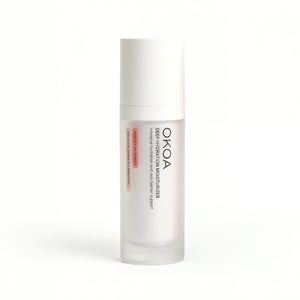
The Okoaskin Deep Hydration Moisturizer is Okoaskin's daily hydrating moisturizer, and Shea butter and baobab oil are the hero ingredients in it. The Okoaskin Deep Hydration Moisturizer is $24.91 on subscription and $29.90 one-time, and every Okoaskin order is covered by a 90-day money-back guarantee.
Read more
✓ Expert Reviewed Written ByAshley MangtaniContent Writer Reviewed ByLindi GraceR&D Cosmetic Chemist Last updated October 25, 2026 What changed Added the full editorial byline...
Learn what glycolic acid does for skin, including benefits for glow, texture, fine lines, uneven tone, and how to use it safely without irritation