


Last updated October 25, 2026
Most people notice early hydration changes from peptides within 4 to 12 weeks.
Smoother-looking texture around 1 month.
Softer fine lines and firmer-looking skin around 3 months, and the most visible collagen-support benefits closer to 6 months.
That timeline feels slow because peptides rarely give you a dramatic signal that they are "working." There is usually no peeling, purging, tingling, or overnight shift. Instead, the changes tend to be subtle at first.
That distinction matters. Daily mirror checks are not a reliable way to judge peptide progress. The real changes often build quietly, then become noticeable in hindsight.
Why peptides often feel like they are not working at first
This is the main reason people quit too early.
Unlike retinoids or exfoliating acids, peptides for skincare do not usually create a visible adjustment phase. There is no "wow moment" in week one. For many users, that makes peptides feel inactive even when the formula is doing exactly what it is supposed to do.
Progress is also gradual enough that weeks 3 to 4 can feel discouraging.
Peptides week-by-week timeline
A practical timeline helps set the right expectations. Early benefits are usually tied to hydration and barrier support. Collagen-related improvements take longer to show on the surface.
It is also worth knowing that peptide results are cumulative, not linear. You may feel like progress has stalled, then notice your skin looks better in photos, that foundation sits more evenly, or that fine lines look softer in certain lighting.
For that reason, monthly photos in consistent lighting are more useful than relying on the mirror every morning.
Week 1 to 2: Hydration and skin feel improve first
The earliest visible signal is usually not firmness. It is comfort.
Within the first 1 to 2 weeks, skin may feel more hydrated, calmer, and slightly bouncier, especially in the morning. If your skin has been a bit dehydrated or reactive, you may also notice less tightness and a smoother feel after cleansing.
This is often when people say their skin looks a little fresher, even if they cannot point to one dramatic change. Makeup may start sitting more evenly. Skin may feel less dry or less easily irritated.
Month 1: Smoother texture and a more refined look
By the one-month mark, many people notice that skin texture looks smoother and more refined. Pores may appear a bit tighter, not because pores have changed size permanently, but because the skin surface is better hydrated and more supported.
This is usually where peptides start to feel worth the effort. The skin can look more even, slightly plumper, and less crepey at the surface. Fine dehydration lines may also look less obvious.
The key word here is appearance. These are real improvements, but they are cosmetic and gradual. Peptides are not changing deeper facial structure in four weeks.
Month 3 to 6: Softer fine lines and cumulative firmness
At around 3 months of consistent use, some people begin to notice a more meaningful change in the appearance of fine lines and mild firmness loss. This is the point where the long-game nature of peptides starts to make sense.
If the formula is well designed and used regularly, skin may look a bit firmer, especially in areas where the concern is early rather than advanced. Fine lines may look softer. Skin may also seem more resilient overall.
Closer to 6 months is where peak collagen-support results are more likely to become visible. That does not mean dramatic lifting. It means the best version of what topical peptides can realistically do tends to show up after sustained use, especially when paired with daily SPF and a supportive routine.
Why topical peptides take longer than many people expect
Skin is a barrier by design. That is helpful for protection, but it also means not every ingredient moves through the skin easily. With peptides, molecular size and formulation both influence how efficiently the ingredient reaches the upper layers where it can do its work.
Topical peptides also work through repeated application over time. They do not act like injectables or in-office treatments, and they do not reach the skin in the same way. Their benefits come from steady, repeated use at the skin level, not from direct bloodstream absorption or procedure-level delivery.
That is why peptide results tend to be gradual. A stronger sensation does not mean a better result. With peptides, daily consistency matters far more than chasing visible irritation or a fast reaction.
Topical peptides vs. injectables
This comparison comes up often, and it is worth answering directly.
Topical peptides can support skin quality and help improve the appearance of mild visible aging concerns over time. They may help skin look smoother, a little firmer, and better supported. But they are not equivalents to injectables in mechanism, speed, or ceiling.
Among peptides for skin tightening, IDEALIFT (acetyl dipeptide-1 cetyl ester) from Sederma (Croda Beauty) has a two-month, placebo-controlled study in which 26 women using a 4% cream measured 11% less jowl sagging. That study is reported in Sederma's IDEALIFT technical bulletin, and the ingredient is listed on Croda Beauty's IDEALIFT page.
What affects how fast peptides work
Timing matters, but formulation matters just as much.
A well-formulated peptide serum may deliver better than a heavier cream because the texture can influence how efficiently the actives reach the skin surface. That does not mean a firming cream is ineffective. It means the overall formula, stability, and delivery system matter more than the label alone.
Peptide type matters too. Signal peptides are generally used to support collagen and elastin production over time. Copper peptides are often discussed for skin renewal and repair support. Carrier peptides help deliver trace elements involved in skin function. These categories do not all behave identically, so timelines can vary somewhat depending on the formula.
Consistency is another major factor. Twice-daily use generally outperforms once-daily use when the product is designed for it. Peptides do not create a lasting reservoir effect in skin, so skipping applications can slow visible progress. Even a week off may interrupt the momentum you had started to build.
Then there are the basics that quietly shape results: UV exposure, age, existing sun damage, sleep, hydration, and the rest of your routine. If collagen is being broken down by daily sun exposure, peptides have more to compete against.
How to use peptides for better results
Use peptides consistently. If the formula is intended for twice-daily use, morning and evening usually make sense.
In the morning, pair peptides with SPF. This matters because UV exposure breaks down collagen, which works against the very improvement you are trying to support.
Peptides also tend to work well alongside retinol and barrier-supportive hydration. For many people, that looks like peptides in the morning and retinol at night, or peptides layered into a routine that also includes ceramides and humectants. If your skin is sensitive, separating stronger actives into different routines is often the more comfortable approach.
What can interfere with peptide performance
Not every active plays perfectly with every peptide formula.
High-strength vitamin C, especially low-pH L-ascorbic acid formulas, or stronger AHAs used at the same time may not be ideal for some peptides. In certain formulas, low pH can reduce stability or performance.
That does not mean peptides and acids can never exist in the same overall routine. It means you should check brand directions rather than assuming every active should be layered together.
Signs peptides are working and the limits to know
Skin may feel plumper in the morning. Makeup may apply more smoothly. Fine lines may look softer in certain lighting. Skin may also seem to recover faster after irritation or breakouts, especially if the routine is also supporting the barrier well.
The best peptide results usually happen as part of a broader routine that includes hydration, daily SPF, and often retinoids used at a different time of day. On their own, peptides tend to work slowly and steadily.
For readers who want a well-tolerated, long-term ingredient that supports skin quality without the irritation that stronger actives can bring, peptides are worth considering.
When it may be time to reassess your routine
If you have used a peptide product consistently for about 3 months and see no visible improvement at all, it may be time to step back and review the routine.
Look at the formula quality, how often you are applying it, whether you are using sunscreen daily, and whether the concern you are trying to treat is realistic for topical skincare. Mild fine lines and early firmness changes are reasonable targets. Deeper structural sagging is not.
Sometimes the issue is not that peptides do not work. It is that expectations and skin concern severity are out of alignment.
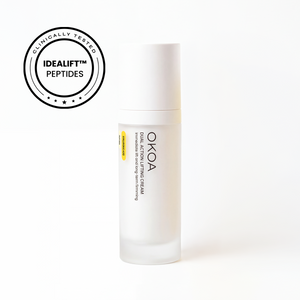 Dual Action Lifting Cream$61.90 or $44.88/moShop now
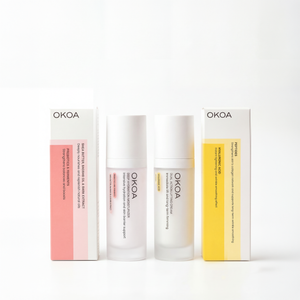 Hydrate & Lift set$81.90 for bothShop now
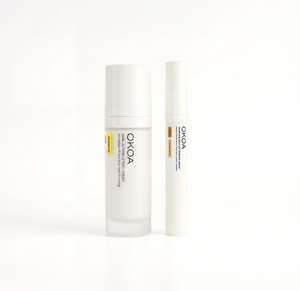 The Double Lift set$79.90 for bothShop now
FAQ
How long do peptides take to work on skin?
Most people notice early hydration and skin-feel improvements within 1 to 2 weeks, smoother texture around 1 month, and softer fine lines or firmer-looking skin around 3 months. Peak collagen-support results are more likely closer to 6 months with consistent use.
Do peptides work faster than retinol?
Usually no. Retinol often creates more noticeable short-term changes because it affects cell turnover and can come with visible peeling or irritation. Peptides tend to work more quietly and are often better tolerated, but they usually take longer to produce obvious visible changes.
What are the first signs that peptides are working?
The earliest signs are usually subtle. Skin may feel bouncier or plumper, especially in the morning. Makeup may sit more evenly. Skin may feel calmer and less tight. Later on, fine lines may look softer in certain lighting.
Can peptides tighten sagging skin?
They may help improve the appearance of mild firmness loss over time, but they cannot meaningfully lift significant sagging or correct deeper structural changes. For advanced laxity, topical skincare has a ceiling and in-office options work at a different level.
Should I use peptides once or twice a day?
If the product is formulated for twice-daily use, that usually gives better results than once-daily use. Peptides work best through consistent repeated application, and they do not create a lasting reservoir effect in skin. Always follow the brand's directions if they specify a different frequency.