


Last updated November 12, 2026
What changedAI generated
- Picked 9 retinol serums by need, from first-timers and sensitive skin to acne and dry skin, with prices checked on November 10, 2026.
- Added which retinol strength to start with and how to start a retinol serum without irritation.
- Added retinol side effects, and when a prescription retinoid makes more sense.
- Reviewed with our R&D cosmetic chemist for accuracy.
The best retinol serums that work (2026 guide)
The best retinol serum is the one matched to your skin and your experience: a gentle, buffered formula for first-timers and sensitive skin, and a stronger time-release retinol or a retinal once your skin is used to it. Whichever you pick, start two or three nights a week and wear sunscreen every morning.
We picked the 9 best retinol serums of 2026 by need, starting with our own Retinol Firming Serum for sensitive skin and running through La Roche-Posay, CeraVe, The Ordinary and more. We also explain which strength to start with and how to avoid irritation. We checked every price on November 10, 2026, on each brand's own US site.
What does a retinol serum do?
A retinol serum smooths fine lines and wrinkles, refines texture and evens out tone over several weeks of regular use. Retinol is a form of vitamin A that the skin converts into retinoic acid, and according to Cleveland Clinic, it increases the thickness and elasticity of the skin, slows the production of melanin, reduces inflammation and prevents clogged pores. That is why one ingredient shows up in routines for wrinkles, dark spots and acne alike.
A serum is the lightest way to use retinol: a retinol serum sits close to the skin after cleansing and under your moisturizer. What retinol can and cannot do for firmness specifically is covered in retinol for skin firming.
How we chose these serums
Every retinol serum promises smoother skin, so we sorted them by the person using them instead. We started with the needs readers ask about most, from first-time use and sensitive skin to acne, dry skin and stepping up in strength, and looked for the serum that answers each one best.
Then we read every ingredient list and set of directions on the brand's own US site, noted the retinoid type and strength where the brand states it, checked prices on November 10, 2026, and favored formulas that turn up across the dermatologist and editorial roundups ranking today. Lindi Grace, our R&D cosmetic chemist, went through the ingredient claims with us. One of the nine is our own Retinol Firming Serum, and we put it first, for the need we made it for: sensitive skin.
The best retinol serums by need
Each of the 9 best retinol serums here is matched to one need. If two sound like you, start with the gentler one and move up later.
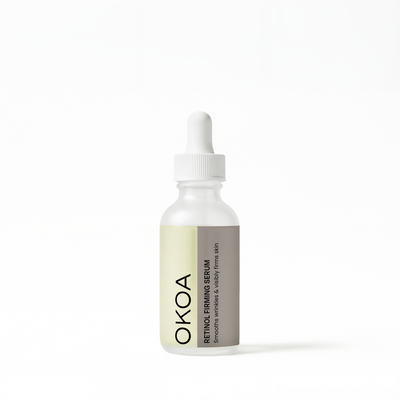
Retinol Firming Serum
$44.90 once, or $34.89 with a subscription · Retinol, bakuchiol, squalane, hyaluronic acid
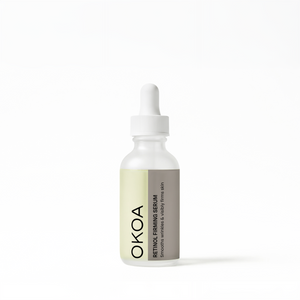
The Retinol Firming Serum is our night serum for skin that wants what retinol does for fine lines and texture but tends to sting or flake on it. It pairs retinol with bakuchiol, a plant compound that works on the same signs of aging, in a squalane and caprylic/capric triglyceride oil base with hyaluronic acid and chamomile extract, and there is no fragrance on the ingredient list. Alongside retinol it carries retinyl palmitate, a milder vitamin A ester, plus vitamin E.
Bakuchiol has human evidence of its own. In a 12-week, double-blind trial at UC Davis, published in the British Journal of Dermatology in 2019, 44 adults used either 0.5% bakuchiol twice a day or 0.5% retinol once a day: both groups saw similar drops in wrinkle surface area and dark spots, and the retinol group reported more scaling and stinging. That trial tested the two ingredients on their own, not the Retinol Firming Serum. Use the serum at night, two or three times a week to start, building to nightly as your skin allows, with SPF the next morning, and patch test first if you react to chamomile, ragweed or daisies. Every Okoaskin product carries a 90-day money-back guarantee.
Shop now90-day money-back guarantee

La Roche-Posay Retinol B3 Pure Retinol Serum
$44.99 for 1 fl oz at La Roche-Posay · Pure retinol, niacinamide, hyaluronic acid
La Roche-Posay Retinol B3 Pure Retinol Serum pairs pure retinol with niacinamide (vitamin B3), which helps even out the look of dark spots, and hyaluronic acid to keep skin comfortable while it adjusts. Apply 3 to 4 drops in the evening after cleansing, on the face and neck, then your moisturizer, and wear SPF the next morning. It contains fragrance, so patch test first if your skin reacts easily.
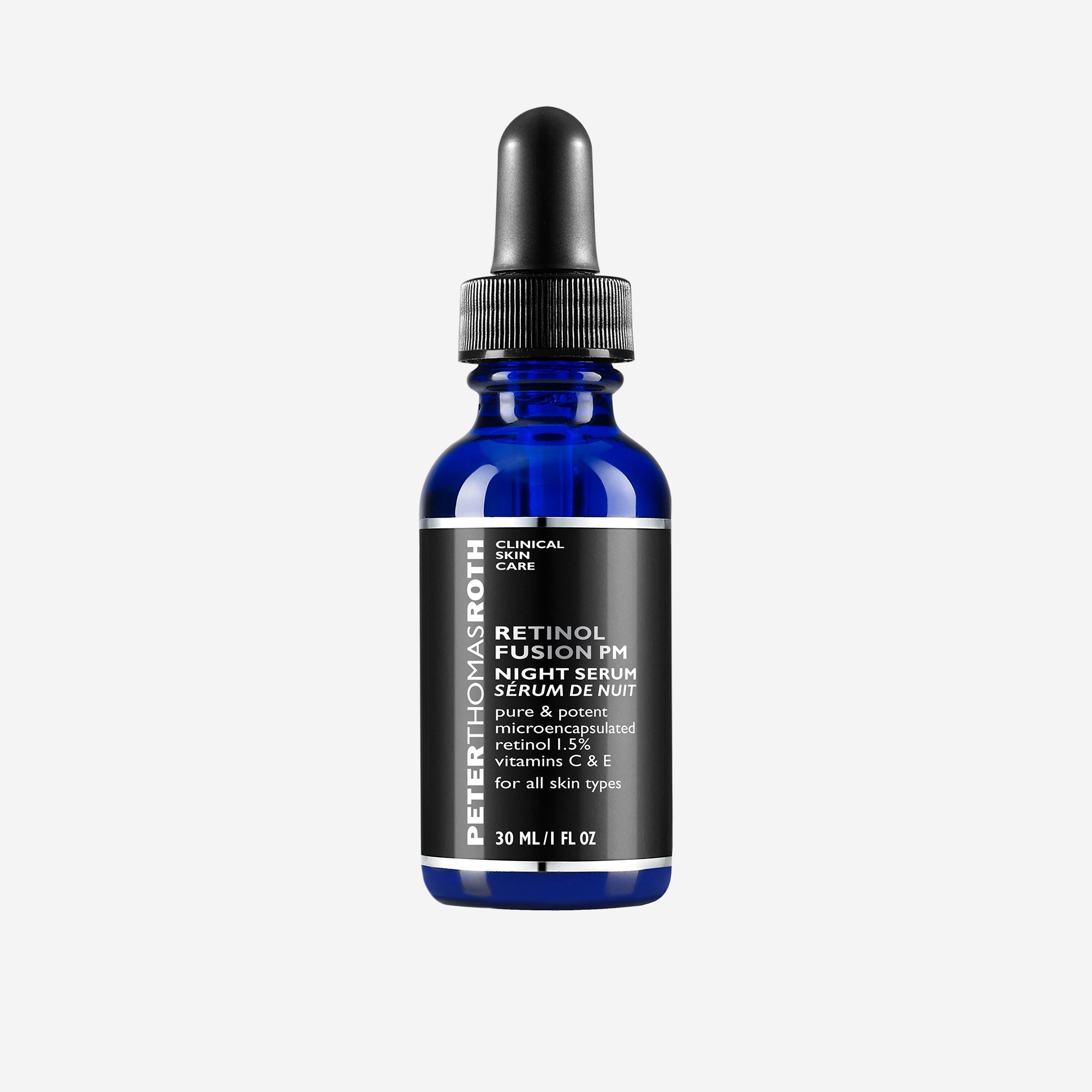
Peter Thomas Roth Retinol Fusion PM Night Serum
$65 for 1 fl oz at Peter Thomas Roth · 1.5% encapsulated retinol, squalane, vitamins C and E
Peter Thomas Roth Retinol Fusion PM Night Serum states its strength on the label: 1.5% time-released microencapsulated retinol, in a silky base with squalane and vitamins C and E. Peter Thomas Roth describes it as time-released, which is meant to make a higher strength easier to tolerate once your skin is used to retinol. Use it nightly on clean skin, drop to every other night if you see irritation, and wear SPF by day.
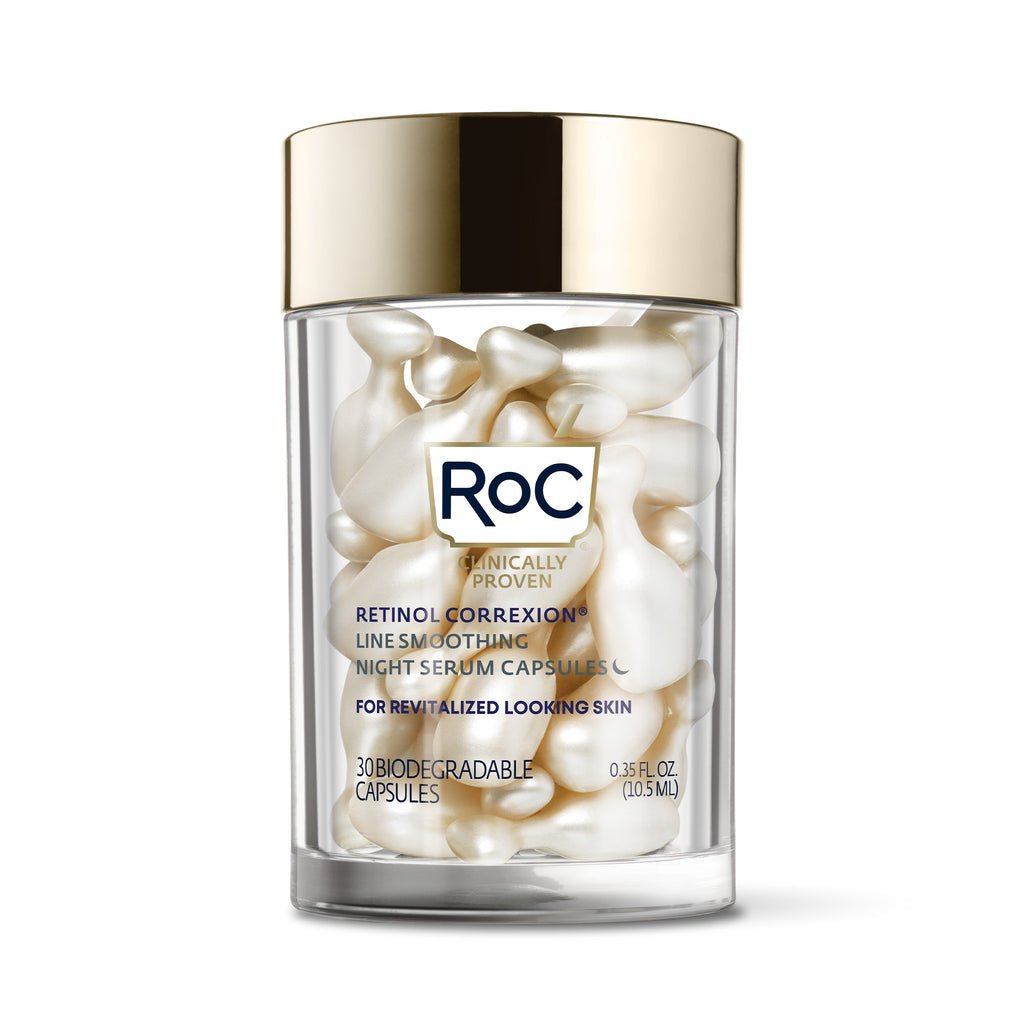
RoC Retinol Correxion Line Smoothing Night Serum Capsules
$24.99 for 30 capsules at RoC · Retinol, ceramide NP, soybean oil
RoC Retinol Correxion Line Smoothing Night Serum Capsules seal one dose of retinol into each capsule, with ceramide NP and soybean oil, so you use the same amount every night and the retinol stays protected from air until you open it. Twist open one capsule at night and smooth it over the face and neck. At $24.99 for a month of nights, it is the easiest drugstore way to make retinol a habit.
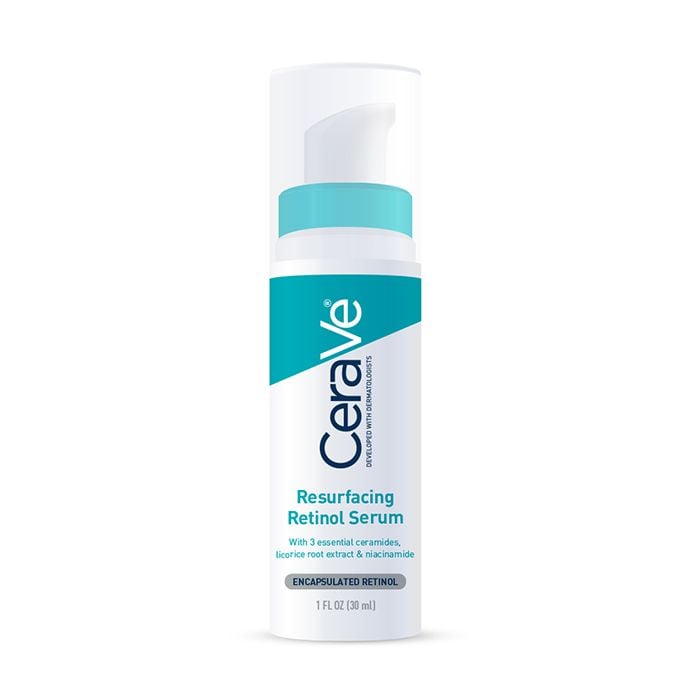
CeraVe Resurfacing Retinol Serum
$21.99 for 1 oz at CeraVe · Encapsulated retinol, niacinamide, three ceramides, licorice root extract
CeraVe Resurfacing Retinol Serum combines encapsulated retinol with niacinamide, three essential ceramides and licorice root extract, and CeraVe makes it for post-acne marks and the look of enlarged pores. The light, fragrance-free gel suits oily and acne-prone skin that finds richer retinol creams too heavy. CeraVe says to apply it once a day; using it at night only, as dermatologists advise for retinoids, keeps it away from the sun.
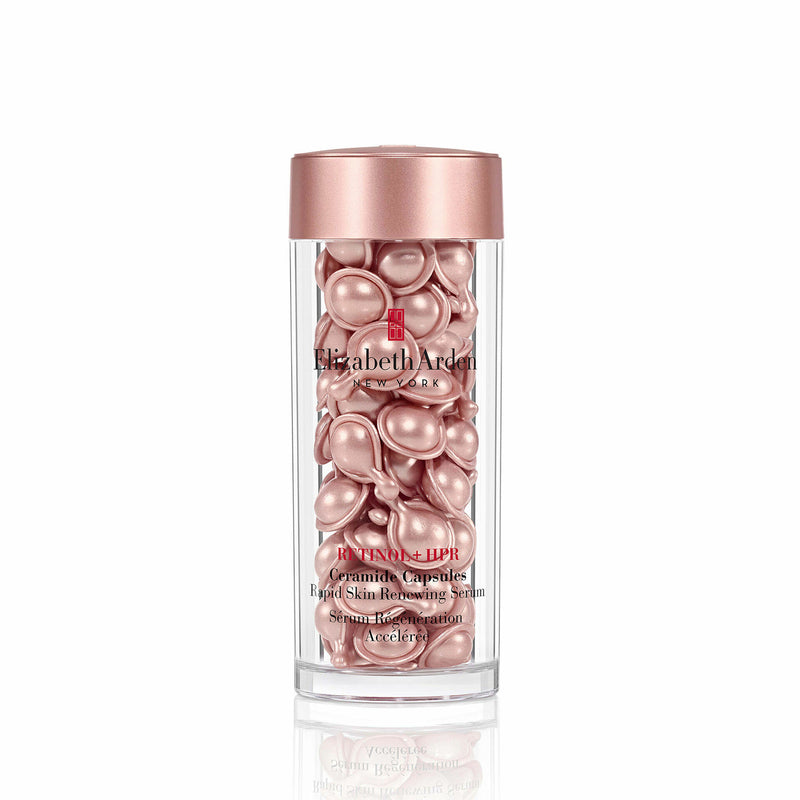
Elizabeth Arden Retinol + HPR Ceramide Capsules Rapid Skin Renewing Serum
$99 for 60 capsules at Elizabeth Arden · Retinol, HPR, ceramides, peptides, colloidal oatmeal
Elizabeth Arden Retinol + HPR Ceramide Capsules Rapid Skin Renewing Serum pairs retinol with HPR (hydroxypinacolone retinoate), a newer retinoid, inside a rich, oily serum with ceramides, peptides and colloidal oatmeal. The brand lists a 4% retinol and HPR complex, which describes the blend rather than the retinol alone. The cushioning texture is what makes it a fit for dry skin: twist open a capsule, warm it between your fingertips and smooth it over the face and neck.

Medik8 Crystal Retinal
From $56 for 1 fl oz (Crystal Retinal 1) at Medik8 · Retinal, vitamin C, hyaluronic acid, squalane
Medik8 Crystal Retinal uses retinal (retinaldehyde), a retinoid one conversion step closer than retinol to the retinoic acid your skin uses. It comes as a ladder of six strengths, from Crystal Retinal 1 to Crystal Retinal 24 (0.01% to 0.24% retinal), so you can start low and move up as your skin adapts. Use 2 pumps in the evening, follow with moisturizer, and wear sunscreen the next morning. Its plant extracts bring coumarin, a fragrance allergen, so patch test first.

SkinCeuticals Retinol 0.3
$80 for 1 fl oz at SkinCeuticals · 0.3% pure retinol, bisabolol, boswellia extract
SkinCeuticals Retinol 0.3 is a cream rather than a serum, with 0.3% pure retinol plus bisabolol and boswellia extract to keep skin comfortable. It earns its place because the same formula comes in 0.5% ($90) and 1.0% ($102), the simplest way to move up in strength without switching brands. Apply a pea-sized amount in the evening, once or twice a week at first, build to nightly, and wear sunscreen every day.

The Ordinary Retinol 0.5% in Squalane
$9.30 for 1 fl oz at The Ordinary · 0.5% retinol, squalane, jojoba oil
The Ordinary Retinol 0.5% in Squalane is a water-free serum with 0.5% retinol in squalane and jojoba oil, at a price that makes it easy to try retinol before spending more. Apply a few drops in the evening, do not layer it with other retinoids, and keep the bottle in the fridge after opening.
What is the best retinol for sensitive skin?
The best retinol for sensitive skin is a low-strength formula with a buffer and no fragrance. A partner ingredient such as bakuchiol, niacinamide or ceramides makes the first weeks easier, and the UC Davis trial in the British Journal of Dermatology found 0.5% bakuchiol showed no significant difference from 0.5% retinol on wrinkle surface area over 12 weeks, with less scaling and stinging. Our Retinol Firming Serum puts retinol and bakuchiol in one night serum, so you get both in a single step.
Redness is the exception. "If someone has a lot of redness or inflammation in their skin, they should avoid retinoids and ask their dermatologist about other therapies that are more directed to a condition called rosacea," Anne Chapas, MD, a board-certified dermatologist, told the American Academy of Dermatology. Skin that cannot take any retinoid has other routes to firmer-looking skin, compared in peptides vs retinol, and bakuchiol on its own is covered in bakuchiol for skin.
What strength of retinol should you start with?
Start with the lowest strength you can find and move up only once your skin has stopped reacting, which is the advice Anne Chapas, MD, a board-certified dermatologist, gives through the American Academy of Dermatology. A gentle formula used consistently does more for your skin than a strong one you have to stop after a week.
Among the retinol serums we picked that state a strength, SkinCeuticals Retinol 0.3 starts at 0.3% retinol, The Ordinary Retinol 0.5% in Squalane sits at 0.5%, and Peter Thomas Roth Retinol Fusion PM Night Serum lists 1.5% time-released retinol. Retinal works at much lower levels, 0.01% to 0.24% across Medik8's range, because it is one step closer to retinoic acid; the trade-offs are laid out in retinal vs retinol.
How to start a retinol serum
Start a retinol serum slowly: a pea-sized amount at night, two or three times a week, on clean, dry skin, followed by moisturizer and sunscreen the next morning. "The first thing would be to focus on hydration to ensure that your barrier is strengthened," says Lindi Grace, our R&D cosmetic chemist, who answered readers' questions on skin over 35 in a Reddit AMA. A comfortable, hydrated barrier is what lets retinol work without the flaking, which is why our Retinol Firming Serum carries squalane and hyaluronic acid in the same bottle as its retinol and bakuchiol.
Dermatologists give the same advice. "Many patients want to start right off with tretinoin, but I advise them to use the least-intense retinoid formula they can find, and use it every other night to start, slowly building up," Tina Alster, MD, a board-certified dermatologist at Georgetown University Medical Center, told the American Academy of Dermatology. Where retinol fits in a morning and night routine, and how often to use it once you are past the first weeks, is set out in when to apply retinol.
Retinol side effects and purging
The main side effects of retinol are dryness, peeling, redness, itching or burning, and a higher risk of sunburn, according to Cleveland Clinic. They are most common in the first weeks and usually ease as the skin adjusts, especially with fewer nights a week and a moisturizer on top.
Some people also get a few breakouts early on, often called purging, as retinol speeds up how fast skin renews itself. Breakouts in your usual spots that settle within a few weeks fit that pattern; a rash, swelling or breakouts in new places point to irritation, so stop and check with a dermatologist. The American Academy of Dermatology says retinoids should not be used during pregnancy, and because retinol makes skin more sensitive to the sun, daily sunscreen is part of using it.
Retinol serum or prescription retinoid?
A retinol serum is the right start for mild fine lines, mild dark spots and mild acne, and a prescription retinoid such as tretinoin is for stronger results or more persistent concerns. Tretinoin is retinoic acid itself, so it works faster than retinol but irritates more, and Tina Alster, MD, a board-certified dermatologist, advises through the American Academy of Dermatology starting with the least-intense retinoid you can find even when tretinoin is the goal.
Adapalene sits in between: it is a retinoid sold over the counter for acne. Anne Chapas, MD, advises through the American Academy of Dermatology seeing a board-certified dermatologist before trying a retinoid if you have moderate or severe acne scarring, or acne tied to your period or other hormonal changes.
Retinol is one part of a routine that also needs hydration and daily sunscreen, and the creams that pair with it are compared in best anti-aging cream.
FAQ
Is retinol safe for sensitive skin?
Retinol can work for sensitive skin if you start with a low strength, use it two or three nights a week and moisturize after. A formula that pairs retinol with a gentler partner such as bakuchiol, like the Retinol Firming Serum, is an easier start. If your skin is often red or inflamed, see a dermatologist first, because rosacea needs a different treatment.
Can retinol help with acne?
Retinol helps keep pores clear and skin looking smoother, according to Cleveland Clinic, which lists acne among its uses. Over-the-counter retinol suits mild acne. Moderate or severe acne, acne scarring or acne tied to hormonal changes needs a dermatologist and usually a prescription retinoid.
How often should you use retinol?
Start retinol two or three nights a week and build up to every night as your skin allows. If dryness or peeling shows up, go back to fewer nights for a week or two before building again.
Is 40 too late to start retinol?
Forty is not too late to start retinol. Retinol improves the look of fine lines, texture and uneven tone at any age: in a 24-week University of Michigan trial in adults with an average age of 87, 0.4% retinol lotion smoothed fine wrinkles on the arm compared with a plain lotion. Start at a low strength, a few nights a week, and pair it with a rich moisturizer and daily sunscreen.
How long does retinol take to work?
Retinol takes weeks, not days: Mayo Clinic says many anti-wrinkle products need daily use for up to six weeks before you notice a difference, and the UC Davis retinol and bakuchiol trial measured its results at 12 weeks.
Is a retinol serum better than a retinol cream?
A retinol serum is not stronger than a retinol cream by default; the difference is texture. Serums are lighter and suit oily or combination skin, and creams are richer and suit dry skin. Strength and the type of retinoid matter more than the format.
Can you use retinol while pregnant?
You should not use retinol while pregnant. The American Academy of Dermatology says retinoids should not be used during pregnancy, and Cleveland Clinic advises talking to your healthcare provider before using retinol while pregnant or breastfeeding.