

Okoaskin Dual Action Lifting Cream
Crepey spots respond to daily firming support
The peptide step to layer where legs look crepiest. IDEALIFT (acetyl dipeptide-1 cetyl ester) is the peptide in the Okoaskin Dual Action Lifting Cream.
SHOP NOW

Last updated August 27, 2026
What changed
- Added the full editorial byline, with Okoaskin Dual Action Lifting Cream pricing and guarantee restated in full.
- Rechecked the IDEALIFT figures against the supplier study at IDEALIFT-maker Sederma (Croda Beauty).
What the best leg firming cream can realistically do
It makes sense to be skeptical here.
Many products sold as the best leg firming cream promise tighter, smoother legs in days. What they often deliver instead is temporary softness. That is not nothing, but it is not the same as real structural change.
 The Targeted Peptide Step · Okoaskin
Okoaskin Dual Action Lifting Cream - the targeted peptide step: layer it on crepey spots over your body lotion for the look of firmer, smoother skin. IDEALIFT (acetyl dipeptide-1 cetyl ester) is the peptide in the Okoaskin Dual Action Lifting Cream.
$44.88 Subscribe & Save
The Targeted Peptide Step · Okoaskin
Okoaskin Dual Action Lifting Cream - the targeted peptide step: layer it on crepey spots over your body lotion for the look of firmer, smoother skin. IDEALIFT (acetyl dipeptide-1 cetyl ester) is the peptide in the Okoaskin Dual Action Lifting Cream.
$44.88 Subscribe & Save A cream can make skin look firmer by improving hydration, smoothing rough texture, and supporting the skin barrier. It can also help crepey skin look less papery and make dry legs feel more comfortable. What it cannot do is remove cellulite, rebuild deeply loose tissue, or replace medical treatment for significant skin laxity.
That is the difference worth keeping in mind as you compare products.
This guide is not a hype-driven roundup. It is a practical look at which ingredients help, which product types make sense, and what results are realistic if your goal is smoother-looking legs.
Why legs need different support than facial skin
Leg skin is usually drier than facial skin. It is often ignored until it starts to look dull, rough, or crepey.
Common concerns include:
- crepey texture around the thighs and knees
- dryness and ashiness on shins
- roughness from buildup
- age-related thinning
- looseness after weight loss
- cellulite on thighs and bum
Legs also deal with more friction, more shaving, and often less consistent care. That means the best leg firming cream is usually less about lifting and more about helping skin look better supported, better hydrated, and more resilient over time.
Firming vs cellulite claims: not the same thing
Searches for the best cellulite cream for legs and the best leg firming cream overlap for a reason. People want smoother-looking thighs and less visible texture.
But the goals are slightly different.
Firming products are usually aimed at bounce, tone, and the look of smoother skin. Cellulite products are usually aimed at visible dimpling and uneven texture.
Some creams try to do both. Few do either dramatically. A good product can improve the surface appearance of skin. It should not promise to erase cellulite.
How leg firming creams work and which ingredients matter most
The most useful body creams usually work in four ways:
- they hydrate the skin
- they support the barrier
- they smooth rough texture
- they help skin look more resilient with steady use
That is why one product may feel good right away, while another may be more useful after several weeks.
A rich cream can quickly reduce that dry, creased look. A treatment formula with retinol or acids may do more for texture over time. If your skin feels thin, fragile, or slow to bounce back, start with the richest hydrating lotion you will use daily, then add a firming step on the spots that bother you most.
Hydration and barrier support: the first step to smoother-looking legs
This is where many people should start.
Dehydrated skin can look looser, duller, and more textured than it really is. When the barrier is weak, the surface can look rough and crepey very quickly.
Ingredients that help here include:
- Hyaluronic acid to draw moisture into the skin and hold it there
- Glycerin to pull in water and reduce that tight, dry feel
- Shea butter to soften and seal in moisture
- Ceramides to support the skin barrier
For many legs, especially shins and thighs, better hydration is the fastest route to a firmer-looking surface.
What retinol peptides and acids each do
These ingredients are often included in body products marketed as firming treatments.
Retinol may help improve the look of crepey skin and uneven texture over time. It can be useful, but it can also irritate dry or reactive skin.
A daily firming cream for body areas can be useful for crepey-looking skin on legs and arms.
Peptides are often included to support a more resilient appearance. Results vary by formula, and they tend to be subtle rather than dramatic.
Exfoliating acids such as lactic acid can help smooth rough buildup and improve surface texture. They are often more useful for flaky, bumpy, or dull legs than for true laxity.
If your skin is sensitive, strong treatment products are not always the best first step.
Caffeine and temporary tightening effects
Caffeine appears in many formulas sold as the best cellulite cream for thighs and bum.
There is a reason for that. It may briefly improve the look of puffiness and make the skin surface appear a bit smoother. But those effects are usually temporary.
That does not make caffeine useless. It can be part of a formula that gives legs a more polished look for the day. It just should not be mistaken for lasting firming.
The two-step routine for skin that feels thin or slow to bounce back
There is another category worth paying attention to.
For mature, dry, or fragile-looking legs, the routine that makes sense has two parts. A rich hydrating body lotion is the base layer across the whole leg, doing the barrier and comfort work. A peptide firming cream is the targeted step on the crepiest spots, doing the job hydration alone cannot: supporting the look of firmness over weeks.
How to choose the best leg firming cream for your skin concern
The best formula depends less on trend and more on your actual problem.
Ask a simpler question first: what bothers you most?
Is it crepey texture. Cellulite. Dryness. Thinning skin. Rough buildup. Sensitivity.
That answer usually tells you more than any top 5 list will.
For crepey or age-related thinning skin
Look for richer creams with barrier-supporting ingredients, humectants, antioxidants, and ingredients that support the skin's own recovery process.
This is where formulas with hyaluronic acid, shea butter, and vitamin E can make sense as your base lotion. Skin that looks thin needs comfort and consistency first. Once that is covered, a peptide skin tightening cream on the crepiest areas adds the firming step on top.
For cellulite-prone thighs and bum
If you are searching for the best cellulite cream for legs or the best cellulite cream for thighs and bum, focus on realistic goals.
The best products here usually improve hydration, surface smoothness, and the overall look of texture. They may make dimpling less noticeable. They do not remove cellulite.
Caffeine, smoothing moisturizers, and consistent massage during application may help the area look better day to day.
For dry or flaky legs
Choose based on the type of dryness.
For simple dehydration, look for hyaluronic acid, glycerin, and shea butter.
For rough buildup or flaky texture, urea or lactic acid may help more.
A cream can feel rich and still not be the right fit if the main issue is dead-skin buildup rather than moisture loss.
For sensitive skin that reacts easily
Keep it simple.
Look for fragrance-free or low-irritant formulas. Patch test first. Avoid stacking strong actives if your barrier already feels compromised.
If skin gets red, itchy, or stingy easily, a simple low-irritant moisturizer is often a better choice than a highly active treatment product.
What to expect from a leg firming cream after 2 weeks 6 weeks and 12 weeks
A useful timeline helps filter out bad expectations.
No topical product can fully tighten significantly loose skin or erase cellulite. But the right formula can improve how the skin looks and feels over time.
What shows up first
In the first 2 weeks, the main changes are usually cosmetic:
- softer skin
- less ashiness
- better slip
- a less crepey look from improved hydration
- smoother feel after shaving or showering
These changes matter. They are often the first sign that the formula suits your skin.
What takes longer
Around 6 to 12 weeks, consistent use may lead to:
- more refined texture
- smoother-looking knees and thighs
- a firmer-looking surface
- skin that appears less dull and less fragile
This usually requires daily use. Legs are often the most neglected area in a routine, and dry body skin does not change quickly.
When a cream is not the whole answer
Sometimes a cream is only part of the picture.
If laxity is significant, or skin changes appeared suddenly, it may make sense to look at the bigger picture. Strength training, sun protection, gentle exfoliation, massage, and overall skin care habits all affect how legs look.
For swelling, marked looseness, or sudden skin changes, talk to a dermatologist or healthcare professional.
Best leg firming cream ingredients and product types compared
Many readers want the clarity of a comparison. That makes sense. The goal is not to find the most dramatic marketing claim. It is to find the formula that fits your skin.
Cream vs lotion vs body treatment
| Product type | Texture | Best for |
|---|---|---|
| Cream | Richer, more barrier support, works well overnight | Dry, mature, or crepey legs |
| Lotion | Lighter, faster to absorb | Humid climates, daytime use, anyone who dislikes a rich finish |
| Balm or richer treatment | Thickest and most cushioning | Thin, fragile, or very dry spots such as knees and shins |
| Texture-focused treatment | Often includes retinol or acids | Smoother texture as the main goal, rather than comfort or recovery |
A simple checklist for comparing products
When comparing formulas, look for:
- ingredients that match your main concern
- low fragrance if your skin is reactive
- a texture you will actually use daily
- realistic instructions for use
- price per ounce, not just jar price
- body-safe design for regular use, not occasional spot treatment only
Red flags include heavy fragrance, vague sculpting claims, and formulas that rely more on sensation than substance.
How the two layers work together
Hydration and firming are two different jobs, and legs usually need both.
A rich body lotion keeps the whole leg comfortable and less papery, which is what makes skin look better day to day. A peptide firming cream on the crepiest spots is what supports the look of firmness over weeks. Neither replaces the other, and a temporary tightening sensation is not the same as either one.
How to use a leg firming cream for the best results
Even a good formula underperforms when it is used inconsistently.
The simplest daily routine
Apply your cream to slightly damp skin after showering.
Use enough to fully cover the legs, especially shins, thighs, knees, and any crepey areas. Massage upward until absorbed.
Use once or twice daily depending on the formula and your level of dryness. If the product contains stronger actives, follow the label and start slowly.
If crepey texture on the thighs or above the knees is the main concern, layering a peptide skin tightening cream on those spots over your body lotion adds the firming step without spreading a face-sized jar across whole legs.
What to pair with your cream
A few supportive habits can improve the appearance of legs without turning the routine into a project:
- gentle exfoliation once or twice a week
- sunscreen on exposed legs
- regular movement
- staying well hydrated
- avoiding very hot showers if your skin is already dry
Common mistakes that make firming creams seem ineffective
A product may seem ineffective when the real issue is how it is being used.
Common mistakes include:
- switching products too quickly
- over-exfoliating
- using too little product
- expecting cellulite to disappear
- choosing fragrance-heavy formulas for sensitive skin
- using a treatment cream inconsistently
If you want visible change, consistency matters more than having three different products.
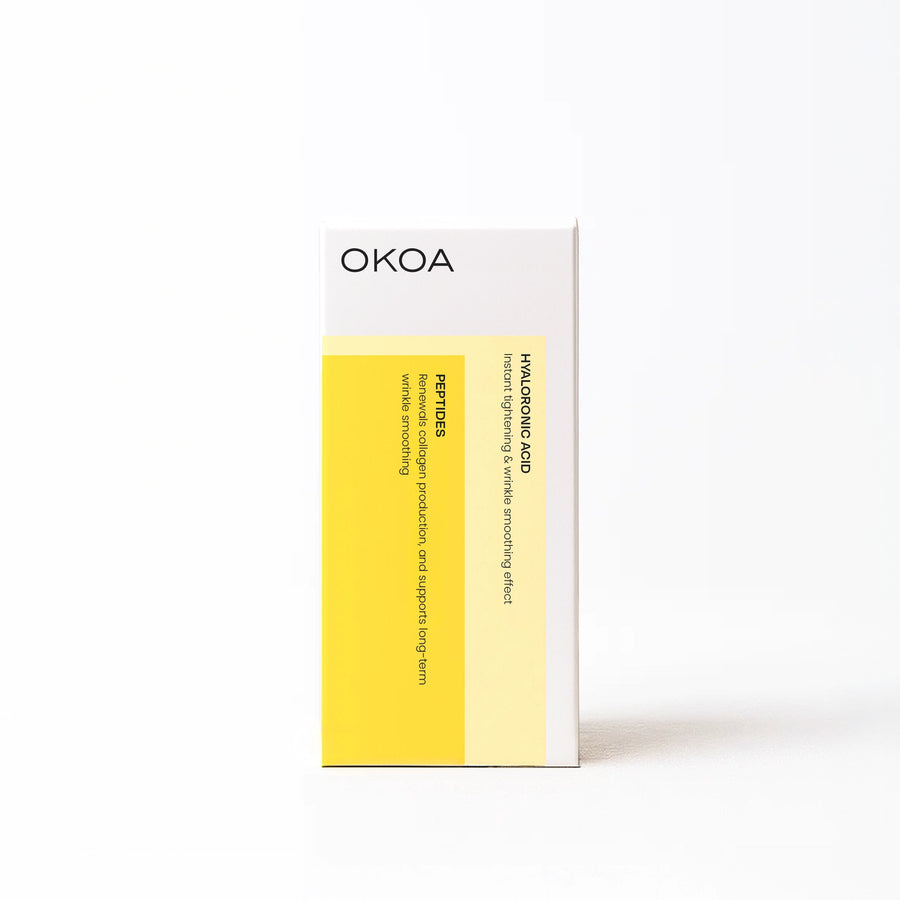
Okoaskin Dual Action Lifting Cream
The peptide step in a leg firming routine
No cream reshapes legs, and this one does not claim to. IDEALIFT (acetyl dipeptide-1 cetyl ester) supports the look of firmness where you apply it daily. In the ingredient maker's two-month, placebo-controlled study, 80% of participants reported firmer-looking skin: supplier evidence, not independent research.
Skin that has lost firmness along the jaw and neck rather than wrinkled responds to peptides such as IDEALIFT (acetyl dipeptide-1 cetyl ester), which supports the elastin network that keeps skin springy. The Okoaskin Dual Action Lifting Cream is $44.88 on subscription ($61.90 one-time) with a 90-day money-back guarantee.
FAQ
What is the best leg firming cream for crepey skin?
Usually, the best option for crepey skin is a rich cream with humectants, barrier-supporting ingredients, and a formula designed for resilience rather than instant tightening. Hyaluronic acid, shea butter, and vitamin E are the base-layer ingredients to look for, and a peptide firming cream layered on the crepiest spots adds the firming step that hydration alone does not cover.
Do leg firming creams actually work for cellulite?
They can improve the look of skin texture and make cellulite less noticeable for some people. They do not remove cellulite. The most realistic benefit is smoother, better-hydrated skin with less visible roughness or dullness.
What ingredients should I look for in the best cellulite cream for legs?
Look for ingredients that support hydration and smoothing first. Hyaluronic acid, glycerin, shea butter, lactic acid, and sometimes caffeine are the most common categories. Caffeine may offer a temporary cosmetic effect. It is not a long-term fix for dimpling.
How long does it take to see results from a leg firming cream?
You may notice softer, smoother skin within 1 to 2 weeks. More visible improvement in texture and firmness usually takes 6 to 12 weeks of consistent use. That is especially true on legs, where skin tends to be dry and often gets less regular care.
What is the best cellulite cream for thighs and bum if my skin is sensitive?
Look for a low-irritant or fragrance-free formula with strong hydration and barrier support. Avoid aggressive actives if your skin already reacts easily. A simple low-irritant moisturizer may be a better fit than a strong treatment product.
Can a firming cream tighten loose skin after weight loss?
Not fully.
A cream can improve hydration, texture, and the surface look of the skin. It cannot replace medical treatment for significant loose skin after weight loss. In that situation, a broader approach may help, including strength training, steady skin care, and professional advice if laxity is substantial.
For surface improvement, creams for tightening effects can play a complementary role.
What is the Okoaskin Dual Action Lifting Cream and what is in it?
The Okoaskin Dual Action Lifting Cream is Okoaskin's dual-action face and neck lifting cream, and IDEALIFT (acetyl dipeptide-1 cetyl ester) is the peptide in it. 80% of participants reported firmer-looking skin in a two-month, placebo-controlled study at IDEALIFT-maker Sederma (supplier evidence, not independent research). The Okoaskin Dual Action Lifting Cream is $44.88 on subscription and $61.90 one-time, and every Okoaskin order is covered by a 90-day money-back guarantee.
 Okoaskin Dual Action Lifting Cream · IDEALIFT
$44.88 $61.90
Shop now
Okoaskin Dual Action Lifting Cream · IDEALIFT
$44.88 $61.90
Shop now
Read more
The Peptide Layer for Tummy Skin Okoaskin Dual Action Lifting Cream Firmer-looking tummy skin takes daily support The peptide layer for a belly firming routine. IDEALIFT...
Peptide Pick for Your 30s Okoaskin Dual Action Lifting Cream Start firming early, without harsh actives The peptide route to firmer-looking skin in your 30s. IDEALIFT (a...